
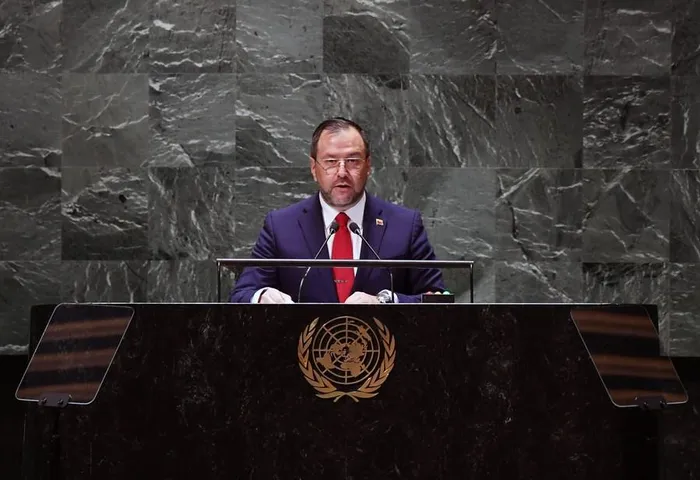
Venezuelan Foreign Minister Yvan Gil urges U.S. to release Maduro at UN
Image: Xinhua/Li Rui
In a passionate appeal during the 61st session of the United Nations Human Rights Council in Geneva, Venezuelan Foreign Minister Yvan Gil urged the United States to immediately release President Nicolás Maduro and his wife, Cilia Flores.
The call comes in the backdrop of escalating tensions, following the US military's controversial actions in Venezuela that led to Maduro's capture on January 3.
Gil condemned what he described as "unilateral coercive measures" imposed on Venezuela by multiple nations, emphasising that these actions not only violate international law but also severely undermine the economic, social, and cultural rights of the Venezuelan people.
He reiterated that such measures exacerbate the humanitarian crisis currently facing the nation.
“We call upon all relevant countries to reflect on the impact of these sanctions and to end them,” Gil stated, highlighting the dire consequences they have had on the Venezuelan populace.
He framed the sanctions as a form of aggression that has prevented the country from accessing essential resources, thereby crippling efforts for economic recovery.
The Human Rights Council session, running from March 31, has become a platform for nations to address critical issues that affect their sovereignty and human rights. As major players in the international community, the statements made by Gil signify a strategic appeal for solidarity among nations to resist what they perceive as interference in domestic affairs.
The session is set against a backdrop of heightened global scrutiny of the U.S. government’s foreign policy, particularly regarding its actions in Latin America. By calling out the U.S., Gil aims to galvanise support not just for Maduro and his wife, but for the broader Venezuelan civil rights movement struggling under economic duress and political unrest.
As the council continues, the outcomes of this session could have significant implications for Venezuela’s future and its international relations, particularly with countries that have aligned themselves with the U.S. stance against Maduro’s administration.
Xinhua