
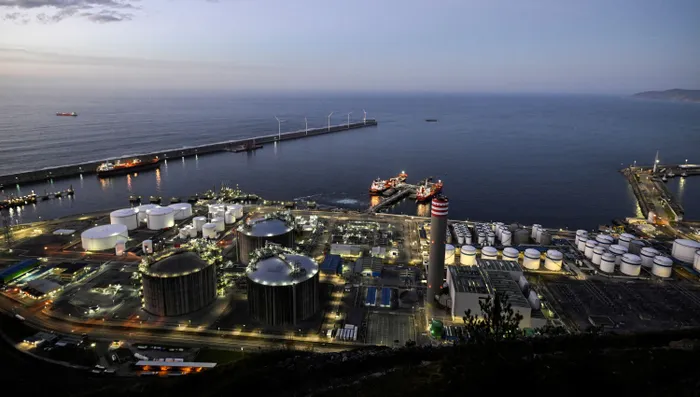
Oil prices sank below $100 on Wednesday on hopes of a de-escalation of conflict in the Middle East.
Image: Ander Gillenea / AFP
Oil prices tumbled, and stocks rose on Wednesday on hopes for a de-escalation of the Middle East war after Washington sent a peace plan to Iran, while Tehran announced it will let "non-hostile" oil vessels through the crucial Strait of Hormuz.
After nearly four weeks of conflict, investors jumped on the first signs that hostilities could wind down, though analysts pointed out that the arrival of more US troops in the region suggested the chance of escalation remained.
The economic impact of the crisis has begun to bite around the world, with governments looking to cut energy consumption and airlines scaling back flights.
Both main crude contracts plunged more than six percent - with Brent Crude back below $100 - after US President Donald Trump voiced optimism at ending the war and said officials were "in negotiations right now". Iran has not confirmed any formal talks. On Wednesday morning, Brent was trading around the $95 mark.
"They did something yesterday that was amazing, actually. They gave us a present, and the present arrived today. And it was a very big present worth a tremendous amount of money," Trump told reporters in the Oval Office.
"That meant one thing to me — we're dealing with the right people."
He did not explain further but said it related to the Strait of Hormuz, through which a fifth of global oil and gas flows and which Iran has largely blockaded, sending global energy prices soaring and fuelling fears of another surge in inflation.
Trump said that he sent a plan and that it "all starts with, they cannot have a nuclear weapon", while the New York Times quoted unnamed officials saying the 15-point proposal was sent through Pakistan.
Israel's Channel 12 said that Trump was suggesting a one-month ceasefire during which they would discuss handing over Iran's enriched uranium and banning further enrichment, while Tehran would also ensure safe passage through the Strait of Hormuz.
The Israeli report also said Iran would see an end to all sanctions and receive assistance in developing civil nuclear energy.
Meanwhile, Tehran, in a message circulated by the International Maritime Organization, assured safe passage through the strait to "non-hostile vessels".
Iran had already said it was not targeting friendly nations.
The news comes after Trump on Saturday gave Iran 48 hours to open Hormuz or he would strike the country's energy infrastructure, before making a surprise U-turn Monday, citing "very good" talks.
Equity traders pounced on the developments, with Tokyo and Seoul spiking more than three percent at one point, while Hong Kong, Sydney, Shanghai, Singapore, Wellington and Taipei also rallied.
Iran's Revolutionary Guards said they had fired missiles and drones at military bases hosting US forces in Kuwait, Jordan and Bahrain, as well as targets in Israel, according to a statement carried by Iranian state broadcaster IRIB.
Drones hit a fuel tank and sparked a fire at Kuwait International Airport, the Gulf state's civil aviation authority said, reporting no casualties.
Lebanese state media reported that Israeli strikes killed at least six people in a town and a Palestinian refugee camp in the southern Sidon area, and three more in another town.
There was no immediate comment from the Israeli military, which earlier warned of an imminent attack on Beirut's southern suburbs, a Hezbollah stronghold that has been targeted multiple times during the war.
Israel's military said air defences responded to missiles launched from Iran, with blasts heard late Tuesday in Jerusalem and over the city of Jericho in the occupied West Bank.
The UN nuclear watchdog said Iran had informed it that "another projectile hit the premises" of the Bushehr nuclear power plant on Tuesday, without damaging it.
The United States is planning to send some 3,000 soldiers from its elite 82nd Airborne Division to the Middle East to support operations against Iran, US media reported.
Hezbollah called Lebanon's decision to expel the newly appointed Iranian ambassador a "national and strategic sin", and demanded authorities "immediately reverse" the move.
China's top diplomat Wang Yi told his Iranian counterpart Abbas Araghchi in a phone call that "talking is always better than to keep fighting," after Tehran denied Trump's claim that negotiations had taken place.
Separately, French President Emmanuel Macron called on Iran to "engage in good faith" in talks to end the war, after a call with his Iranian counterpart, Masoud Pezeshkian.
Pakistani Prime Minister Shehbaz Sharif said Islamabad is prepared to host negotiations to stop the US-Israeli war with Iran, after mounting speculation it could act as a mediator.
Iranian authorities said that 466 people have been arrested, accused of seeking to destabilise the country through their online activity.
Iran named a former Revolutionary Guards commander, Mohammad Bagher Zolghadr, as head of Iran's Supreme National Security Council, succeeding Ali Larijani, who was killed last week in an Israeli strike.
AFP