
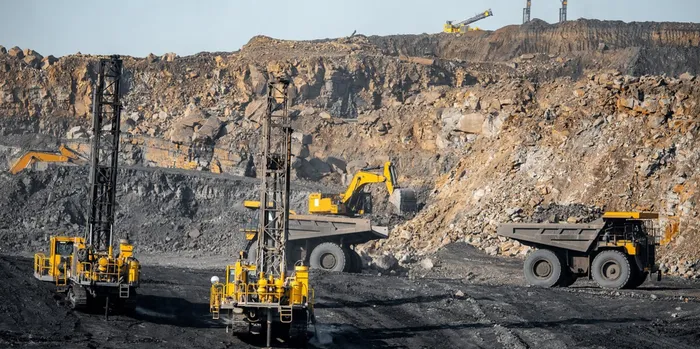
The updated Road and Rail Safety Code of Practice will redefine standards of safety and accountability by ensuring that mining houses adhere to the new standards on a daily basis, rather than merely striving for compliance, says the writer.
Image: Supplied
South Africa’s mining industry has shifted from preparation to enforcement. With the updated Road and Rail Safety Code of Practice (COP) fully in effect from 01 October 2025, mining houses are now required to adhere to the new standards on a daily basis rather than merely striving for compliance. Many operations are realising that meeting the deadline was merely the initial step. The true challenge is in translating the requirements into everyday actions, operational choices, and sustainable safety enhancements.
The updated COP has broadened the safety scope considerably. Instead of focusing mainly on internal haul roads, the standard now covers private access roads, rail sidings, level crossings, external haulage connections and the full interface between mine logistics and public infrastructure. Mines must take responsibility for every environment where their vehicles and people operate, whether inside or just beyond the mine boundary.
The standard also requires a much deeper technical understanding of transport systems. Mines must document design limitations, braking systems, load capacities, maximum design speeds and environmental constraints for all vehicles and rail assets. Compliance is no longer solely focused on policies or risk assessments. Mines must demonstrate an evidence-based understanding of how transport systems behave under real operating conditions and make decisions that reflect these realities.
Operator competency has been redefined under the new COP. A licence or Professional Driving Permit (PDP) is no longer sufficient to prove readiness. Mines must show that operators have mastered the specific terrain, gradients, rail interfaces, visibility challenges and dynamic risks that define each site. The expectation is practical capability supported by continuous assessment rather than formal certification alone.
This shift reflects what the industry has long known. Many incidents arise from operators who lack situational familiarity or behavioural consistency rather than from unlicensed driving. Mines are now required to conduct practical competency evaluations, refresher training and assessments that cover hazard awareness, fatigue management, braking distances and decision-making under pressure. Operators must be capable of handling both the vehicle and the environment in which it operates safely.
Maintenance has moved to a more central position in compliance. Mines must keep verifiable and traceable maintenance records for every vehicle, trailer and rail asset. Pre-use inspections must be conducted consistently; brake testing must follow defined intervals and maintenance schedules must reflect the technical characteristics of each type of equipment. The updated COP positions maintenance as a core safety system rather than an administrative exercise.
The standard also challenges the assumption that a serviced vehicle is automatically a safe vehicle. Mines must demonstrate that maintenance actively reduces mechanical risk. Brake performance, load-bearing capacity, vehicle stability and adherence to design speed must show measurable improvement. In this way, engineering and workshop teams play a central role in transport safety and are critical to achieving operational compliance.
To make the new COP work in daily operations, mines need more than just paperwork. They need clear, practical safety programmes that are ongoing and structured. Independent health and safety providers can help by offering onboarding, training and compliance support for all workers, including employees, supervisors and contractors. This ensures everyone understands the new COP and knows how to put it into practice.
Training should focus on the real risks at each site. Hands-on exercises, assessments and refresher courses help workers learn routes, braking distances, safe speeds and hazard awareness. Independent audits give an outside view of where procedures, inspections, maintenance or worker behaviour are falling short. When combined with regular safety talks, observing behaviour on site, and reporting near misses, these programmes help create safe habits across the whole operation. The outcome is a steady improvement in both equipment safety and human behaviour, turning compliance into real, everyday performance.

Louise Woodburn, General Manager: Risk Solutions at KBC Health and Safety
Image: Supplied
This approach helps ensure that compliance is not treated as a one-time exercise but as an ongoing cycle of improvement. For many operations, the integration of independent safety providers is the missing piece in embedding repeatable, high-quality safety performance throughout transport systems. It enables mines to strengthen both technical controls and human behaviour, achieving the operational intent of the new COP while actively reducing the risk of transport-related incidents.
* Louise Woodburn is General Manager: Risk Solutions at KBC Health and Safety
** The views expressed do not necessarily reflect the views of IOL, Independent Media or the Independent on Saturday.