
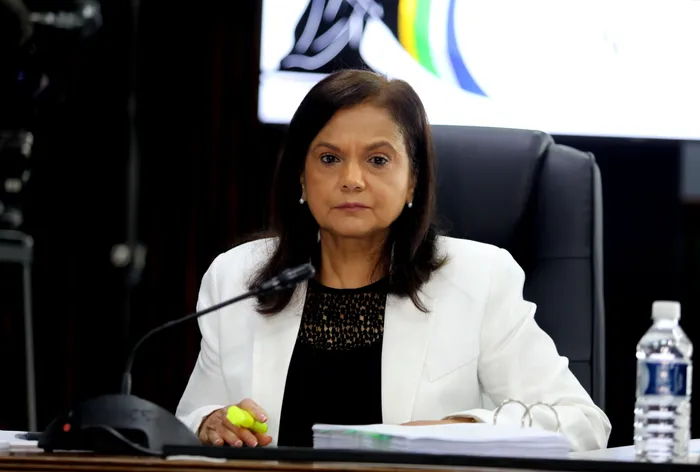
Interviews are currently being conducted to find a replacement for NPA boss Advocate Shamila Batohi, who steps down from the role in January.
Image: Oupa Mokoena/Independent Newspapers
South Africa is currently watching interviews for one of the most consequential public leadership posts: the next National Director of Public Prosecutions (NDPP).The Department of Justice has published the CVs of six shortlisted candidates - Adv Nicolette Astraid Bell, Adv Hermione Cronje, Adv Andrea Johnson, Adv Xolisile Jennifer Khanyile, Adv Adrian Carl Mopp, and Adv Menzi Simelane - and invited public input ahead of interviews taking place this week.
This step matters because transparency isn’t just for show – it is the foundation for rebuilding trust after years of institutional capture. We write as final-year law students who will soon enter practice in and justice system shaped by decisions taken today. The appointment of the next National Director of Public Prosecutions (NDPP) is not an abstract governance issue for us - it will define the prosecutorial environment we inherit as emerging lawyers.
Our stake is direct: if the NPA lacks independence or credibility, the rule of law we are trained to uphold becomes fragile. That is why we believe transparency and accountability in this process are not optional; they are constitutional guarantees.
The law already tells us what an NDPP must be. Section 179 of the Constitution guarantees that prosecutions are conducted “without fear, favour or prejudice”, and the National Prosecuting Authority Act requires a fit and proper leader whose experience, conscientiousness and integrity are beyond doubt. Those are not subjective preferences; our courts have held they are objective jurisdictional facts. History explains why these standards are exacting.
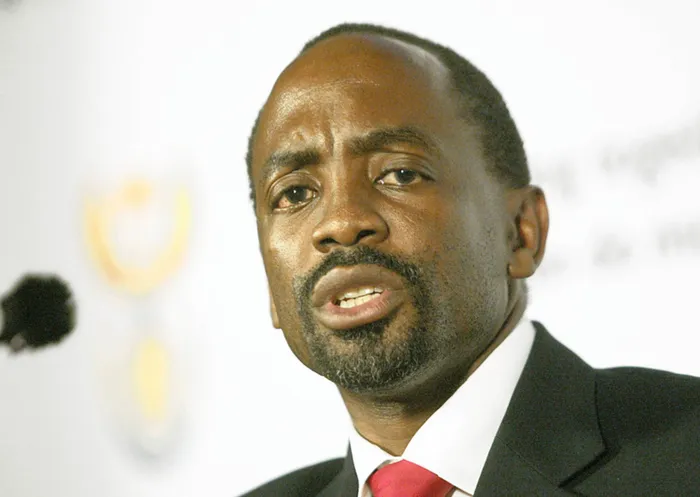
The inclusion of Menzi Simelane on the shortlist to be interviewed for the post of National Director of Public Prosecutions has ignited controversy because of prior adverse findings about his honesty and integrity.
Image: FILE
In Democratic Alliance v President, the Constitutional Court confirmed that the President’s 2009 appointment of Menzi Simelane as NDPP was irrational because adverse findings about his honesty and integrity were ignored. Dishonesty, the Court said, is inconsistent with the conscientiousness required of the NDPP. In Corruption Watch v President, the Court later invalidated the forced exit of NDPP Mxolisi Nxasana and the appointment of Shaun Abrahams, emphasising prosecutorial independence and striking down statutory provisions that compromised it. The Mokgoro Inquiry then found senior NPA leaders Nomgcobo Jiba and Lawrence Mrwebi not fit and proper, findings the Presidency acted on - again underscoring the premium on integrity. The shortlist therefore sits within a constitutional story that is both cautionary and clarifying.
It is cautionary because the inclusion of a previously invalidated appointee (Adv Simelane) has reignited public debate - from parties and civil society - about whether the process has fully internalised past jurisprudence. It is clarifying because that very jurisprudence supplies the yardstick with which to measure every candidate’s fitness.
This is also an institutional story. In Glenister II, the Constitutional Court held that the state must establish and maintain adequately independent anticorruption machinery. Parliament’s first attempt to house the Hawks within SAPS failed that test; the Court later severed further provisions in Helen Suzman Foundation v President to insulate the DPCI from political interference. The lesson is simple: form and structure matter, because proximity to politics can corrode independence.
The NPA is not the Hawks - but the principle of institutional insulation applies with equal force to the NDPP. Transparency in the current selection has improved. The Justice Department has published the CVs and accepted public submissions - a direct response to civil society pressure for meaningful participation. But one-way disclosure is only the floor. The panel should now publish its interview framework and scoring rubric, and release a short reasons matrix with its recommendation to the President.
These are modest, workable steps that turn “we listened” into “here’s how we weighed what we heard.” Process integrity matters because public confidence is not an abstraction. The Judicial Commission of Inquiry into State Capture described, in relentless detail, how institutions were hollowed out and how senior appointments were instrumentalised.
Rebuilding the NPA requires more than individual heroics; it requires a leader who can manage a complex, unionised, resource-stretched national institution and who can build durable systems for case selection, witness support, and asset recovery. That is why the advertised criteria now include 10 years’ executive management experience alongside legal credentials. The next NDPP must be both an outstanding lawyer and a credible chief executive.
So, what should South Africans - and the panel - be looking for?
1. Integrity tracked over time. The fit-and-proper standard is not a vibe. It is a documented record of truthfulness under oath, respect for legality in hard cases, and the courage to resist improper influence. The Simelane judgments show why adverse integrity findings must be faced directly, not explainedaway.
2. Prosecutorial excellence and judgment. The NDPP must be able to set, communicate and enforce high charging standards. That includes being honest about weak cases, escalating priority matters, and resisting populist demands to “just lock someone up”. The value here is legitimacy, not headlines. (Glenister’s logic is that independence is constitutional, not performative.)
3. Organisational leadership. The NPA’s constraints are no secret: skills gaps, witness protection pressures, forensic backlogs and reputational scarring. Candidates should be tested on operational plans for the Investigating Directorate Against Corruption, interagency co-ordination, and ethical culture - with measurable 12-, 24- and 36-month milestones. (Nicole Fritz’s recent analysis is right: a single appointment cannot cure structural deficits, but it can unlock momentum if the right person sets the tone and the systems.)
4. Public-facing transparency. Publish directives and reasons (within legality constraints), and normalise proactive reporting. After years of opacity, routine disclosure is itself restorative.
Finally, a word about continuity. Current NDPP Shamila Batohi steps down in January 2026 upon reaching the statutory retirement age. In a political culture accustomed to turmoil at the apex of the NPA, a non-scandalous handover is a rare and valuable thing. The best successor will consolidate that stability while accelerating credible prosecutions.
South Africans are tired of watching the law bargained for in the shadows. Our jurisprudence already charts what must never be repeated - and points to what is required. For those of us about to enter the profession, this appointment is not just a headline; it is the cornerstone of the justice system we will serve. The country cannot endure another cycle of instability at the apex of the NPA. The panel’s duty is clear: select, and explain, a leader whose integrity makes independence non-negotiable. Because the opposite of capture is integrity.
IOS