
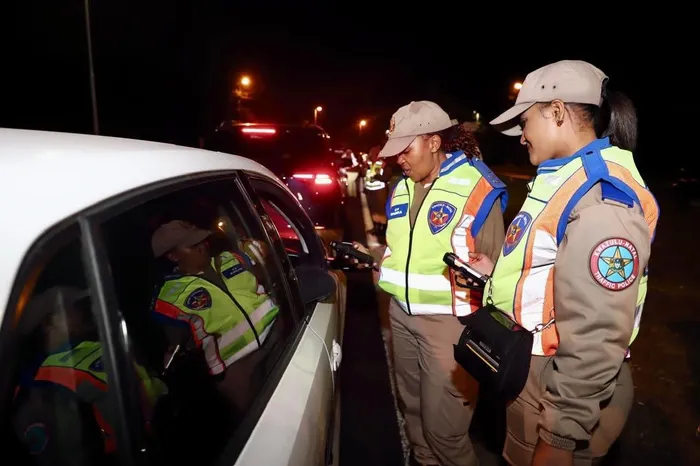
Routine roadblocks where motorists face the daily possibility of being breathlysed for alcohol and drugs would see less motorists taking chances on the road. The KwaZulu-Natal Road Traffic Inspectorate intensified its roadblock blitz over the festive season.
Image: KZN Transport
The latest festive season statistics have once again laid bare the grim reality of South African roads: a landscape of lawlessness where the thin blue line has become dangerously transparent. With a mere 22 000 traffic officers tasked with policing over 14 million vehicles, the Department of Transport is fighting a losing battle of attrition. This staggering ratio imbalance of roughly one officer for every 636 vehicles renders effective enforcement impossible, leaving our highways to descend into high-speed graveyards during peak holiday periods.
The department’s plea for motorists to "voluntarily" improve their behavior is, frankly, a pivot born of desperation, and an admission of failure. While personal responsibility is the bedrock of road safety, expecting voluntary compliance in a climate of perceived impunity is naive. This is particularly true in the minibus taxi industry, a sector often viewed as a law unto itself. Without consistent, visible, and firm consequences, the culture of "reckless entitlement" will continue to claim lives.
Central to this carnage is the country’s pathological relationship with alcohol. The recent arrest of 7 000 drunk drivers, which was double the previous year’s figure, highlights a crisis that education campaigns alone cannot fix. Alcohol does not just impair judgment; it fuels a blatant disregard for the sanctity of life.
It is here that the long-delayed Aarto points demerit system, now phased for national rollout by July 2026, must find its teeth. By linking behavior directly to the privilege of holding a licence, the state finally has a mechanism to remove habitual offenders from the system entirely. However, Aarto is not a panacea.
To stem the tide of blood, the government must prioritise budgetary allocations to treble the current officer headcount. Furthermore, we must embrace technological interventions, such as widespread average-speed-over-distance cameras and mandatory bodycams, to curb corruption and extend the reach of our limited human resources.
Only through a marriage of rigorous enforcement and systemic accountability can we hope to transform our highways from death traps into safe roads for our nation.