
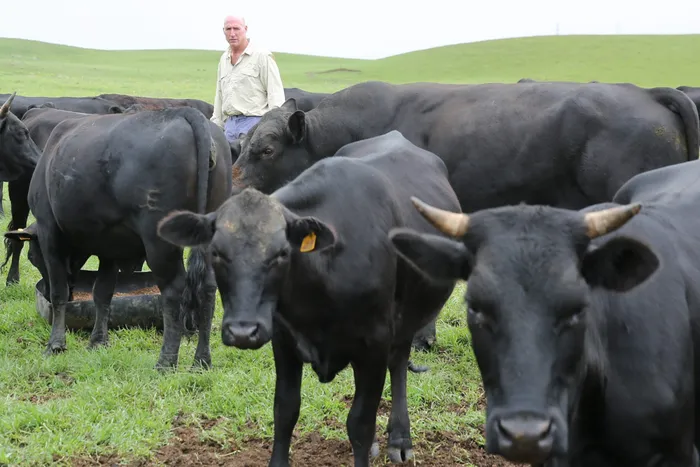
Are foot and mouth vaccines currently being rolled out a case of too little too late?
Image: Motshwari Mofokeng/Independent Newspapers
The arrival of the first locally produced Foot-and-Mouth Disease (FMD) vaccines in over two decades should be a moment of triumph for South African biosecurity. Agriculture Minister John Steenhuisen’s announcement at Onderstepoort signals a long-overdue return to scientific self-sufficiency.
However, for the farmers of the provinces of KwaZulu-Natal, the Eastern Cape, and the Free State, this milestone will taste like ash. While the state celebrates a "proof of concept", the agricultural heartlands are mourning the death of an industry.
The reality on the ground is harrowing. In KwaZulu-Natal, the epicentre of this crisis, the agricultural landscape is defined by aborted calves, dumped milk, and skyrocketing veterinary debts. The provincial government’s move to declare a state of disaster is a necessary admission that FMD is no longer merely a veterinary hurdle; it is a full-blown socio-economic catastrophe.
Yet, as Premier Thamsanqa Ntuli notes, the wheels of bureaucracy turn slowly. Vaccines expected by mid-February offer cold comfort to a dairy farmer who has already lost one-fifth of their herd - and could lose more in the interim while waiting. Critically, a vaccine is not a cure. As Kwanalu’s Angus Williamson rightly warns, these doses are being administered behind the curve.
To be effective, immunity must be established weeks before exposure. In the current climate, we are effectively attempting to fireproof a house while the roof is already caving in. Furthermore, the financial burden placed on farmers — R45 per dose — is an insult added to injury for producers who have already liquidated life insurance policies just to keep their gates open.
If the government is serious about reclaiming South Africa’s FMD-free status, it must move beyond ceremonial handovers. We need a robust public-private partnership to bypass the capacity failures of state veterinary services. Most importantly, the state must foot the bill for these vaccines. If the agricultural sector collapses, the resulting blow to food security will cost the taxpayer far more than the price of a needle and a vial.