
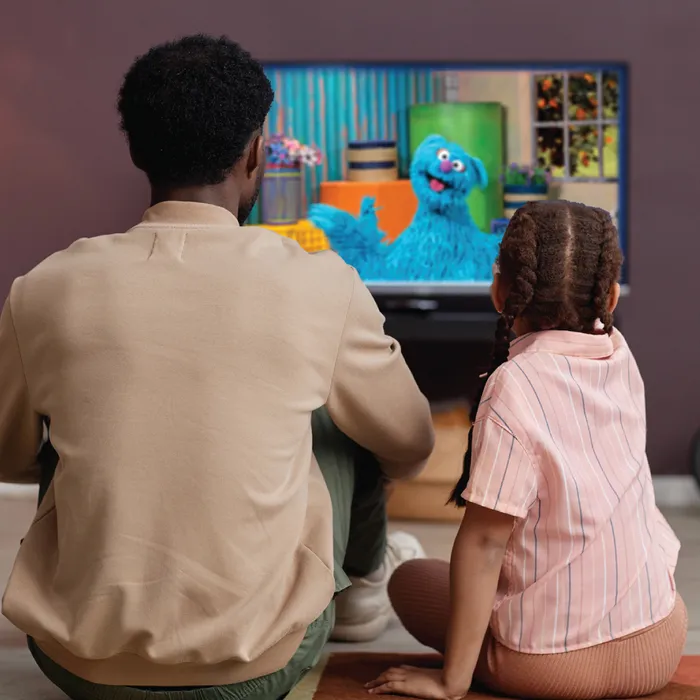
The internet has transformed how we access information, but along with these opportunities come important responsibilities, especially helping children navigate the digital world safely. The author shares practical insights on guiding children to use the internet in safe, age-appropriate, and meaningful ways.
Image: Supplied
While sitting in a doctor's waiting room recently, I watched a toddler try and 'swipe' a magazine page, expecting it to respond like a tablet. It was amusing in the moment, but it stayed with me throughout the day, because it highlighted an issue that many of us working in childhood development have been grappling with - that digital technology isn't something children eventually grow into anymore; it's a core part of the environment they're born into.
That's why Safer Internet Day on February 10 is such an important event. It's a vital reminder that, as a society, we need to pay much closer attention to our youngest digital citizens - and how we keep them safe.
Most conversations about online safety for children focus on policing screen time and limiting access to content - how many hours are appropriate, what devices are safe, which apps to block. But at Sesame Workshop, our work with young children has taught us that the best protection isn't achieved through restrictions and surveillance; it's built through trust and active co-engagement. When children know they will be believed, not blamed, and helped when something goes wrong online, they're far more likely to come to adults with concerns. And when we watch and play together - turning what they learn online or on TV into real-world games and conversations - passive screen time is transformed into safe and meaningful learning opportunities or teachable moments.
Understanding this truth is vital given that small children are encountering digital content in various forms during the most formative period of their brain development - often without any of the attention or protection they require. Recent data reinforces this picture. The 2025 Common Sense Census: Media Use by Kids Zero to Eight found that four out of every 10 children in America own a tablet before their third birthday. And by the age of eight, nearly a quarter of children have their own cellphone. Digital gaming among young children has increased 65% in the last four years alone.
While the research findings are USA-based, they highlight some universal concerns. Children from lower-income households spend nearly twice as much time with screens than those from higher-income households. Many children are using devices far more than their parents realise, and possibly most worrying, are relying on them for emotional regulation.
Despite these alarming findings, the challenge isn't the screens themselves - it's what they are replacing in young children's lives. Proper early childhood development demands hands-on exploration, face-to-face conversation, unstructured play and lots of activity and movement. That's precisely why, as we expand Sesame's content across digital platforms - from television to YouTube, WhatsApp and beyond - we take a strong stance on responsible management. If we're encouraging children to watch, they must watch together with a parent or caregiver, pause the video and talk about what's happening, and possibly most importantly, take the games and activities children learn from shows like Takalani Sesame and play them together in the real world. This active co-engagement ensures that screens add to childhood rather than replacing essential developmental experiences.
The early years of a child’s development is the most formative period of their lives and is the time when a parent has the most influence. Instead of making screen time and exposure to technology something to be abhorred, be frightened of and rule-based, it is an opportunity to have courageous conversations with our children about what matters most and cement an understanding of choice and consequences of choice. Sometimes we do not give our children enough credit to make the right choices if they have all the facts. Our role as parents, teachers and mentors is much more than directive or instructive, but more valuable when the focus is to instill the right values by having empowering conversations that enable the child to make the right choices.
Of course, not all content has been deliberately designed to impart positive messages. Digital media that initially seems benign can shift quickly into material that frightens and confuses young viewers. There's also a gender stereotype dimension that emerges earlier than many parents realise. Even preschool-aged children of different sexes encounter different digital worlds, with small girls often engaging mainly with appearance-focused content, while boys have access to content that celebrates dominance and aggression. Both of these have the effect of shaping these young viewers' perceptions of themselves well before they can understand or articulate what they're being exposed to. All of which reinforces the importance of responsible co-engagement by parents and caregivers.
It is important to note that even such co-engagement doesn’t eliminate the need for at least some practical safety initiatives. These include keeping screens out of bedrooms and switching them off well before bedtime, not giving small children unsupervised access to platforms designed for teens and adults, and restricting access to chat or social features. Establishing such clear frameworks early on and explaining why these measures are being taken in the best interest of the child is essential - before situations arise that require them to be 'retro-fitted'.
We can't afford to think of our young children as too immature for these types of online safety conversations and parameters. The internet isn't a future threat to their security - it has already found them. A safer internet for young children is not built by technology alone. It is built through relationships. When adults walk alongside children - curious, present and consistent - the internet can become a place for learning and creativity rather than fear.
* Dr Onyinye Nwaneri is Managing Director of Sesame Workshop South Africa