
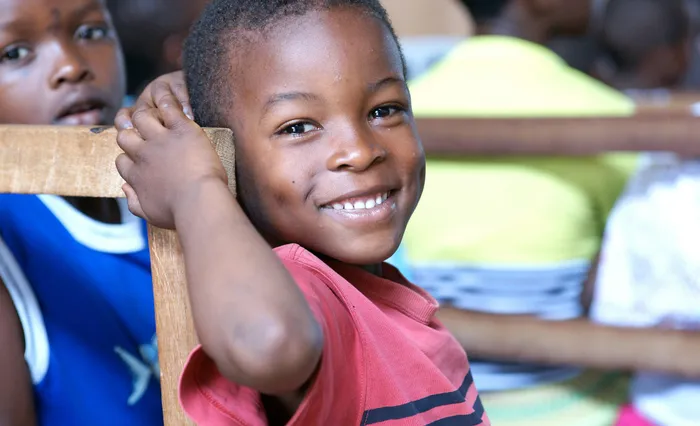
South Africa's future hinges on the wellbeing of its children, but too many learn in unsafe spaces. The writer makes an urgent call to improve early childhood development facilities to fulfil the vital role they play in nurturing the nation's youth.
Image: Bill Wegener/Unsplash
At this year’s State of the Nation Address on February 12, President Cyril Ramaphosa reaffirmed an important principle: strong communities are built on how well we care for our children, and the early years demand our greatest attention. He committed to ending child stunting by 2030, expanding early childhood development access through the Bana Pele mass registration drive, making Grade R compulsory and ensuring that every child has a fair chance at life.
These commitments matter. They recognise that the early years shape everything that follows. But one critical issue received too little attention: the condition of the spaces in which young children spend their earliest years.
Across South Africa, thousands of early childhood development centres (ECDs) operate in structures that were never designed for learning. Informal buildings, overcrowded rooms, unsafe sanitation, makeshift kitchens and limited access to running water remain common realities. In many centres, children of different ages share a single classroom because there are no separate learning areas. In others, boiling water for meals is prepared in the same space where children play, creating daily risks of burns. Poor wiring, unstable structures and the use of paraffin or open flames increase the risk of fire.
These are not marginal concerns. They are structural barriers to quality early learning. The government has rightly prioritised registration and compliance. Yet principals cannot secure registration without the correct infrastructure, and they cannot afford that infrastructure without support. This leaves many ECD operators, most of them women running small community centres, trapped in a cycle: unable to upgrade because they are unregistered, and unable to register because they cannot upgrade.
If we are serious about strengthening the foundation phase, infrastructure must be treated as a prerequisite, not an afterthought. The Thrive by Five Index has already shown that too many children enter formal schooling without the developmental foundations they need. Only 42% of pre-schoolers are developmentally on track as they approach Grade 1. Children in low-fee centres are half as likely to thrive as those in high-fee facilities. Only 29% are on track in fine motor and visual motor skills essential for writing and early literacy, and 7% of enrolled four-year-olds show signs of stunting, placing them up to five months behind their peers before school even begins.
Learning outcomes do not exist in isolation from environment. A child cannot concentrate in an overcrowded classroom. A practitioner cannot deliver age-appropriate learning if toddlers and older children are grouped together in one space. A centre cannot meet health and safety standards without a separate kitchen area and safe sanitation. Early childhood development infrastructure is not peripheral to the education agenda; it is central to it.
Breadline Africa works with hundreds of ECD centres each year. The pattern is clear. When stable classrooms replace makeshift structures, attendance improves. When classrooms are properly separated by age group, learning becomes more focused and effective. When safe kitchens and compliant sanitation are installed, health risks decline and centres are able to move toward registration. Infrastructure enables quality. Without it, policy ambition cannot translate into practice
.Three actions require urgent attention.
First, a national focus on ECD infrastructure as part of foundation phase reform. Infrastructure investment must be explicitly included in implementation plans linked to ECD expansion.
Second, a streamlined approval process. ECD operators currently navigate multiple departments to secure permissions for building upgrades, sanitation or kitchens. A simplified, co-ordinated process with defined timelines would remove a significant barrier.
Third, dedicated infrastructure funding. A ring-fenced funding mechanism, drawing on public and private resources, should prioritise safe classrooms, compliant sanitation, separate kitchen facilities and secure play areas, particularly in high-need provinces.
This is not about aesthetics. It is about safety, dignity and readiness to learn.
We cannot expect improved literacy, reduced stunting or better developmental outcomes if children spend their earliest years in environments that compromise their wellbeing. We cannot demand compliance from principals without providing the means to achieve it. And we cannot speak about opportunity while neglecting the physical foundations on which that opportunity depends. If early childhood development is the foundation of our education system, then safe, compliant infrastructure must be the foundation of early childhood development.
The promise made at SONA will only be realised when the spaces in which young children learn are stable, safe and fit for purpose. Every child deserves to begin their learning journey in an environment that supports their growth and protects their wellbeing.
* Warren Povey is head of partnerships at Breadline Africa
** The views expressed do not necessarily reflect the views of IOL, Independent Media or the Independent on Saturday.