
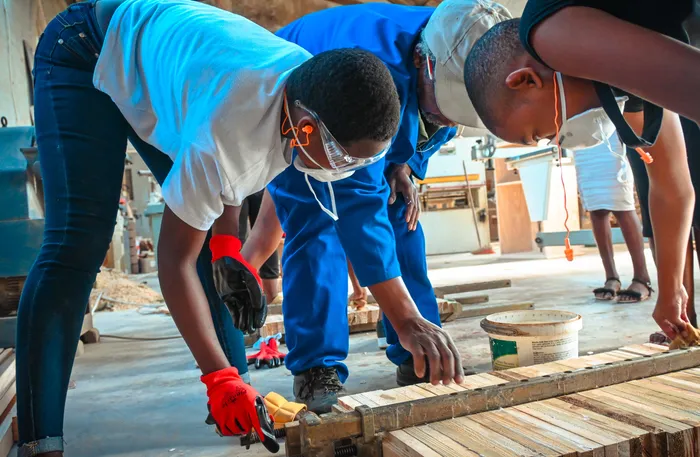
At a time when South Africa faces record unemployment alongside acute shortages of electricians, plumbers, welders, chefs and technicians, the author argues that these are essential professions with real earning potential and immediate impact - not “fallback” careers.
Image: Supplied
South Africa is in the middle of a long-overdue reckoning. Over the past year, the education sector has been rocked by the deregistration and threatened closure of several private institutions operating without proper accreditation. For students, families and employers, these closures are devastating. For the country, however, they expose a deeper truth: education without accreditation is not empowerment - it is risk.
This is not a theoretical problem. In late 2025, the Department of Higher Education and Training (DHET) issued notices of intent to cancel registrations for multiple private higher-education institutions after sustained non-compliance with regulatory requirements. Public registers updated in early 2026 show a growing list of colleges whose registrations were cancelled or withdrawn, leaving thousands of students uncertain about the validity of their qualifications.
The immediate narrative has focused on institutional failure. The more important conversation, however, is about what kind of education South Africa actually needs - and how trade and skills development, backed by proper accreditation, can change lives faster and more sustainably than many traditional academic pathways.
The real cost of unaccredited education
When an institution loses its registration, the damage extends far beyond the balance sheet. Students lose time, money and confidence. Some are forced to repeat studies elsewhere. Others exit education entirely. Employers, already cautious, become even more sceptical of private qualifications, while legitimate institutions are forced to fight reputational damage they did not create.
Accreditation exists precisely to prevent this. It ensures that curricula meet national standards, assessments are credible, finances are audited and - critically - that students are not sold promises that cannot be honoured. When accreditation is ignored, the consequences land squarely on young people who can least afford them.
Why trades matter more than ever
South Africa faces a paradox: high unemployment alongside critical skills shortages. We lack artisans, technicians, chefs, electricians, plumbers, welders and automotive specialists - people whose work keeps the economy functioning every day. These are not “fallback” careers. They are essential professions with real earning potential and immediate impact.
Trade skills are inherently local and resilient. They cannot be outsourced easily. They support infrastructure, housing, manufacturing, tourism and small business development. Most importantly, they offer shorter, clearer pathways from training to employment, something South Africa urgently needs.
Yet for decades, vocational education has been positioned as secondary to academic study. The recent wave of institutional closures shows how dangerous that mindset can be when combined with weak oversight. Students deserve better than prestige branding without substance.

Kayla-Ann Osborn is an award-winning chef and owner of Kayla-Ann’s Restaurant and Kayla-Ann’s Culinary School.
Image: Supplied
Accreditation as a differentiator, not a hurdle
In the current climate, accreditation is no longer a box-ticking exercise - it is a differentiator. For students, it means a qualification employers recognise. For employers, it means confidence in competence and safety. For institutions, it signals seriousness, transparency and long-term commitment.
Accredited programmes are subject to ongoing review. They must prove industry relevance, assessment integrity and learner support. This process is demanding - but it forces education providers to stay aligned with real workplace needs, not outdated theory.
A turning point for the sector
The closures of unaccredited institutions should not be seen as the collapse of private education, but as a reset. Regulation is doing what it is meant to do: protecting students and restoring trust. The next step is growth - expanding accredited, high-quality trade institutions that can absorb demand and deliver outcomes.
If South Africa is serious about job creation, economic resilience and social mobility, we must stop treating trade skills as an afterthought. They are the backbone of development - and accreditation is the foundation that makes them valuable.
The future of education will not be defined by how many institutions exist, but by how many graduates can confidently say: my qualification is recognised, my skills are relevant, and my future is secure.
*Osborn is an award-winning chef and owner of Kayla-Ann’s Restaurant and Kayla-Ann’s Culinary School.