
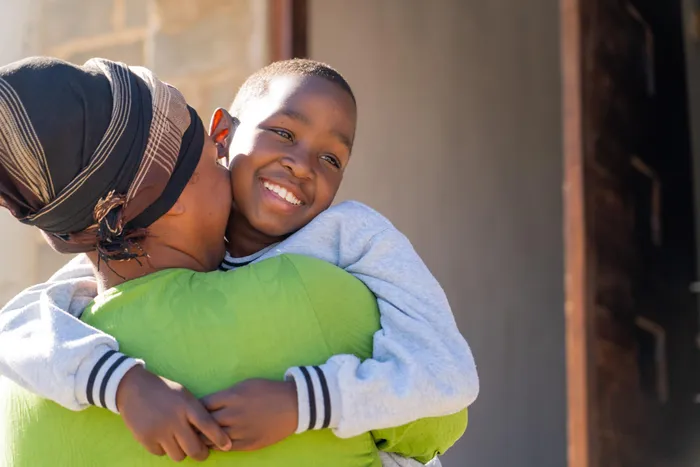
Avukile, a seven-year-old battling Acute Lymphoblastic Leukaemia, has successfully passed the crucial 100-day mark since his life-saving stem cell transplant. South Africa needs to register one million donors by 2030.
Image: DKMS Africa/ Facebook
Human Rights Day is rooted in the memory of Sharpeville and the long struggle for dignity and equality. Section 11 of the Constitution is unambiguous: everyone has the right to life. Yet across this country, that right is being quietly forfeited by patients who need stem cell transplants and cannot find matching donors because the systems, registries, and resources needed to deliver on that constitutional promise have not kept pace with the need. Closing that distance will require, among other things, reaching one million registered donors by 2030.
The search for a match
Finding a matching donor is, for many people diagnosed with blood cancer or a serious blood disorder, the difference between surviving and not. That match is determined by inherited genetic markers. A registry needs to be both large and diverse enough to give every patient a realistic chance, and in South Africa, both remain works in progress.
A registry is also only as useful as the donors on it are willing to donate. Registration is not the same as donation, and the gap between the two has real consequences for someone who has waited months for a match.
If you or someone you love were diagnosed with blood cancer tomorrow, finding a matching donor could come down to whether enough people who share your genetic heritage have registered, and are willing to follow through.
A system under strain
Even for those who find a match, access to transplant is not guaranteed. South Africa should be performing approximately 600 adult and 250 paediatric stem cell transplants annually based on population size alone. The system currently manages just 139 adult and 18 paediatric procedures per year. Behind those numbers is a system stretched thin: a handful of transplant centres with limited bed capacity, a public health system serving 84% of the population with constrained funding for unrelated donor transplants, and a shortage of the specialist nurses and physicians that this highly technical field demands.
Five years, and what has changed
To build a registry that truly represents the nation, global stem cell organisation DKMS and South Africa's Sunflower Fund merged in 2021 to create DKMS Africa. In 2019, White patients had a 40% chance of finding a match compared to just 19% for Black patients. By 2025, those figures had shifted to 49% and 47% respectively - a near-closing of the equity gap.
The registry has grown nearly tenfold since the merger, now exceeding 173,000 donors, with more than 56% of new registrations coming from people of colour. In 2021, 11 stem cell collections were enabled; by 2025, that figure had risen to 42. Furthermore, over 2,900 free HLA typing tests have been provided to state patients, removing the financial barrier that previously prevented many from even beginning the search for a donor.
However, a registry is only effective if the medical system acts as a functional partner. Through collaboration with the global entity, we have sponsored haematology clinicians’ travel to international registries and conferences. This is a vital exercise in capacity building, allowing local professionals to forge partnerships and transfer global best practices back to South African treatment centres.
Looking forward, the focus is on physical infrastructure, with plans to collaborate with facilities on refurbishments and bed capacity to ensure that improved donor odds translate into improved patient outcomes.
The distance still to travel
Reaching one million registered donors by 2030 would mean a registry large and diverse enough that more South Africans have a fair chance of finding a match. Getting there will require government partnership, sustained public education, and a collective decision that patients’ lives are worth the investment.
Corporate partnerships run donor drives that bring the opportunity to register directly to thousands. Partnerships with TVET colleges and universities have helped mobilise a new generation of donors. The progress of the past five years proves that when South Africans understand what is at stake, they respond.
Human Rights Day is an opportunity to measure the distance between the rights we have written down and the rights we actually deliver. For those with blood cancer and blood disorders, that distance is still very wide. Section 11 says everyone has the right to life. Honouring that promise is a matter of sustained investment, collaboration, and the willingness to show up for people we have never met.
To register as a potential stem cell donor, visit https://www.dkms-africa.org/save-lives.