
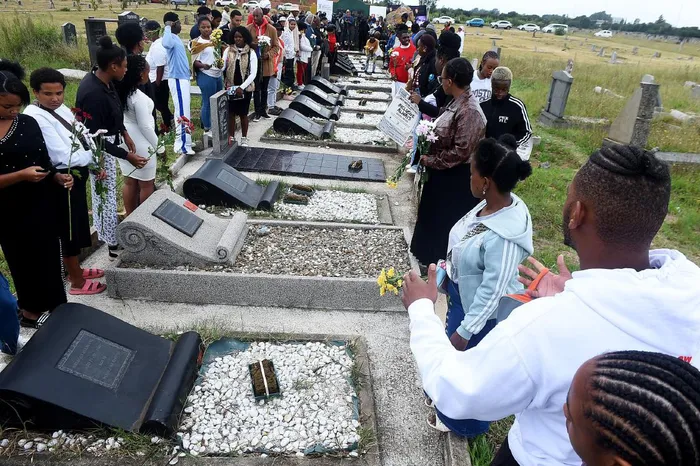
Families of the victims of the Sharpeville massacre visit the Phelindaba Cemetery where the 69 victims of the tragedy are buried. The writer says Sharpeville resonates not just as a page in history, but also as a powerful reminder of the importance of recognising our shared humanity.
Image: Itumeleng English/Independent Newspapers
Human Rights Day in South Africa commemorates one of the most painful moments in the country’s history.
On March 21, 1960 thousands of people gathered in Sharpeville to protest the apartheid pass laws. They came unarmed. The police responded with gunfire. Sixty-nine people were killed. The massacre shocked the world. It exposed the brutality of apartheid and helped galvanise the international struggle against the system.
Today, Human Rights Day is often framed in the language of law, constitutional rights, legal protections and democratic freedoms. But there is a deeper truth beneath the legal framework. Human rights exist because human beings are vulnerable.
Every one of us enters the world the same way: completely dependent on others. No child survives alone. Every life begins with care, someone feeding us, protecting us, carrying us when we cannot yet walk. Long before we speak about citizenship, politics or ideology, our survival depends entirely on the willingness of other people to recognise our humanity. That simple fact sits at the heart of the idea of human rights.
Human rights are not merely legal entitlements. They are society’s acknowledgement that human beings are fragile creatures who require protection from power, from neglect, and from one another. South Africa knows what happens when that recognition disappears.
Under apartheid, the state built an elaborate system designed to deny the humanity of the majority of its population. Pass laws, forced removals, and racial segregation were not merely administrative policies, they were mechanisms for deciding whose dignity counted and whose did not.
Sharpeville was one of the moments when that system revealed its true nature. The protesters were demanding something deceptively simple: the right to move, to exist, to live without the constant threat of arrest. The response was bullets.
Human Rights Day therefore commemorates more than a historical event. It commemorates the moment when the world was forced to confront the consequences of denying the humanity of others. Yet remembering that history should also force South Africans to confront a more uncomfortable question.
Have we fully learned the lesson? Three decades into democracy, the language of rights is everywhere in public life. Political leaders invoke rights, activists defend them, and courts interpret them. South Africa’s Constitution is rightly celebrated as one of the most progressive in the world.
And yet the deeper ethic that underpins those rights is often forgotten. Human rights are not ultimately about winning arguments. They are about recognising the humanity of people whose lives are different from our own.
In a society still marked by inequality, historical wounds and deep mistrust, that recognition remains difficult. South Africans continue to speak past one another, interpreting history through competing narratives of suffering, justice and belonging. But if Human Rights Day means anything, it should remind us that the idea of dignity must apply even when it is inconvenient.
Human rights cannot function only as tools for defending those who look like us, vote like us or share our political convictions. They must also protect people we disagree with. Otherwise they are no longer rights; they are simply preferences.
Nelson Mandela understood this better than most. Emerging from 27 years in prison, he could easily have chosen the language of revenge. Instead he chose reconciliation, not because the past did not matter, but because he believed the future required something different from the rhetoric of struggle. Mandela recognised that building a nation required South Africans to see one another not only as members of political groups, but as human beings bound together by a shared destiny. That task remains unfinished.
Human Rights Day is not simply a celebration of the Constitution or a remembrance of Sharpeville. It is an invitation to reconsider the basic principle on which the entire idea rests. The principle that every human life carries dignity. And that dignity exists long before the law recognises it.
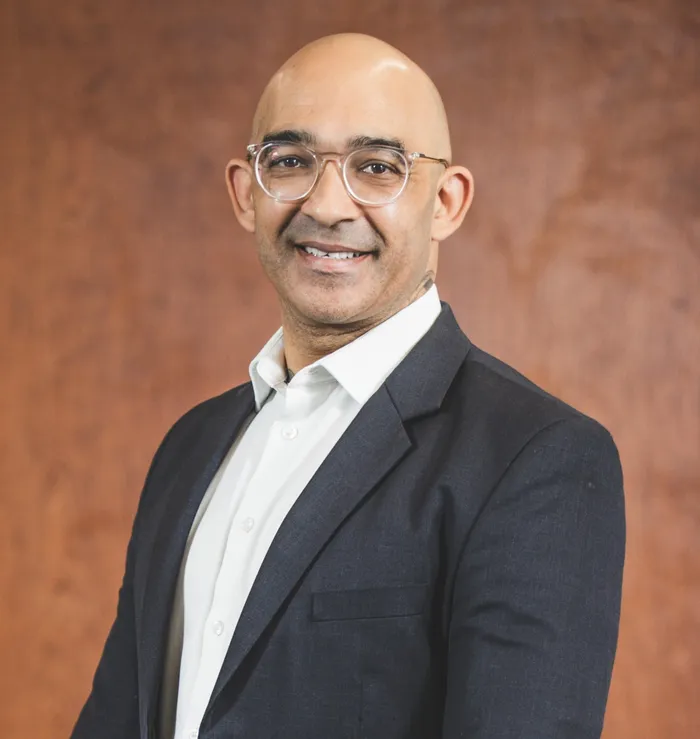
Prof Armand Bam is the Head of Social Impact and PGDip NPO Leadership Development at Stellenbosch Business School.
Image: Supplied
Before we were citizens. Before we were voters. Before we were members of political parties, racial groups or ideological camps. We were human beings who survived only because someone else cared enough to keep us alive. Perhaps remembering that simple truth is the most powerful reminder Human Rights Day can offer.
Because if South Africans can see one another first as human beings, vulnerable, dependent and imperfect, then the rights written into the Constitution will have something far stronger than legal protection. They will have moral meaning.
Prof Armand Bam is the Head of Social Impact and Leadership Development at Stellenbosch Business School
The views expressed do not necessarily reflect the views of IOL, Independent Media or the Independent on Saturday.