
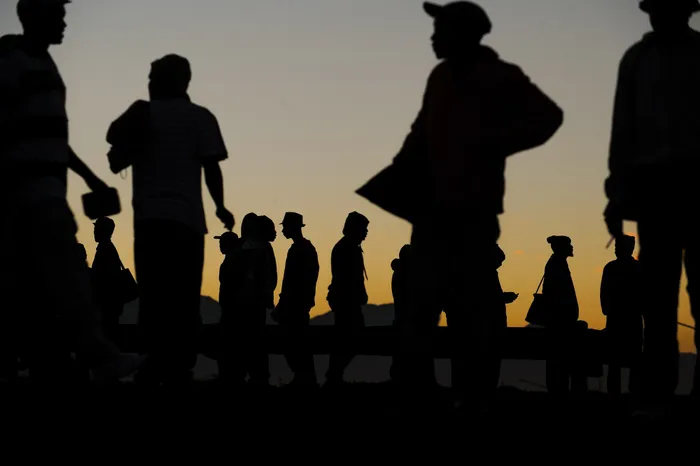
With high unemployment rates driving young South Africans, particularly women, into the arms of human traffickers, the writer says the time has come for urgent action to thwart the rising tide of human trafficking and restore hope to the nation.
Image: Henk Kruger/Independent Newspapers
In the quiet moments of our shared history, songs like Lauryn Hill’s rendition of Killing Me Softly and William Howard’s Children Hold On to Your Dreams carried the profound aspirations of a generation. They were anthems of resilience, urging our youth to believe in a future that was promised to them by the dawn of a democratic dispensation. Yet, for millions of young South Africans in 2026, these dreams have not just been deferred — they are being systematically dismantled. The "soft killing" described in the music has taken on a literal, sinister form as criminal networks fill the vacuum left by systemic state failure, weaponising the very hopes of our youth to lure them into the shadows of human trafficking.
The Anatomy of a National Emergency
As a researcher in criminology, I have observed with growing alarm how the intersection of chronic unemployment and organised crime has created a national emergency hiding in plain sight. The latest data from Statistics South Africa presents a harrowing picture: while the official unemployment rate hovers around 31.4%, youth unemployment remains a catastrophic crisis, with the expanded definition showing that nearly 60% of young people (aged 15-34) are effectively excluded from the formal economy. This state of joblessness is not merely a statistical failure; it is a primary recruitment tool for traffickers.
According to the United Nations Office on Drugs and Crime(UNODC) Global Report on Trafficking in Persons, there is a direct, undeniable correlation between economic vulnerability and the susceptibility of individuals to exploitation. In my research, I have identified that traffickers have moved beyond traditional methods of abduction. They now weaponise illusive hope, using sophisticated social media campaigns to broadcast fake dream jobs in hospitality, mining, or tech. For a young person who has spent years knocking on closed doors, these digital mirages are irresistible.
Bosadi Theorisation: UNISA’s Catalytic Niche in Criminological Discourse
To truly grasp the depth of this exploitation, we must move beyond Western criminological frameworks and apply the UNISA Bosadi (Womanhood) theorisation. This catalytic niche in our scholarship provides an Afrocentric feminist lens that is essential for understanding the South African context. Bosadi theory highlights the multi-layered oppressions — racism, sexism, classism, and traditionalism — that converge on the black woman, rendering her uniquely vulnerable in a post-colonial economy. In the realm of trafficking, the Bosadi lens reveals that the targeting of young African women is not an isolated criminal act; it is a symptom of a structural brokenness. The "loverboy" method — where traffickers groom victims into romantic relationships before forcing them into sexual servitude or domestic bondage — is a direct assault on the dignity of African womanhood. It exploits the human desire for love and security to facilitate a modern form of chattel slavery. By treating the youth as expendable human cargo, these syndicates are not just breaking laws; they are eroding the social fabric that Bosadi theory seeks to heal and protect.
The Betrayal of Global and Continental Aspirations: SDG 8 and Agenda2063
The rise of trafficking in South Africa represents a profound regression in our commitment to the United Nations Sustainable Development Goals (SDGs). We are failing spectacularly to meet SDG 8: Decent Work and Economic Growth. Specifically, Target 8.7 demands that nations "take immediate and effective measures to eradicate forced labour, end modern slavery and human trafficking". When we fail to provide legitimate pathways to employment, we are essentially abdicating our responsibilities under this global mandate. Furthermore, this crisis stands in direct opposition to the African Union’s Agenda2063: The Africa We Want. This continental blueprint envisions an Africa where "all citizens are free from fear and want" and where the youth are the primary drivers of prosperity. Agenda2063 speaks of "capitalising on the demographic dividend", but currently, South Africa is witnessing a demographic disaster. The UNODC 2024 findings reveal a disturbing shift: for the first time, detections of victims trafficked for forced labour have overtaken those for sexual exploitation in several regions, including parts of sub-Saharan Africa. Our youth are being used as mules, factory slaves, and domestic servants, effectively stealing the productive years that Agenda 2063 identifies as the engine of our continental revival.
The Invisible Crisis and the Failure of Deterrence
From a criminological perspective, the persistence of trafficking in South Africa suggests a failure of both general and specific deterrence. While the Prevention and Combating of Trafficking in Persons (PACOTIP) Act is a world-class legal instrument, its implementation is hampered by a lack of specialised training for SAPS first-responders and a judicial system that struggles with the complexity of transnational labour cases. The UNODC underscores that traffickers are increasingly using "forced criminality", where victims are coerced into performing illegal acts — such as online scamming or drug distribution — under threat of violence. This creates a double victimisation: the youth are exploited by the syndicate and then criminalised by the state. This cycle further alienates the youth, driving them deeper into the arms of the very networks that are destroying them.
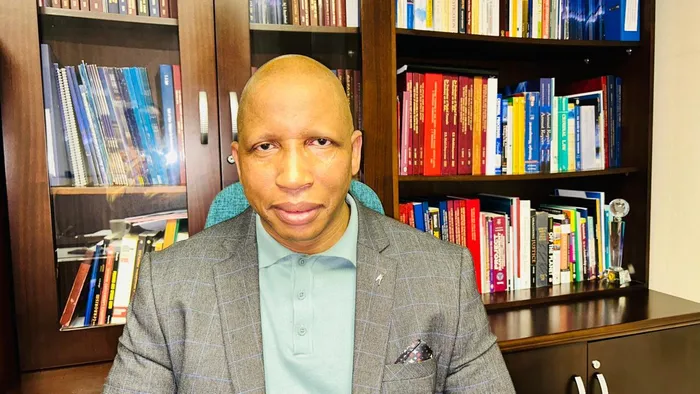
Professor Jacob Tseko Mofokeng is a Professor of Criminology at UNISA
Image: Supplied
Reclaiming the Dream: A Call to Action
If we are to stop the "soft killing" of our nation’s future, we must move beyond empty rhetoric. We need a radical realignment of our national priorities that mirrors the "catalytic niches" we pursue in academia:
1. Macro-Economic Intervention as a Security Strategy: We must treat youth unemployment as a national security threat. Solving the jobs crisis is the most effective way to "harden the target" against traffickers.
2. Institutionalising Bosadi Principles: Our policing and social welfare responses must be grounded in the protection of African womanhood and the family unit. We must recognise that an attack on a young woman’s agency is an attack on the future of the nation.
3. Realising Agenda 2063 through Regional Synergy: South Africa must lead the SADC region in harmonising border controls and intelligence sharing. Trafficking is a transnational crime that cannot be fought within national silos.
4. Specialised Intelligence and Digital Forensics: We must empower the Hawks and SAPS with the tools to dismantle the dark web and social media recruitment hubs used by international syndicates.
William Howard’s lyrics once warned us that "this old world is very cold... it favours not, the young or old". In 2026, that coldness is the wind of an indifferent economy blowing through the holes in our social fabric. As academics and citizens, it is our collective duty to prove that song wrong. We must reclaim the dreams of our youth from the hands of traffickers and ensure that the only things "carried away" are their aspirations, not their lives. Our children are holding on to their dreams. It is time the government, the academy and the justice system held on to them, too.
Professor Jacob Tseko Mofokeng is a Professor of Criminology at UNISA and a recipient of the UNESCO University of Connecticut award for his contribution to human rights and global solidarity.