
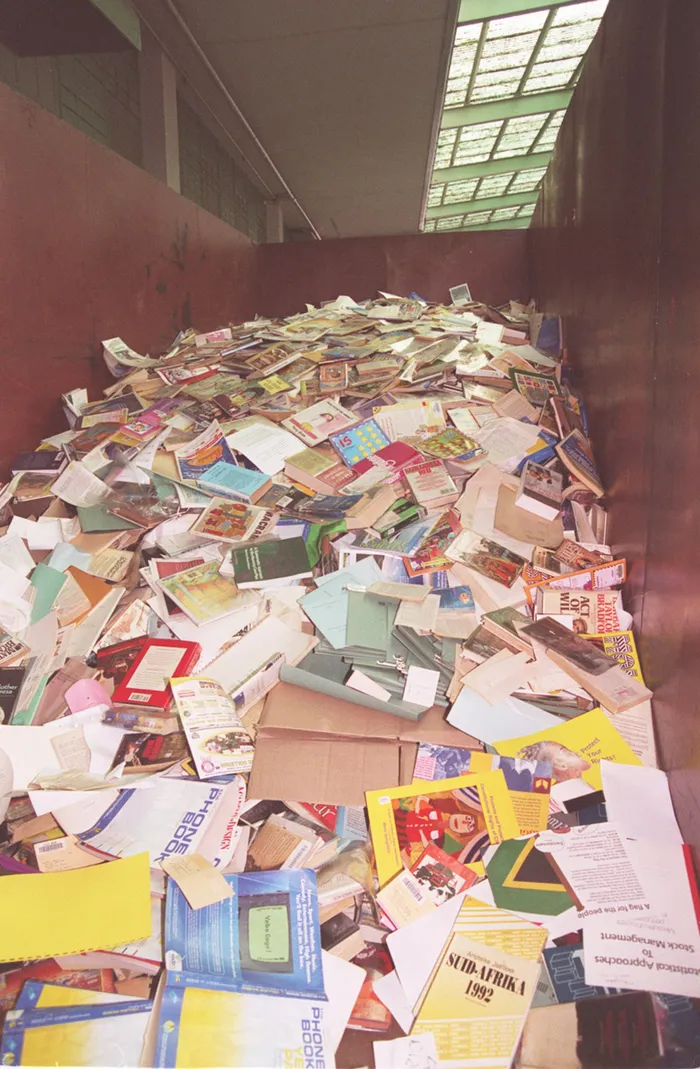
As South African libraries face neglect and decay, a silent crisis threatens democracy and knowledge. The writer asks if society is prepared to confront the urgent need for revitalisation and reform of libraries.
Image: File
In recent research travelogues of the Eastern Cape, a colleague and Urban Planner, Professor Alan Mabin, shared through the aegis of Facebook his sincere concerns about the poor overall state of the Municipal Library at Gqeberha where 40 years ago he spent considerable time in researching for his doctoral thesis. The infrastructure, governance and service delivery collapse of the library ecosystem at Gqeberha, though, is not unique. It reverberates throughout South Africa.
In every democratic society, libraries stand as quiet but powerful symbols of civilisation, memory, and intellectual freedom. They are among the few public institutions that ask nothing of citizens except curiosity and a willingness to learn. In South Africa, however, libraries increasingly stand neglected, underfunded, and, in some instances, deliberately diminished. This is not merely an administrative failure. It is a national crisis that speaks to how we value knowledge, history, and the future of our democracy. Libraries, whether in municipalities or universities, are national public assets and must be treated as such.
Across the country, public libraries are deteriorating. Buildings are falling into disrepair, budgets are shrinking, collections are not being updated, and trained librarians are disappearing from the system. Many communities, especially poorer and rural communities, depend on libraries not only for books, but for internet access, educational support, research facilities, literacy development, and safe public spaces for young people. When a library closes or declines, the damage extends far beyond the walls of the building itself. Entire communities lose access to opportunity.
The tragedy is that this decline often unfolds in silence. Roads with potholes provoke public outrage. Electricity failures dominate headlines. Yet the slow destruction of libraries rarely generates the same urgency, despite the fact that the long-term consequences may be equally devastating. A society that ceases to invest in libraries gradually weakens its intellectual foundations. Without spaces dedicated to reading, research, and critical inquiry, democratic culture itself becomes impoverished.
What is particularly concerning is the apparent indifference among some public officials charged with protecting these institutions. Whether through direct decisions, chronic underfunding, bureaucratic neglect, or simple omission, government authorities are contributing to the downgrading of public libraries throughout the country. This neglect reflects more than poor governance; it reflects a troubling failure to appreciate the role libraries play in sustaining an informed and educated society.
Libraries are not luxuries reserved for the elite. They are essential democratic institutions. In a country marked by deep inequality, libraries remain among the few places where access to knowledge is free. For many children, a library may provide the only quiet place to study. For job seekers, it may be the only place with internet access to search for employment opportunities. For students, researchers, and ordinary citizens, libraries provide resources that would otherwise remain inaccessible.
Yet libraries are often treated as expendable. Budgets for books, archival preservation, digital infrastructure, and staffing are reduced with alarming ease. Buildings are allowed to decay. Valuable collections are neglected. In some cases, libraries have even become targets of vandalism or political indifference. These are not isolated incidents; they are symptoms of a broader societal failure to recognise that intellectual infrastructure is as important as physical infrastructure.
At the same time, there is a more complicated and uncomfortable issue that cannot be ignored. Some people view libraries and archives as institutions that historically reflected colonial and apartheid perspectives while excluding or marginalising African histories, indigenous knowledge systems, and the lived experiences of the majority of South Africans. There is truth in this criticism. Many archives, collections, and educational institutions were shaped within systems of racial exclusion and unequal power. Certain voices were preserved while others were silenced.
But acknowledging this history should not lead to the destruction or abandonment of libraries. The answer to exclusion cannot be erasure. The task before South Africa is not to weaken libraries, but to transform and democratise them. We need libraries that reflect the full diversity of South African experiences, languages, cultures, and histories. We need institutions that preserve the painful truths of apartheid while also recovering the stories that apartheid sought to suppress.
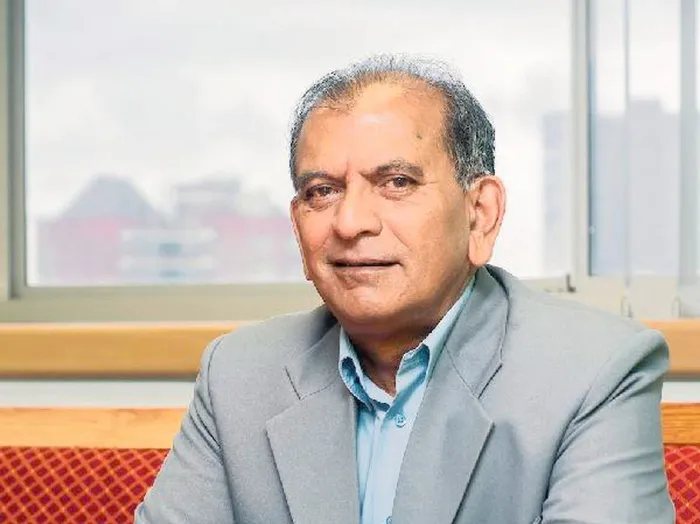
Professor Dhiru Soni
Image: Supplied
A mature democracy does not fear history, even when that history is uncomfortable. It confronts it honestly. Libraries and archives are essential to that process because they preserve evidence, memory, and public accountability. Once records disappear, societies become vulnerable to distortion, denialism, and historical amnesia. Nations that lose their archives lose part of their identity.
The destruction or neglect of libraries therefore raises a deeply troubling question: are we unintentionally creating a society that is less informed, less reflective, and less capable of critical thought? In an era increasingly dominated by misinformation, superficial digital engagement, and political polarisation, libraries remain among the few institutions dedicated to careful reading, scholarship, and the preservation of verified knowledge.
This is not an argument against technology or digital progress. Libraries themselves must evolve to meet modern needs. Digital archives, online learning platforms, multimedia resources, Makerspaces for STEAM education and entrepreneurship, and community programmes should all form part of a modern library system. But digital advancement should strengthen libraries, not replace them. A society that assumes information on the internet can substitute for properly maintained libraries misunderstands the role libraries play.
Libraries do not merely store information; they curate, preserve, contextualise, and protect it. South Africa urgently requires a renewed national commitment to libraries and archives. This commitment must go beyond symbolic rhetoric. It requires sustained funding, professional staffing, modernisation initiatives, and public campaigns that encourage reading and intellectual engagement. It also requires political leadership that understands that investment in libraries is an investment in democracy itself.
Schools, universities, municipalities, civil society organisations, and communities all have a role to play. But government leadership is indispensable. Public officials must recognise that neglecting libraries is not a neutral act. It has generational consequences. A child deprived of access to books and learning spaces today becomes an adult denied opportunities tomorrow.
The future of South Africa cannot be built on weakened institutions of knowledge. We cannot claim to value education while allowing libraries to collapse. We cannot speak of social justice while denying communities access to the tools of learning and empowerment. And we cannot meaningfully confront our history if we permit the destruction of the very institutions that preserve historical memory.
Libraries are not simply buildings filled with books. They are guardians of collective memory, centres of learning, and foundations of democratic life. To neglect them is to neglect the intellectual and moral future of the nation itself. South Africa must decide whether it wishes to become a society that preserves knowledge or one that allows memory, scholarship, and public learning to slowly disappear. The answer to that question will shape not only the future of our libraries, but the future of our democracy.
*Professor Dhiru Soni is Director for Research at REGENT Business School andwrites in his personal capacity