
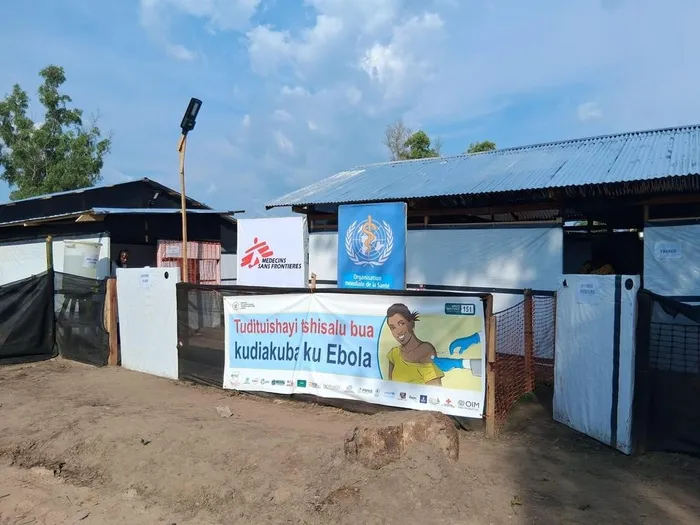
Doctors Without Borders (MSF) has raised concerns over a new Ebola outbreak in the Democratic Republic of Congo, reporting over 80 deaths and 246 suspected cases. As MSF scales up its response, President Cyril Ramaphosa urges African nations to enhance cross-border surveillance to combat the spread.
Image: MSF
Global humanitarian medical care organisation Doctors Without Borders (MSF) has expressed alarm about the latest outbreak of Ebola virus and announced that it had begun to rapidly scale up its medical response in the Ituri province of the Democratic Republic of Congo (DRC).
In a statement today, MSF said on the weekend of 9-10 May it received alerts of an increased number of deaths from a suspected viral haemorrhagic fever in an area northwest of Bunia, the capital of Ituri. In collaboration with the Congolese ministry of health, a team went to assess the situation and found that 55 people had died since the beginning of April. MSF also received subsequent reports of cases identified in two other separate areas of the province.
“The number of cases and deaths we are seeing in such a short timeframe, combined with the spread across several health zones and now across the border, is extremely concerning,” said Trish Newport, MSF Emergency Programme Manager.
According to the Congolese authorities, a total of 246 suspected cases and more than 80 deaths have been reported in the DRC across three health zones. This outbreak is caused by the Bundibugyo Ebola virus, a strain distinct from the more common Zaire one for which there is no approved vaccine and no approved treatment.
On Friday, health authorities in neighbouring Uganda also confirmed one case of Ebola Bundibugyo in a 59-year-old Congolese male who died on Thursday. MSF informed the Ugandan Ministry of Health that it was ready to support its public health authorities’ response.
Describing the challenging conditions on the ground in the DRC, Newport said: “In Ituri, many people already struggle to access healthcare and live with ongoing insecurity, making rapid action critical to prevent the outbreak from escalating further.”
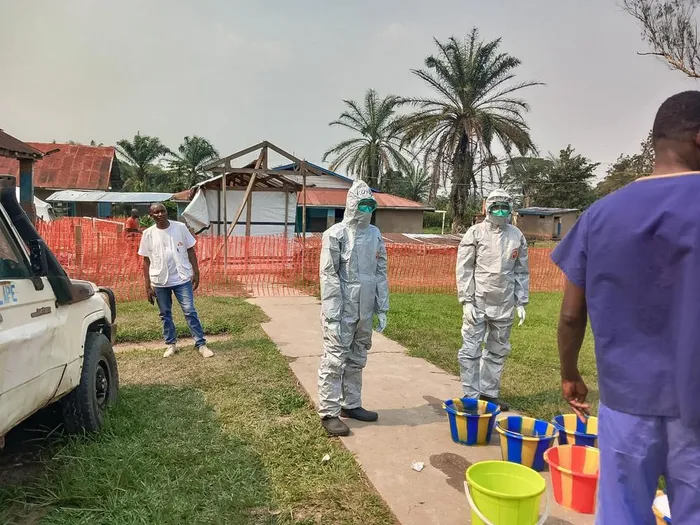
Doctors Without Borders (MSF) has raised concerns over a new Ebola outbreak in the Democratic Republic of Congo, reporting over 80 deaths and 246 suspected cases. The organisation is already in the affected areas and has begun scaling up its response.
Image: MSF
Meanwhile, President Cyril Ramaphosa has warned that the Ebola outbreaks in the Democratic Republic of the Congo (DRC) and Uganda pose a significant regional threat, urging African countries to strengthen cross-border surveillance and coordinate urgently to prevent further spread of the disease.
"Ebola does not respect borders," he said.
In his capacity as African Union Champion on Pandemic Prevention, Preparedness and Response, Ramaphosa said the virus outbreaks in the DRC and in Uganda’s capital city of Kampala, required urgent and coordinated action across the continent.
“In a region marked by high population mobility, insecurity, and humanitarian movement, the risk of regional spread is significant and demands urgent, coordinated action,” said the South African president.
MSF, which already has teams in the affected areas of Ituri to assess medical needs, is coordinating closely with the Congolese health authorities. In MSF’s Salama clinic in Bunia, the organisation said it had three suspected cases that have been isolated.
The organisation is currently mobilising more teams comprising medical, logistical, and support staff experienced in responding to such viral haemorrhagic fever outbreaks, along with essential supplies, to launch a large-scale response as quickly as possible.
This is the third recorded outbreak involving the strain with an estimated case fatality rate of 25-40%, following outbreaks in Uganda in 2007-2008 and in DRC in 2012, the organisation said.
Ebola is an infectious viral haemorrhagic fever, transmitted to humans through direct contact with blood, secretions, organs, or other bodily fluids of infected animals. Human-to-human transmission occurs through close contact with the bodily fluids of infected individuals.
MSF said it has responded to multiple Ebola outbreaks in the DRC over the past years. This outbreak marks the country’s seventeenth since the first case was discovered in 1976.
Ramaphosa said the deadly outbreaks were also a reminder that Africa needed to continue investing in resilient public health systems and regional health security structures despite declining international welfare and development assistance known as Official Development Assistance (ODE).
“These outbreaks are also a reminder that, despite the decline in Official Development Assistance, Africa must continue investing — including through increased domestic financing — in resilient public health systems and regional health security architecture,” Ramaphosa said.
The Ebola outbreaks come at a time when global and continental authorities are dealing with the fallout of an outbreak of hantavirus aboard a cruise ship last month.
World Health Organization (WHO) member states are also gathering for their annual meeting in Geneva starting on Monday amid the two virus concerns.
While they were not officially on the agenda, the Ebola and hantavirus outbreaks were reportedly expected to “feature prominently” in discussions, especially as the WHO has been battling to convince members states such as the United States to stay and continue contributing to building a united global front for better global health.
The 79th World Health Assembly (WHA79) takes place in Geneva, Switzerland from 18 to 23 May, bringing together delegations from WHO member states to "set global health policy and advance the Organization's strategic priorities".
The assemby will build upon the momentum of the previous assembly, which adopted the Global Action Plan on Climate Change and Health, "an updated road map for an enhanced global response to the adverse health effects of air pollution, and the elevation of climate change as the first strategic objective of WHO's Fourteenth General Programme of Work (GPW14, 2025–2028)".
WHO said in a statement that several member states and civil society organisations were also hosting side events on climate, air pollution, energy and health on the margins of WHA79.