
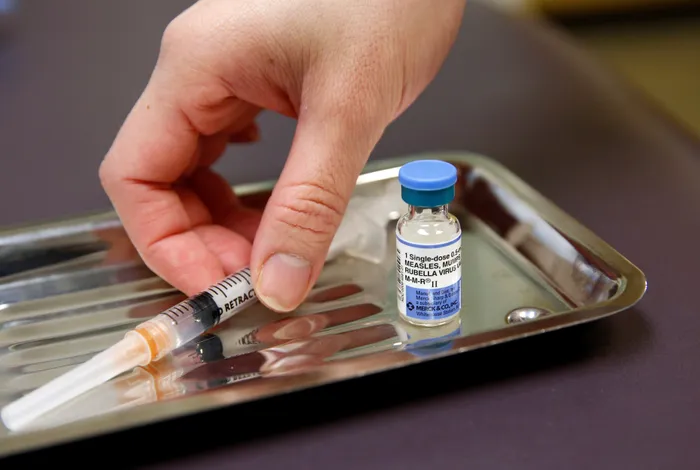
Concern grows over children not getting vaccines in South Africa.
Image: ANA Archives
South Africa’s vaccination efforts need renewed urgency, with health experts warning that gaps in coverage continue to leave children vulnerable to preventable diseases.
Marking African Vaccination Week from 24 to 30 April, Sanofi South Africa has reiterated the importance of improving vaccine access, awareness and uptake across the country as part of broader public health efforts.
“Vaccination remains one of the smartest and most effective investments in public health,” says Jean-Baptiste Bregeon, Country Lead and Head of Vaccines, Sanofi South Africa. “Improving coverage is not only about having vaccines available. It’s about building trust, strengthening health systems, supporting healthcare workers and making sure people have the information they need to act. African Vaccination Week is a reminder that protecting lives takes sustained effort and strong partnerships, and Sanofi remains committed to playing its part in South Africa.”
UNICEF estimates that immunisation prevents about 4.4 million deaths annually, while the World Health Organization reported that 14.3 million children globally missed routine vaccines in 2024. Global coverage for the third dose of the DTP vaccine stood at 85%, while measles first-dose coverage was recorded at 84%.
In South Africa, the National Department of Health reported in 2024 that “80% of children in the country had received all their vaccinations by the age of one,” meaning “one in five children had missed one or more doses and was not fully protected.”
UNICEF South Africa has also raised concern, highlighting that “there were 58,000 more zero dose children in 2024 and 278,000 without vaccination, leaving them vulnerable to vaccine preventable diseases.”
Measles vaccination coverage also declined from 80% in 2023 to 76% in 2024.
Recurring outbreaks of measles, cholera, polio and diphtheria have added pressure to the health system, with disruptions to routine immunisation increasing the risk of further outbreaks.
This year’s African Vaccination Week campaign aims to intensify vaccination and surveillance activities in districts with high numbers of under-vaccinated and unvaccinated children. Vaccines included in South Africa’s national immunisation schedule remain available free of charge at public healthcare facilities.
Sanofi said its focus over the next two to three years will be to support efforts to improve vaccine coverage across the country.
“Improving vaccine uptake requires a practical, local approach that recognises the realities of South Africa’s healthcare system, including uneven coverage, pressure on frontline services, and the challenge of reaching communities across both urban and rural settings,” says Bregeon.
He added: “That’s why partnership matters. Improving immunisation outcomes takes coordinated action across government, healthcare providers, communities and industry. Strong supply is important, but so is public confidence, clear communication and consistent follow-through at clinic level.”
Sanofi has called on South Africans to ensure their vaccinations are up to date and encouraged healthcare providers to continue promoting immunisation as a key part of preventive healthcare. upgrade for incr