
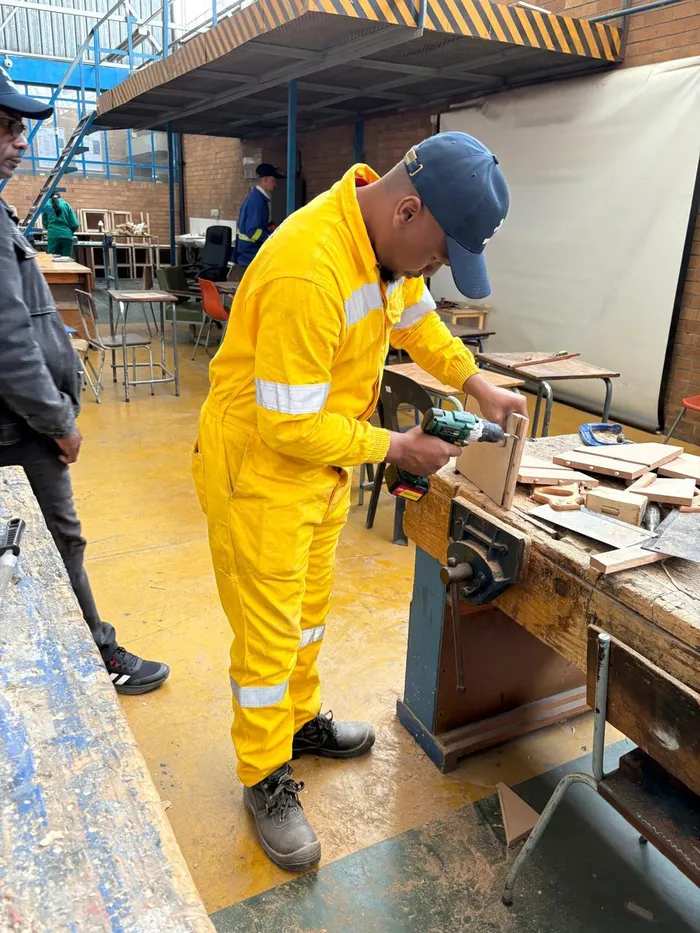
Trade skills remain central to economic growth, and programmes supporting artisan development are key to addressing the skills gap.
Image: Supplied
Artificial intelligence may dominate global conversations about the future of work, but South Africa faces a critical shortage of skilled trades, which threatens the maintenance and development of its infrastructure, industry experts warn.
Denver Berman-Jacob, executive director of protective workwear company Sweet-Orr, says the country must balance innovation with investment in the skilled workforce that powers infrastructure, energy and industrial sectors.
“Technology and trades must coexist, with digital progress matched by investment in the skilled workforce that powers South Africa’s infrastructure, energy, and industrial sectors."
He adds that trades remain central to employment and economic stability at a time when South Africa’s official unemployment rate rose to 33.2% in the second quarter of 2025, while the expanded rate, which includes discouraged jobseekers, stands at nearly 43%.
“We are excited about the future of AI,” says Berman-Jacob. “But while attention is fixed on what’s next, unemployment keeps rising, and we’re not setting up the second generation for opportunity. So the question is, how can we help now, in the meantime? We can do that by building and protecting the sectors that keep South Africa working.”
Berman-Jacob, who is completing his PhD at Erasmus University in the Netherlands, where he has been conducting groundbreaking research on entrepreneurship in transitional and emerging markets, says the country must strike a balance between innovation and inclusion.
“AI is transforming many sectors, but no machine can replace the plumber who fixes your pipes, the electrician who restores your power, or the miners who extract our natural resources. Skilled trades are still the backbone of this economy,” he said.
Berman-Jacob warned that South Africa could not afford to leapfrog trades in its pursuit of a services-driven economy. “These industries employ large numbers of people with relatively low skill levels, bringing them into the formal economy. And then the ripple effect begins: one generation works in a factory, and the next moves into law, accountancy, or engineering. That’s how you create inclusion and opportunity.”
Beyond access to work, he said inequality remains one of the biggest challenges almost three decades after democracy. “We are still one of the most unequal societies in the world. Giving people access to the right tools and skills is an indirect way of addressing poverty and inequality. It’s about bringing more South Africans into the formal economy.”
The company has supported skills development for generations, with its on-site training school producing thousands of graduates who have gone on to work in factories, industries and other sectors.
“That history shows our commitment to skills development and to building the economy through people. If we can extend that commitment beyond our own factory gates into communities, then we’re fulfilling a national responsibility,” Berman-Jacob said.
The donation, he said, is part of a larger effort to strengthen trades and industries in South Africa, while another is aimed at protecting lives.
The company recently donated R2.5 million in protective workwear and safety boots to artisan training schools and skills programmes, helping reduce one of the barriers to entering trade work: the high cost of personal protective equipment.
“Skills alone are not enough,” Berman-Jacob said. “You cannot access many workplaces without the correct workwear. For start-ups and small businesses, that cost can be prohibitive. By donating PPE, we are removing one of the obstacles preventing people from entering these industries.”
Recent employment data highlights both risk and opportunity in trades. The trade sector shed 52 000 formal jobs in the last quarter, while construction added 55 000 jobs year-on-year, showing that although some industries are under pressure, trades continue to generate opportunities.
“Workwear could also be a matter of life and death in sectors such as chemicals, electricity, and heat. If you’re working in an environment with chemical spills, arc flash, or flames, the right garment protects you. It’s not just about compliance, it’s about survival.”
The handover of protective workwear to various startups and community groups began in October and continued over the last month.