
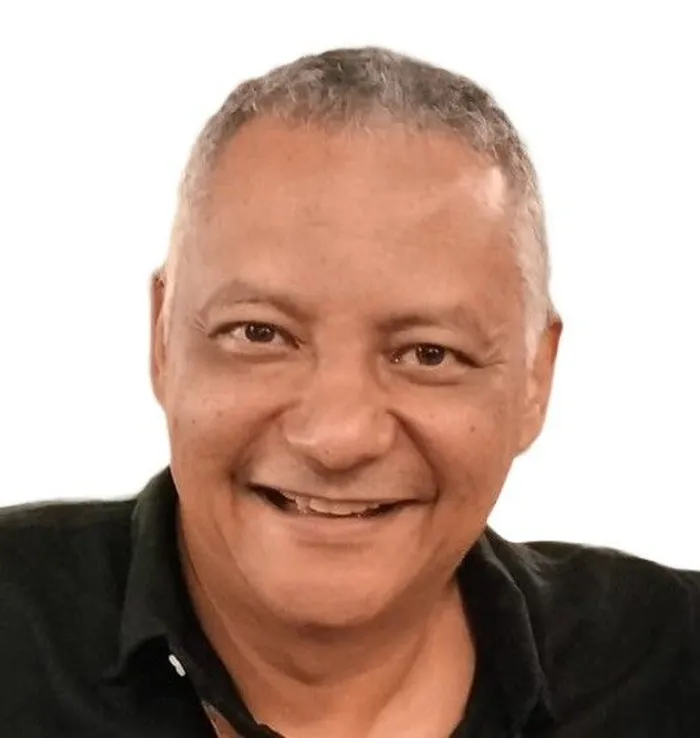
Ashley Green-Thompson runs an organisation that supports social justice action.
Image: Supplied
It’s been an odd week. The promise of the festive break makes it hard to concentrate on anything, and I’ve found myself yearning to get to the family homestead in KwaZulu-Natal to decompress. And then I listen to the radio during my morning walk, and I hear a renowned political commentator talking about the ANC’s National General Council.
He’s asked about the tri-partite alliance, but goes off script, expressing anger at the inability of black people to lift themselves out of poverty. He cites Cosatu’s 1.5 million members and compares them to the 50 000 (it's actually 230 000) Afriforum members who have funded one of the loudest, most influential civic advocacy groups.
I checked them out online, and in addition to the tertiary educational institutions they build, as mentioned by our learned commentator, they offer a range of services to their members who apparently pay fees averaging R100 per month.
The commentator rails against the inability of the union federation and any other civic formation of black people to come close to the Afrikaner organisation in mobilising resources for development.
It raised an interesting dilemma for me. I say this without being an apologist for anyone, and I certainly have no brief for Afriforum, a negative and destructive voice in South Africa’s efforts to build a just, inclusive and fair society.
But these comments I encountered on the radio do not offer the full story. We cannot ignore the structural causes of the malaise our communities are in. It’s disingenuous to discount the legacy of 400 years of colonialism and apartheid that entrenched poverty and its associated ills.
Our democratic election in 1994 that signalled our return to the international community and global economy meant that white people who already had the wealth, could grow it at an exponential rate. In addition to these legacies, skewed ownership patterns persist. Capital continues to assault poor people through the erosion of living wages, slavish devotion to shareholder profits, disregard for environmental impact and the de facto privatisation of services.
Having said that, we are too often our own worst enemies, and I am still shaken by how quickly greed and self-interest found purchase in a democratic South Africa.
This brought corruption by those in power and an erosion of our own agency. We waited for the economic empowerment deals, saw nothing wrong in diverting public funds into private pockets, and became blasé about the increasing incompetence in public service. And the daily grind to survive in an economy that had no jobs makes it easier to give in and wait for the charity and handouts.
Black people have a proud history of agency and self-sufficiency. Hell, we beat the apartheid monster. This week I was at an event celebrating 40 years of Kagiso Trust, set up in 1985 to support resistance and those who would be impacted by the sanctions imposed on the regime.
I remember reading about Epainette Mbeki, wife to Govan, who kept the home fires burning during his incarceration, and was active in the Zenzele women’s movement that empowered women at grassroots level through self-reliance, education, and collective action.
In my work we give a little money to so many localised organisations that do things like soup kitchens, feeding schemes, homework clubs for kids, and community initiatives that care for marginalised groups like migrants and older people.
We all know about stokvels and savings schemes that will make sure families eat, and in some instances eat better over December. They also pay for school supplies in January.
These local activities testify to the resilience of black people that was one of the building blocks of the black consciousness movement. We don’t need to spend energy worrying about the anti-social advocacy of Afriforum. Let them court Trump and his ilk and get their just deserts. We need to turn the solidarity and philanthropy and agency that exists in all our communities into a mighty movement that shifts those at the top end, the ones who would rather we waited for the handouts from capital or a captured government.
And when we turn that into what Zenzele called collective action, who knows what we can achieve.