
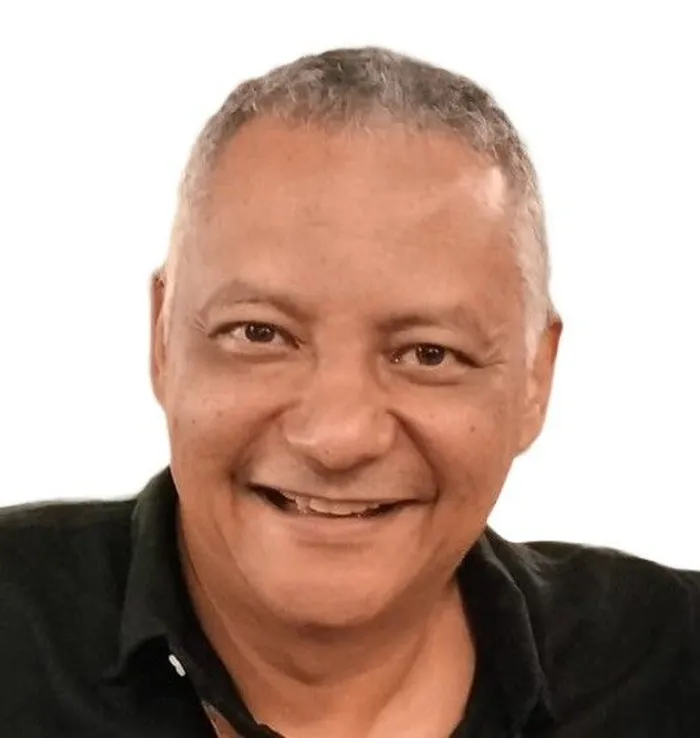
Ashley Green-Thompson runs an organisation that supports social justice action. Ashley Green-Thompson runs an organisation that supports social justice action.
Image: Supplied
I’ve been distracted by the testimony of Robert McBride at Parliament’s ad hoc committee investigating the allegations made by KZN Provincial Commissioner, Nhlanhla Mkhwanazi, about police corruption, political interference, and criminal infiltration - allegations that implicated and led to the suspension of the Minister of Police, Senzo Mchunu.
For those who don’t know, McBride spent time on death row for the bombing of Magoos Bar in Durban in 1986, a venue known to be frequented by off-duty police from the previous regime. He was one of white South Africa’s favourite demons – they offered no forgiveness for this ‘terrorist’ whose action claimed the lives of three white women. He went into policing in the new dispensation, and at one point was the executive director of the Independent Police Investigative Directorate, a structure tasked with keeping an eye on the police. Not without controversy, he has always struck me as genuinely committed to transformation and the constitutional order. His testimony this past week confirmed that opinion.
Notwithstanding the general scepticism that so many have about so many public hearings and commissions, they are an important part of our democratic life. Any space where there is public scrutiny of the behaviour of public officials is welcome in my view. The role of Parliament as the representatives of our political wishes is important too, and the committees that invite witnesses to testify before them allow an opportunity for accountability in full view of us ordinary citizens.
My distraction in front of the television (instead of my desk) led me to two observations.
The first is most eloquently captured in a short article by Cape Town activist Henriette Abrahams who critiques the committee’s failure to effectively discharge its responsibility to exercise oversight on how public institutions function. This passage from her piece captures it: "When parliamentary oversight fails, …[the consequences impact] communities living with corrupt and politicised policing, intelligence structures shielded from scrutiny, whistleblowers silenced or killed, and a justice system that appears captured rather than protective. These are not abstract governance issues. They shape daily life for millions of South Africans."
I share her concern about how the committee performed. In particular, I was struck by how MPs from those parties who lay claim to the legacy of the liberation movement were preoccupied with diminishing the credibility of McBride rather than getting to the essence of the allegations he was making about corrupt politicians and police. Instead, I found those parties with what we might call a traditionally white constituency, and not so connected to a comradely past, spent less time trying to score points against the witness.
And this is my second observation. Our politics is so partisan that we cannot take advantage of the platforms and spaces that allow for a deeper accountability. Commissions and parliamentary committees that invite the public to observe should be valued places where our politicians, advocates and judges pursue the truth rather than score political points and play performative politics for the gallery. I found myself losing focus and wondering about the credibility of one particular MP who really enjoyed using big English words quite out of context (the grammar Nazi in me couldn’t cope). Instead of wondering about whose agendas were being advanced and which crooked leader was being protected, I should have been dissecting the web of intrigue McBride was describing.
Instead of MPs getting upset by McBride’s brusqueness, they should have been challenging him to go deeper into his allegations to find the truth. They even asked the committee chair to protect them against the rudeness of the witness! Really? We are in trouble if this is the calibre of politician we are accepting, people who are more concerned about appearance than accountability, with theatrics rather than truth.
Postscript: I briefly watched DA MP Glynnis Breytenbach in the same committee berate the hapless Ekurhuleni police deputy head Julius Mkhwanazi (not to be confused with Nhlanhla). The disrespect and disdain she displayed towards a black adult, regardless of his competence or credibility, reminded me that apartheid is still very much alive as a determinant of relations in our country.