
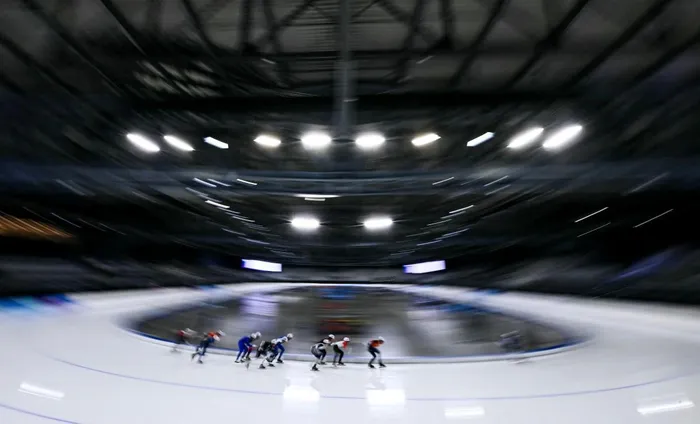
Athletes compete in the Mass Start men juniors race during the ISU Junior Speed Skating World Cup 2025, a test event for Milano Cortina Olympic Games, at Rho Fiera district in Milan on November 30, 2025.
Image: Stefano Rellandini / AFP
The Winter Olympics will depend on artificial snow to ensure consistent conditions despite environmental concerns, even though Alpine events will take place in the Dolomites range at 1,800 metres above sea level.
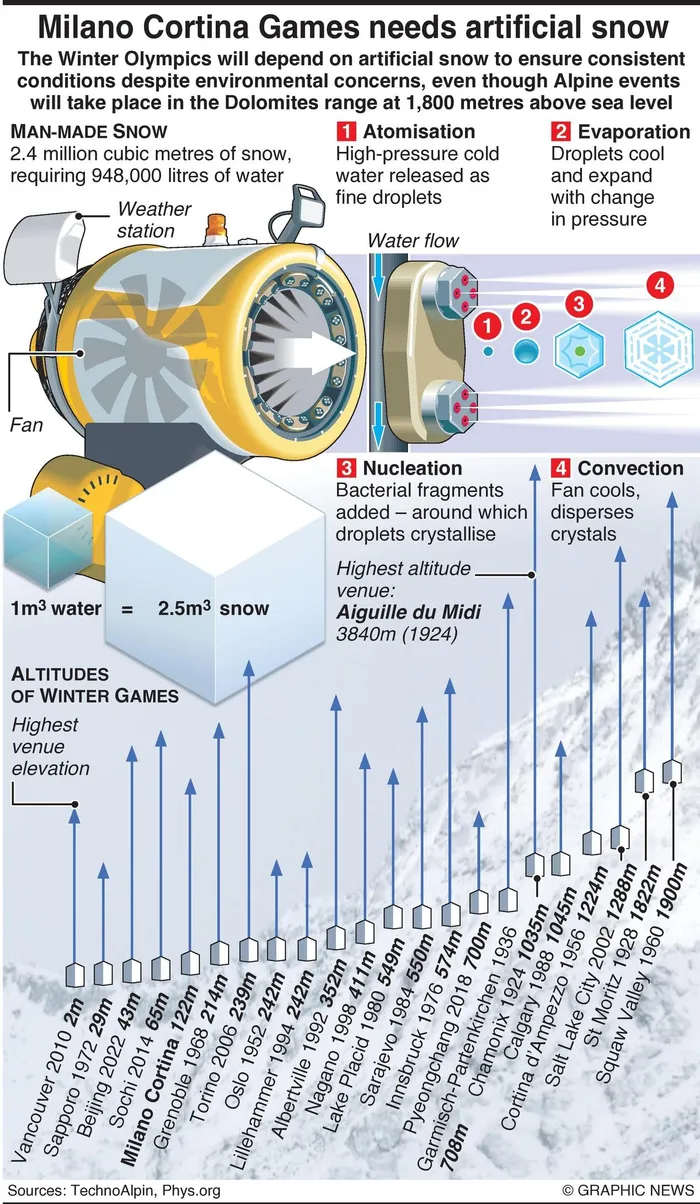
Graphic shows how snow cannon works, and compares altitude of Winter Olympic venues.
Image: Graphic News
The 2026 organising committee has said it plans to make 2.4 million cubic metres of artificial snow, which will require 948,000 cubic metres of water, to the dismay of environmental activists.
A cubic metre of water can produce around 2.5 cubic metres of snow according to the International Commission for the Protection of the Alps.
While the altitude of the Alpine events should ensure sufficient snow cover, snow cannons will allow competition organisers to guarantee consistent track conditions, as required by international federations governing skiing and biathlon.
Milano Cortina will certainly use much less artificial snow than the last Winter Olympics in Beijing, where around 2.7 million cubic metres of water were required.
Graphic News