
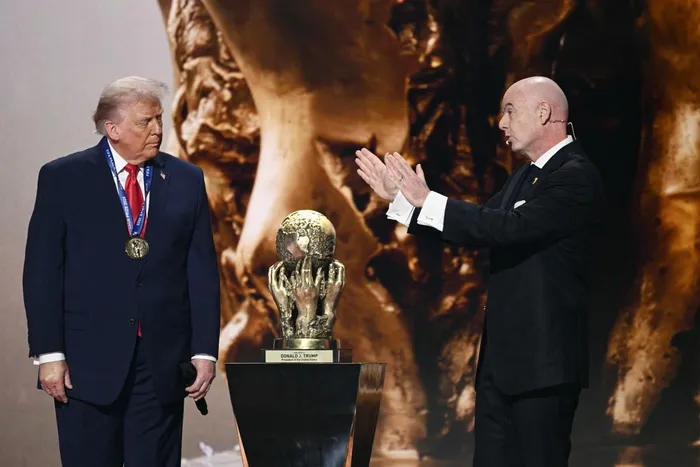
From Mussolini’s "Black Shirts" to the 1966 African boycott and the modern-day sportswashing debates of Qatar and 2026, the FIFA World Cup has always been about more than just goals. Photo: AFP
Image: AFP
When Fifa awarded the US, Mexico, and Canada the 2026 World Cup hosting rights, they probably did so with the presumed assurance that there would be little political controversy swirling around the event.
But drug cartels, immigration control, unilateral wars, politically motivated assassination attempts and political brown-nosing have marred the build-up to the showpiece. Despite Fifa insisting that it is apolitical, the truth is that politics and the World Cup have always been intertwined.
Here, we look at a handful of other political moments that had a major impact on the World Cup.
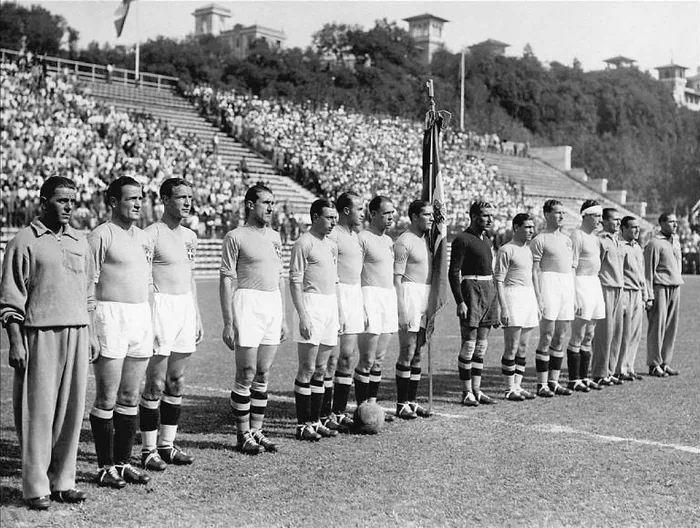
The Italy team in 1934. Photo: AFP
Image: AFP
The rise of fascism and Nazism in Europe ensured that all sporting events were highly charged before the outbreak of World War II. The World Cups in Italy in ‘34 and France four years later — along with the Berlin Olympic Games in 1936 — became vehicles to promote ideologies and regimes.
The modern terminology would certainly define this as sportswashing. Mussolini used the 1934 event to further his fascist world view, with historians claiming he used his influence to sway the outcome for Italy. In 1938, the dictator ordered the Azzurri to wear their infamous "black shirts" against host nation France to promote his regime.
While the English remember 1966 as their only triumph, for the rest of Africa, the tournament was a non-event. Promised just one spot among 16 teams, the entire continent boycotted the event in protest against what were perceived as racial undertones regarding the "inferiority" of African football.
In a rare moment of political decisiveness, Fifa banned South Africa due to the Apartheid regime. The South African government had proposed sending an all-white team in 1966 and an all-black team to Mexico four years later, a proposal Fifa rightly rejected.
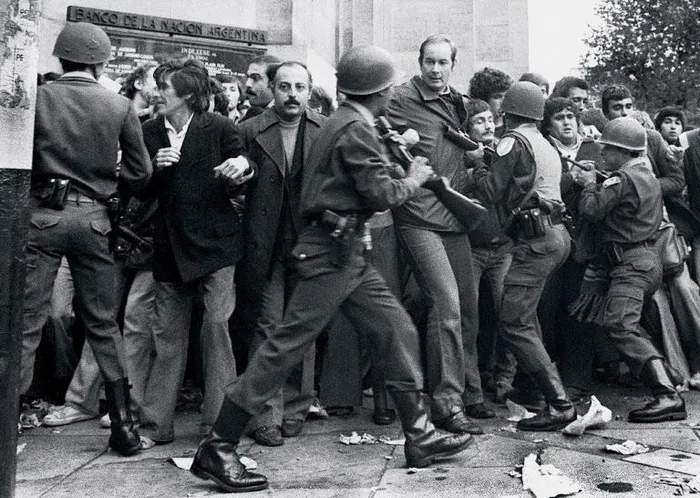
Argentine soccer fans are beaten in front of the Banco de la Nacion Argentina in Buenos Aires by police, who considered that they were not orderly enough as they lined up to buy tickets for the soccer World Cup on May 1978. | AFP
Image: AFP
Two years before kick-off, a military junta overthrew the Argentine government. The authoritarian regime purged opposition, committing crimes against humanity and genocide. Despite this, the World Cup went ahead, serving as a tool to legitimise the junta's rule. Charges of match-fixing remain, particularly regarding Argentina’s suspicious 6-0 win over Peru.
Russia's hosting was dogged by corruption allegations, a state-sponsored doping programme, and the invasion of Crimea. Tensions escalated further following the failed assassination of double agent Sergei Skripal in London. While the IOC took action against Russian athletes, Fifa allowed the tournament to proceed.
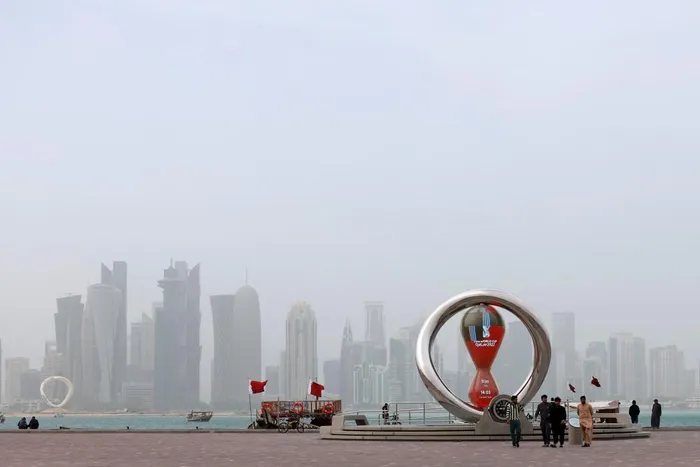
People walk past the 2022 FIFA World Cup countdown clock installed along the waterfront on a foggy day at the Corniche area facing the high-rise buildings in the West Bay district, in Doha. | AFP
Image: AFP
Allegations of sportswashing were levelled at Qatar, primarily regarding the human rights violations of the migrant labour force. An estimated 6 500 workers died during the infrastructure build. Following this tournament, Fifa finally took a hard stance on Russia, banning them from the 2026 qualifiers following the invasion of Ukraine.
Spain, Portugal, and Morocco 2030: Morocco faces scrutiny over military operations and alleged human rights violations in the Western Sahara.
Saudi Arabia 2034: Similar to Qatar, grave concerns exist regarding migrant worker safety and the kingdom's broader human rights record. | Morgan Bolton