
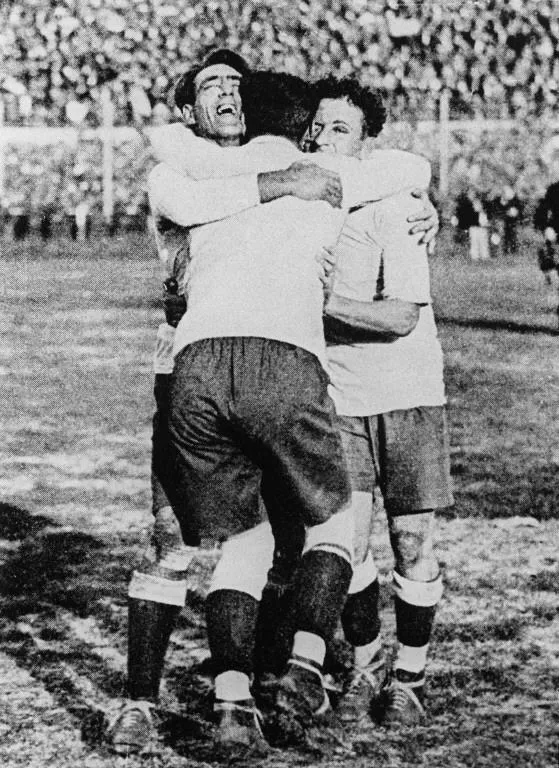
The 1930 World Cup was a world away from today's luxury, featuring amateur stars, snow in July, and a final played with two different balls. Uruguay took the crown, but the real winner was the beautiful game itself. | AFP
Image: AFP
The inaugural Fifa World Cup, hosted by Uruguay, was a far cry from the polished, multi-billion-dollar spectacle we see today. It was an audacious, slightly chaotic experiment driven by the vision of FIFA President Jules Rimet.
For European nations it meant sending a team for a gruelling three-week transatlantic boat voyage, while keeping amateur players away from their day jobs for months. Yet, looking back at those 17 days in Montevideo, it is clear that this flawed, beautiful tournament laid the unshakeable foundation for the world's most beloved sporting event.
Uruguay were undoubtedly the best team in the world at the time, and were selected to host the first tournament due to being 1928 Olympic champions.
North America: Mexico, United States
South America: Argentina, Bolivia, Brazil, Chile, Paraguay, Peru, Uruguay (hosts)
Europe: Belgium, France, Romania, Yugoslavia
The major European footballing powers of the time — Italy, Spain, Germany, and England (who had withdrawn from Fifa altogether) — stayed home. The two Asian countries affiliated to Fifa at the time, Japan and modern-day Thailand, elected not to enter the competition. The only African nation, Egypt, missed their ship to Uruguay after being delayed by a storm in the Mediterranean.
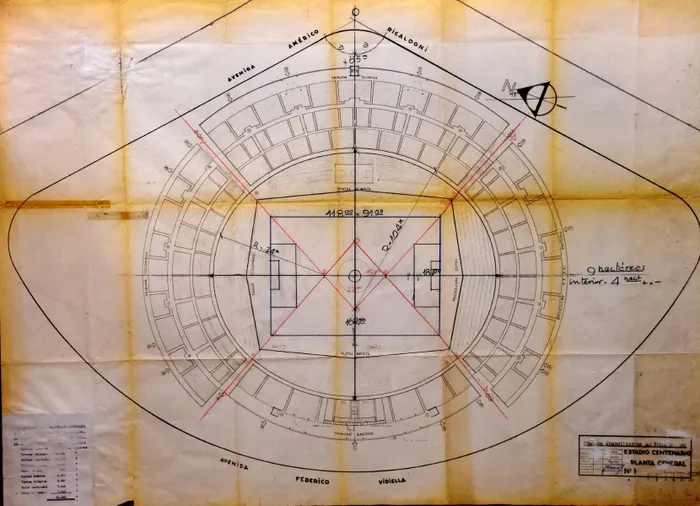
The original blueprints for the Estadio Centenario. | AFP
Image: AFP
The Estadio Centenario was built especially for the event and to celebrate Uruguay’s independence. Rimet termed it the "temple of football". All the matches where hosted in the capital of Montevideo, with Estadio Gran Parque Central and Estadio Pocitos also used as venues.
The 13 teams were drawn into four groups, with Group 1 containing four teams and the others containing three. Each group played a round-robin format, with the four group winners progressing to the knockout semi-final stage.
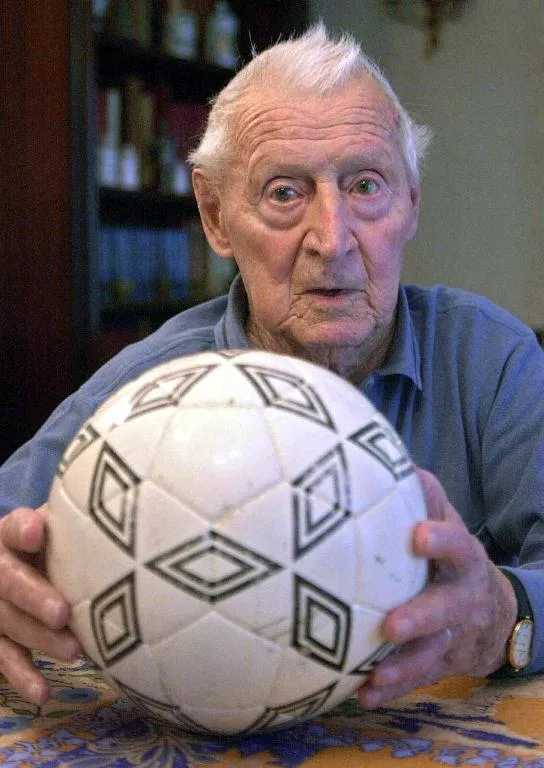
Lucien Laurent of France. | AFP
Image: AFP
The first two matches of the Fifa World Cup were played simultaneously. France beat Mexico 4–1 at the Estadio Pocitos, while the US defeated Belgium 3–0 at the same time at the Estadio Gran Parque Central. France's Lucien Laurent scored the first World Cup goal.
"We were playing Mexico and it was snowing, since it was winter in the southern hemisphere. One of my teammates centred the ball and I followed its path carefully, taking it on the volley with my right foot," said Laurent.
"Everyone was pleased but we didn't all roll around on the ground – nobody realised that history was being made. A quick handshake and we got on with the game. And no bonus either; we were all amateurs in those days, right to the end."
Semi-final one: US 1, Argentina 6
Semi-final two: Uruguay 6, Yugoslavia 1
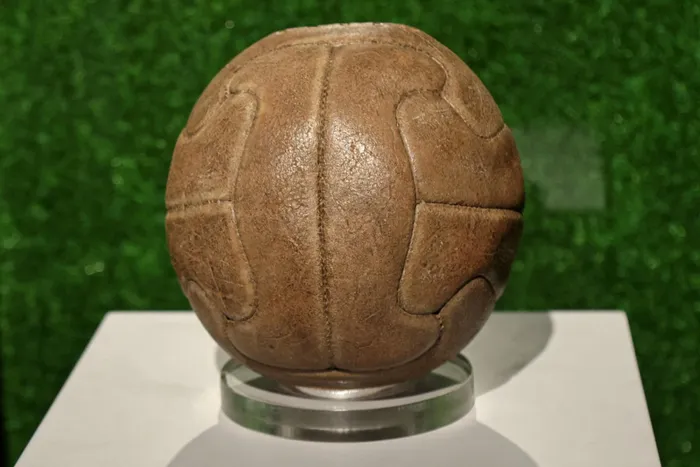
The ball used for the first Fifa World Cup matches. | AFP
Image: AFP
A rematch of the 1928 Olympic final, the tension was palpable with thousands of Argentine fans crossing the River Plate, greeted at the docks by armed guards searching for weapons. It was eventually played in front of 93 000 fans at the Estadio Centenario, with hosts Uruguay running out 4–2 victors over Argentina.
The golden boot, meanwhile, was won by Guillermo Stábile of Argentina who scored eight goals during the tournament.
The final was played with two different balls as the teams could not agree beforehand which ball to use. Fifa’s compromise was purely diplomatic: Argentina provided the ball for the first half, and Uruguay for the second.