
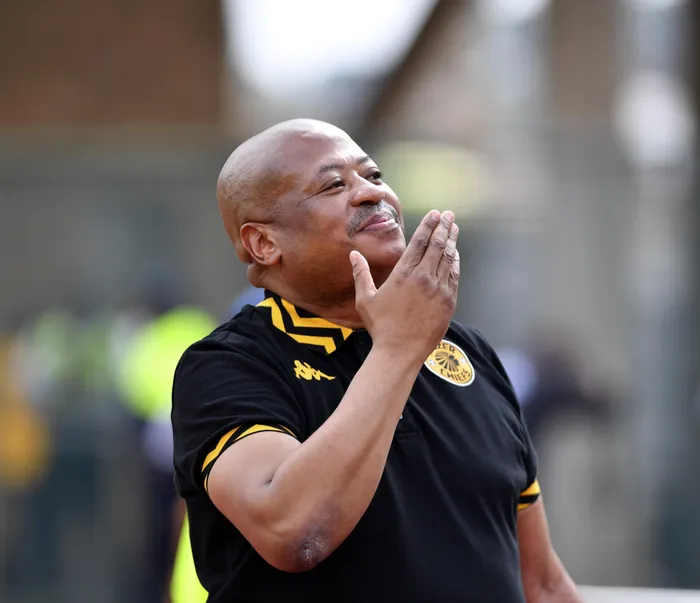
Kaizer Chiefs Football Manager Bobby Motaung rejects narratives that frame the future of Amakhosi leadership as a power struggle.
Image: AFP
FEW FIGURES in South African football have been as visible, as debated and as misunderstood as Bobby Motaung.
For over three decades, his presence at Kaizer Chiefs has symbolised authority to some, nepotism to others, and continuity to those who understand the inner workings of the club. ‘Bobsteak’ has been praised, vilified, caricatured and scrutinised - often without context.
Yet when the son of Amakhosi boss Kaizer Motaung speaks of his role, the language he uses is not that of power, but of service.
“We are custodians,” he says. “We are serving.”
That he does not say ‘I’ but rather ‘we’ goes smack against the general notion he is a spoilt son of the boss who sees the club as a "family business" in which his word holds sway.
That distinction of his role matters, especially at a club as emotionally owned as Kaizer Chiefs. With millions of supporters invested in every decision, leadership is never neutral. It is either validated by trophies or rejected by results.
Bobby learnt this early.
As team manager, he became the public face of recruitment - a role that exposed him to relentless criticism. Chiefs sign a player? Bobby signed him. Chiefs struggle? Bobby failed.
What supporters often missed was the complexity behind those decisions.
“It was never my decision alone,” he explains. “There were coaches, scouts, negotiations. But as the man in front, you take the heat.”
Leadership, he learnt, is not about being liked. It is about accountability.
“You take responsibility when things go wrong,” he says. “That’s character.”
There were moments when the weight of criticism overflowed. Abuse became personal. Family lines were crossed. Reactions followed - moments that would later be ‘weaponised’ against him.
“I had to grow,” Bobby admits. “I had to understand that this is part of the job I signed up for.”
Growth came with distance, a step back from day-to-day operations into a more advisory role. Today, Bobby operates at a high level, overseeing strategy, governance and institutional continuity, while younger executives like Kaizer Junior handle technical and operational detail.
Contrary to public perception, this was not a demotion.
“It’s collaboration,” Bobby explains. “Different strengths, different roles.”
Junior works closer to coaches, scouts and analytics - areas requiring modern, data-driven thinking. Bobby provides institutional memory, negotiation experience and leadership perspective.
“It’s generational,” he says. “Football evolves.”
This evolution is critical as Chiefs attempt to reclaim dominance in an era defined by Mamelodi Sundowns’ sustained excellence. For a club once synonymous with winning, the drought has been painful.
“Pressure comes from expectation,” Bobby says. “But when you put pressure, you lose vision.”
The challenge, he believes, is not reacting emotionally, but planning intelligently - resisting the urge for quick fixes in favour of sustainable rebuilding.
Succession remains a sensitive topic. With Kaizer Motaung still alive, active and sharp, Bobby rejects narratives that frame the future as a power struggle.
“The chairman is here,” he says. “He’s guiding us.”
Succession, in his view, is not about replacing a man, but honouring a philosophy built on patience, community and long-term thinking. That philosophy is what Bobby has spent his life defending, often at personal cost.
From his earliest days selling tickets at the gate, to shielding talent like Doctor Khumalo from rival advances, to pioneering professional team management structures, Bobby’s contribution has been hands-on and deeply personal.
“I was never forced to be here,” he says. “This is passion.”
The Motaung siblings now share that burden, sometimes disagreeing fiercely, but always aligned on purpose.
“We disagree to go forward,” Bobby says.
That forward movement is the ultimate test. Amakhosi supporters are restless. Success has become a memory rather than a norm. But Bobby remains steadfast.
“When you serve with respect,” he says, “You manage pressure.”
In a football culture obsessed with instant results, Bobby Motaung represents something rarer - institutional patience. Whether that patience will be rewarded remains to be seen. But one thing is certain: few have carried the weight of Kaizer Chiefs for as long, or as visibly, as he has.
And fewer still were born for it quite so literally.