
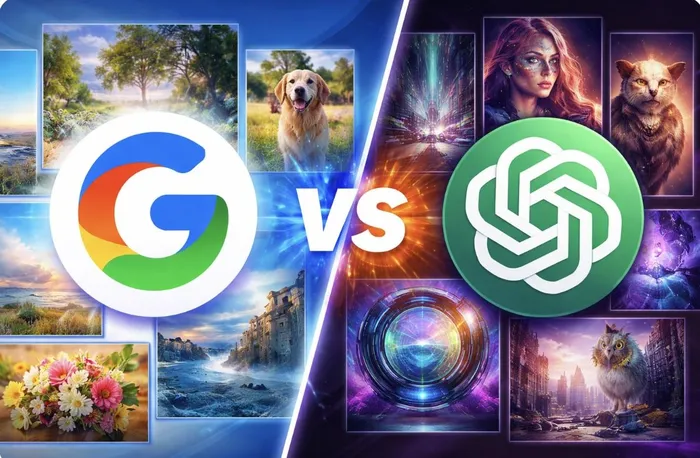
Understanding the capabilities and limitations of the free versions of ChatGPT and Google Gemini can be quite nuanced, as you can maximise their potential without investing in paid subscriptions. Picture: ChatGPT
Image: ChatGPT
The use of Artificial Intelligence (AI) in the vast majority of modern office work has become universally accepted, but just how much can you do with free versions of apps like ChatGPT and Google Gemini?
It’s a question worth asking, as there are a number of limitations with the free versions, but there’s still plenty you can achieve without forking over more of your hard-earned money.
The free version of Gemini, for example, sets limits on how useful the app can be during busy periods or ‘high-traffic’ times.
It means users are limited to around 30 prompts a day.
It’s also generally accepted that you have a small limit on how many image requests the app will let you process in a 24-hour period.
When it comes to search, the free version has a 32,000-token context window, while the paid model has over 1 million.
For ChatGPT, there’s a strict limit on user requests. It’s actually as little as 10 message prompts per hour.
However, if you reach the limit, you still have access to similar features but with a more bare-bones model, which ChatGPT will use. The responses are generally faster, but less capable when this happens.
Much like Gemini, ChatGPT also limits free users during high-traffic periods.
I’ve personally found the image requests with ChatGPT to be more limited and less capable than Gemini in most cases.
In fact, the best workaround I’ve found as someone who refuses to pay for the paid versions is to combine my requests over both apps. That way, you already have access to more functionality off the bat.
But there’s no getting around it: AI can do amazing things for your workflow, but the free versions are just giving you a taste of what you can really achieve.