
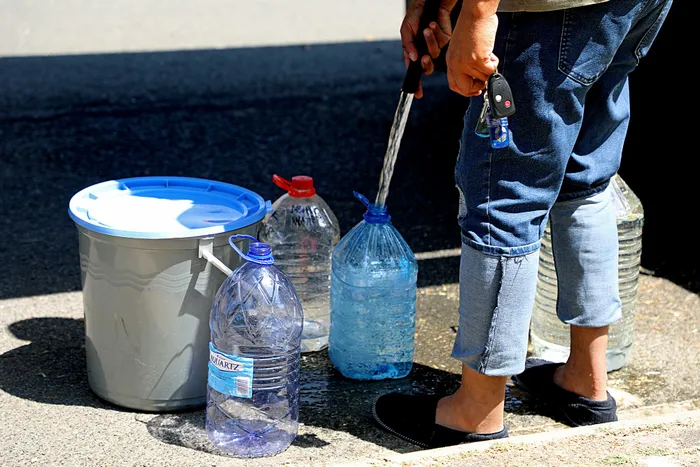
South Africa is on the brink of a water catastrophe, driven by aging infrastructure, rampant leakage, and poor municipal management, all exacerbated by climate-induced drought.
Image: File/ Timothy Bernard/ Independent Newspapers
The Activists and Citizens Forum is calling for President Cyril Ramaphosa to resign as South Africa grapples with a dire water crisis affecting numerous communities across Gauteng and beyond. Areas such as Midrand, Melville, and Hammanskraal are currently facing crippling water cuts and shortages, with residents bearing the brunt of this pressing issue.
Dennis Bloem, a spokesperson for the forum, asserts that the rampant water supply challenges plaguing the nation are symptomatic of deeper concerns, such as corruption and sabotage within government ranks.
He stated during an interview with SABC that officials, councillors, and ministers are complicit in a system that has allowed the water crisis to spiral out of control.
"If an independent investigation can be conducted, the country will be shocked by the deep corruption in the water supply," Bloem warned. He emphasised that the ongoing crisis has far-reaching consequences, impacting all South Africans, and called on governmental leaders to confront their failures directly.
"The government and President Cyril Ramaphosa must, just for once, admit that they have failed the country," he added. "President Cyril Ramaphosa must do the honourable thing and resign. He has failed the country."
The forum's activities culminate in a planned protest scheduled for this Sunday morning, where demonstrators are expected to gather outside Johannesburg Water headquarters, showcasing their frustration and demanding immediate action from the government.
Meanwhile, Rand Water said it's concerned about persistently high water consumption in Gauteng, particularly in the cities of Johannesburg and Tshwane.
The utility has warned that usage above the allocated volumes continues to place a significant strain on the overall supply network.
Rand Water spokesperson Makenosi Maroo says current demand is putting the system under pressure.
“Currently, demand is forcing the system to operate under pressure, stretching infrastructure capacity to accommodate abnormally high usage levels. Furthermore, this high consumption has negatively affected the water supply in parts of our bulk water supply area.
''Rand Water, after engaging with the high water-consuming municipalities, will be reducing water supply to these areas to restore water supply in affected areas so that we can stabilise the entire bulk water supply system,” adds Maroo.
South Africa is on the brink of a water catastrophe, driven by aging infrastructure, rampant leakage, and poor municipal management, all exacerbated by climate-induced drought.
Across the nation, particularly in Mpumalanga, Limpopo, and Gauteng, residents grapple with increasingly frequent water interruptions, raising the spectre of a humanitarian crisis.
Recent reports indicate that over 40% of piped water is lost due to leaks, highlighting the urgent need for drastic infrastructure improvements. In major metropolitan areas like Johannesburg and eThekwini, the situation is critical, prompting community leaders and citizens alike to call for immediate governmental intervention.
Late in 2025, The Star, spoke to water expert Professor Mike Muller, a civil engineer and professor at the University of the Witwatersrand Graduate School of Governance, who explained the scale of Johannesburg’s water woes, from collapsing infrastructure and the heavy economic toll of supply failures to the urgent interventions needed to pull the city back from the brink of a full-blown water catastrophe.
He explained that more water is lost to breaks and leaks.
“Johannesburg water users are paying for the water that is currently being lost. Less losses could mean reduced tariffs. But now, they will have to pay the cost of catching up with the backlog, which may mean increased tariffs,” he shared, also highlighting that Johannesburg will likely have to borrow money to pay for accelerated network replacement, with National Treasury already looking at ways to arrange this,'' Muller, added.
THE STAR