
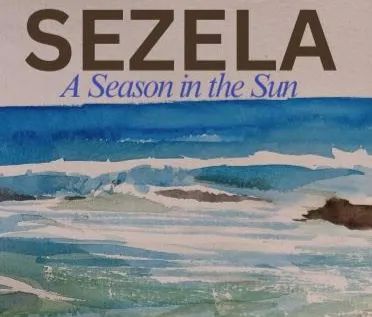
The book is currently available
Image: Supplied
Professor Kiren Thathia launched his book 'Sezela: A Season in the Sun" on Sunday. Below is the foreword of the book by Rajend Mesthrie, Emeritus Professor (UCT).
Aaah, I remember Sezela… A sugar cane village by the sea complete with sugar mill, a plantation owners’ culture and the Indian Barracks. Populated by descendants of field hands going all the way back to the 19th century, many still living in the long rows of houses, which could tell many tales of toil, hardship and endurance.
And a community spirit embracing the change, adapting the plantation world to a coastal lifestyle. In my sociolinguistic fieldwork in the 1980s there were tales recounted of fishing, swimming with and against the tide, and tragic stories of death by drowning. Everyone knew everyone else and assumed that any visitor would too. And so I proved a bit of an ignoramus, who didn’t even know where the Loco Barracks was or had never heard of Rueben’s Bay (try googling today and you still won’t find it).
I deduced that the old locomotive, pulling the trailers of sugar cane in days of yore must have parked in the evenings by one of the barracks. No sign of a locomotive there as far as I could see. And Rueben’s Bay emerged after many tellings and retellings in the community, as did the rock where Rueben’s body had ended after one of the great drowning tragedies of earlier times.
No plantation culture is complete without the Indian waiters serving at the clubhouse for European gentlemen. The plantation hands themselves drink at home, a strong cane-spirit that’s only natural in this setting. You might say it was their fortification in hardship, their mainstay. The European gentlemen perhaps still have more refined tastes. And the nearby mill impressively grinds on.
What can I say about Sezela but that the people I spoke to considered Umkomaas – once my home town, slightly closer to Durban up north – a tad too refined, suitable only as a retirement place for the elders, when their time on the plantations and place in the barracks were over. For our part in Umkomaas, we thought of Sezela as a place where people were rougher and this certainly showed up in their football teams. You couldn’t compete against a team with barracks lads in attack and defence.
Umkomaas mothers didn’t want their sons to marry kotri girls from the Sezela barracks down south. And speaking of mothers, who couldn’t be impressed by the dignity of the women, despite the hard life they had endured as plantation hands and home-makers (in the tiniest of quarters within the long houses).
There are of course gaps and biases in my memory of my fieldwork days there. One of the gaps is that I didn’t interview people under seventeen, so I didn’t get to experience their lives from the inside. Young people were too shy or wary of an outsider to truly open up for a sustained, interactive interview. So it is a most welcome event to have a novel emerge from this setting, by a former Umkomaas lad, forced to endure a season in the Sezela sun when his schoolmaster father took charge of the Indian school.
This is a novel about growing up in Sezela, told by an outsider who joins the community in his mid-teens. Kiren Thathiah writes of teenage life, love and rivalries, of their hopes and fears, and their individuality amidst the common bonds of place and community. He recaptures the innocence and insouciance of youth, despite the challenges of the times.
Mandela is still in jail, white hegemony is sealed but challenges are emerging. Soweto has erupted, and a few university students from Durban are bringing back home talk of standing up for one’s rights and tales of resistance. This novel goes beyond the genre of romance in a political setting. Thathiah brings to bear his expertise in Art (as an artist and Professor of Fine Art) and the multicultural possibilities it offered in the 1970s. The sub-tale of René, the young Afrikaans artist, the gifted outsider who remains an outsider is a compelling one. The insider/outsider dichotomy becomes a nuanced theme involving a range of characters as the novel progresses.
There are several things about this novel that make it stand apart from the novellas that have merged in post-plantation KwaZulu-Natal. One is the easy way the past is remembered and lived out in the present. Thathiah makes a convincing case for the centrality of small town, barrack-based (or partly-based) culture in experiencing the past of indenture, that has indeed become fashionable to remember and honour in the big cities today.
I particularly like the motif and metaphor of journeys in the novel. There are the daily journeys of the high-school children on the rickety buses from Sezela to Umzinto to face irksome teachers and figures of authority. There are train journeys to Durban to connect with the broader and more modern theatre of relatives, work and education. These journeys take on a wider significance, straddling the different space-time worlds of the big city and the small barracks-town, the plantation ethos of indenture and the modern present in which the sugar mill still grinds.
And if you’re looking for a good re-living of young love amidst an epigraphic background of song verses from the sixties and seventies, this novel is for you.
* Sezela: A Season in the Sun is available through the publishers at madeindurban.co.za and will be in bookshops soon.