
An Instagram video revisits why Johannesburg is seen as the centre of creative opportunity and whether that belief limits growth elsewhere.
Image: Picture: Freepik
Cape Town creatives are increasingly questioning the idea that success only comes from moving to Johannesburg.
In a recent Instagram post, DJ Hluma Shoko, who goes by the handle @not_a_she, explained why they refuse to relocate under the assumption that the City of Gold is the only place where a creative career can thrive.
Shoko uses the pronouns of they/them.
In the caption, they are direct about their position.
“I refuse to move to Joburg with the mentality that that is where my creative career will thrive,” they wrote.
Instead, they explained that they are choosing to stay and invest in Cape Town’s cultural landscape, even if it means choosing a longer and less convenient route.
“I’m willing to put up the good fight and invest in the growth of the cultural landscape in CPT,” they add.
What they make clear early on is that this is not a random thought or a sudden decision. They mentioned that they already had this conversation privately with other artists and creatives, but felt it was time to think about the practice more openly.
Their issue is not with Johannesburg as a city, but with the automatic belief that moving there is the only logical step for creative growth.
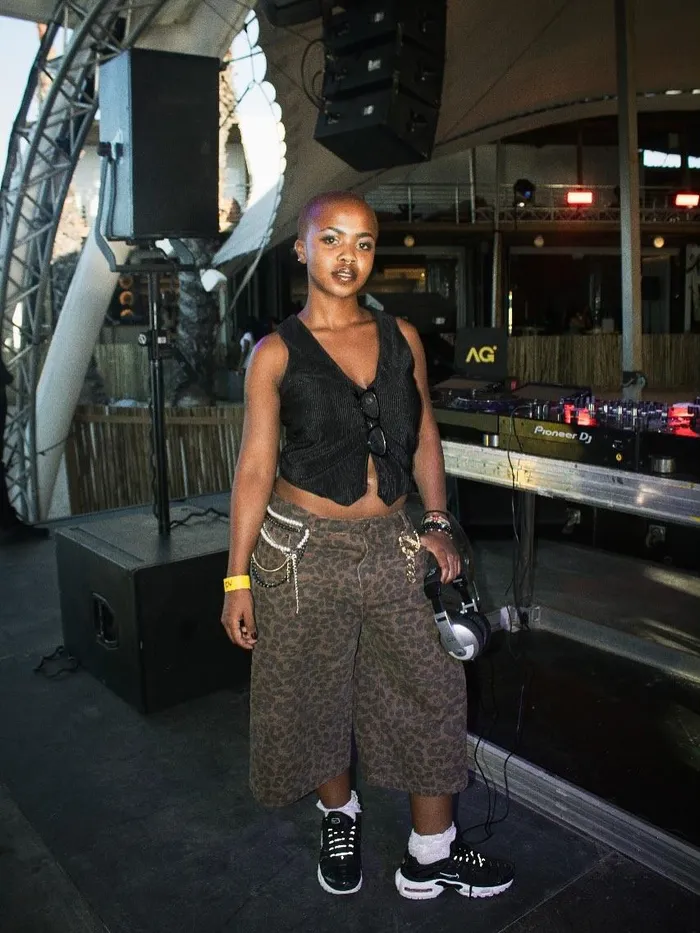
Cape Town DJ Hluma Shoko, who goes by @not_a_she.
Image: Picture: Instagram
Shoko also contextualises why Johannesburg holds the cultural weight it does. “JHB is the cultural hub it is because people invested in it and put in the time to see it grow,” they added.
That point is important because it removes the myth that creative hubs simply exist naturally. According to Shoko, Johannesburg was built intentionally, over time, through consistent investment and visibility.
They referenced shows like "Selimathunzi", "Top Billing" and "Shiz Niz", noting how they actively documented the city’s cultural development.
“The era of 'Selimathunzi', 'Top Billing', 'Shiz Niz' actively documented the growth of what we see now in JHB,” they explain, adding that the same approach is possible elsewhere.
“It’s also possible in CPT and other provinces, too.”
They argue that documentation, storytelling and infrastructure play a major role in shaping where creativity is seen, archived and valued.
In the video itself, they go deeper into what this ongoing migration means, particularly for black creatives. “I feel that it’s not really conducive. What this does is it forces a lot of us black creatives, especially, to move to Joburg, leaving Cape Town to be dominated by white creatives,” they said.
Shoko raised an issue that extends beyond the present moment.
“It leaves us with Cape Town, which has no blueprint of creativity for the next generation of creatives,” they explained.
For Shoko, this is not just about individual careers, but about what gets left behind when creatives relocate. “There are no infrastructures that work because everything is in Joburg,” they added, pointing to how resources, platforms and opportunities tend to follow concentration.
“Do you see where the problem is?”
They are asking viewers to consider how normalised movement towards one city affects the development of others. If creatives consistently leave, there is little chance for sustainable creative ecosystems to form elsewhere.
What makes Shoko's stance notable is that they are not positioning themselves as anti-Joburg or suggesting that no one should move. They are questioning the default logic that success must look one way and exist in one place.
Their post opens up a broader conversation about how creative cities are made in South Africa. They are not defined by popularity alone, but by who stays, who invests and who is willing to build infrastructure for those coming next.
Cape Town, like many other provinces, has talent. What it lacks, as she points out, is sustained investment that allows creatives, especially black creatives, to imagine long-term futures without needing to relocate.