
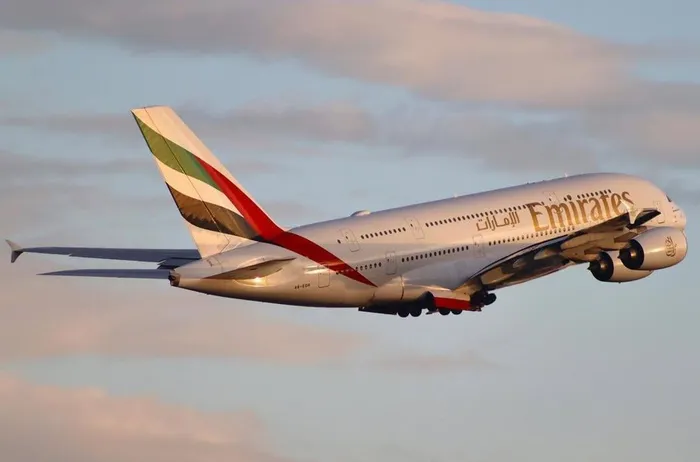
Every takeoff and landing at Dubai International (DXB) and Zayed International (AUH) is tracked in real-time by military-grade radar.
Image: Instagram.
If you’ve been following the news or have a flight booked through the Middle East, you know the last few days have been a whirlwind.
While recent events have strained international travel, the UAE has remained steadfast in its commitment to the safety of its citizens, travellers and skies.
From grounding flights during peak risks to providing accommodation and food for stranded passengers, here is how the UAE is currently protecting its citizens and visitors.
You may have seen reports of fighter jets escorting civilian planes. While it looks like a scene out of a movie, the reality is a highly organised military operation known as Combat Air Patrols (CAP).
High-tech F-16 Desert Falcons and Mirage 2000s are patrolling designated safe corridors around the clock.
These jets aren't just there for show; they are actively intercepting drones and cruise missiles long before they ever get near a civilian flight path or a city centre.
The UAE’s defence network has already successfully intercepted 186 ballistic missiles and over 810 drones, ensuring that not a single civilian flight has been compromised.
After a brief total closure of airspace earlier this week, the General Civil Aviation Authority (GCAA) has slowly reopened the skies using a specialised contingency corridor system.
To ensure every single plane is under the watchful eye of the air defence network, the UAE has limited movements to approximately 48 flights per hour.
Every takeoff and landing at Dubai International Airport and Zayed International Airport in Abu Dhabi is tracked in real-time by military-grade radar, ensuring a fighter-shielded journey from runway to cruising altitude.
While many countries may have struggled with the logistics of stranded travellers, the UAE has stepped up to absorb the human cost of the crisis.
The government has prioritised safety over profits, grounding thousands of flights when risks were high and only resuming limited services once safety was 100% verified.
In an unprecedented move of hospitality, the government instructed hotels in Dubai and Abu Dhabi to provide free rooms and meals to all stranded passengers, and the state has pledged to cover any medical costs for tourists that may arise due to the current regional tensions.
Operations are currently in a limited resumption phase. Emirates and Etihad are operating a small number of flights out of Dubai International, Dubai World Central and Abu Dhabi.
If you are flying in or out, you are flying through some of the most protected airspace in the world; you are still travelling at your own risk.