
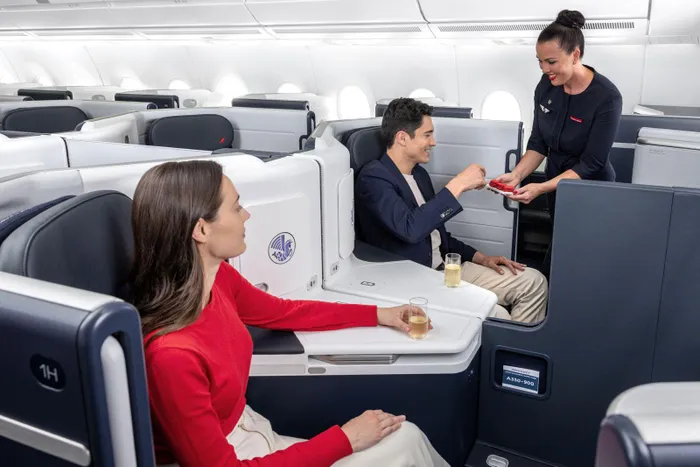
Regardless of whether you're flying business class or economy, learn what you need to know about your in-flight meals and how altitude impacts your taste buds.
Image: Supplied
Recently, I was among a group of media and celebrity influencers who experienced Air France's in-flight dining firsthand.
Our host, Wilson Tauro, country manager for Southern Africa at Air France-KLM, accompanied us to Food Directions SA, located a few kilometres from OR Tambo International. The aviation and hospitality catering company is responsible for providing meals not only for Air France but for several other airlines as well.
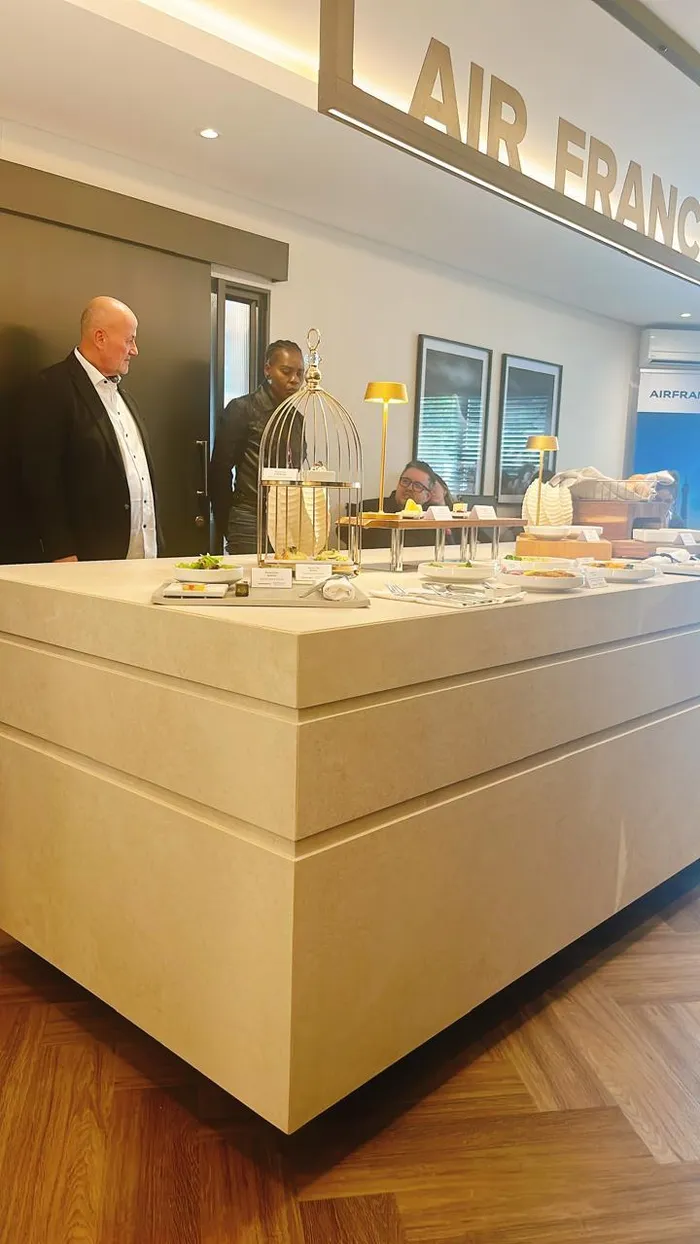
Food Directions SA's team presented the media with an overview of their operations, food preparation processes, and the menu selections available for each class.
Image: Debashine Thangevelo
The primary goal of the visit was two-fold: to personally sample the business meal options available on the aforementioned airline and to gain deeper insight into the rigorous regulations governing food preparation, packaging, and delivery.
We also learned how flying affects your senses. Below are some interesting facts every traveller should know.
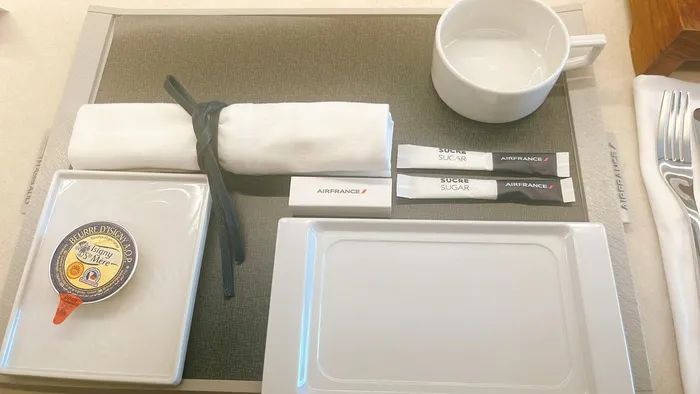
The business class serving tray includes rich French butter for your roll, as seen here.
Image: Debashine Thangevelo
Menu design is a vital step in the process, beginning months before a flight departs. To achieve this, the airline collaborates with its catering teams and partners to create menus that not only endure extreme conditions but also authentically represent the French dining experience.
The menu is meticulously crafted to offer a perfect blend of nourishment and indulgence. Consequently, the meal preparation process emphasises fresh salads, slow-cooked proteins, vibrant grains, and seasonal vegetables as core components.
The meals offered are based on traditional French cuisine but incorporate global influences, such as South African flavours, specifically for flights operating to and from the country.
Onboard meals are quality-checked and pre-portioned, supplied through a temperature-controlled chain. This process adheres to both strict aviation hygiene protocols and Air France’s specific culinary guidelines.
The in-flight dining experience is carefully designed, with packaging engineered to allow cabin crew to deliver quick, smooth service while maintaining the food's texture, temperature and presentation.
Trays in economy and premium economy (now just known as premium) classes are modular and user-friendly. For business class, the trays elevate the experience with individual plated main courses and airline-debossed silver cutlery, creating a distinct sense of occasion.
To counteract the reduced perception of taste at altitude, salt and spice levels are precisely calibrated. Textures are selected for their ability to withstand reheating, and aromatics are amplified, ensuring the served dish remains vibrant and flavourful.
Sustainability is a key factor behind the scenes, playing an equally important role. They ensure quality while reducing environmental impact through controlled sourcing, minimal waste processes, and precision-led kitchen workflows.
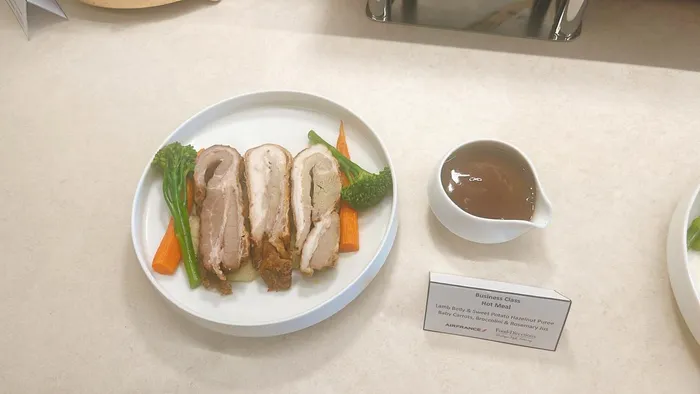
For business class travellers, the menu features a choice of four main dishes, including the lamb belly served with sweet potato hazelnut purée, broccolini, baby carrots, and a rosemary jus.
Image: Debashine Thangevelo
The quality of the meals served, clearly evident in their presentation across different travel classes, is a direct reflection of the price paid.
“Onboard dining is a key part of the travel experience for our customers,” Tauro shared. “A great deal of thought goes into every detail, from how a dish is prepared on the ground to how it is served in the air. It’s about delivering consistency, quality, and a sense of care at every touchpoint of the journey.”
On long-haul flights, travellers are treated to a multi-course dinner service, a light refreshment and breakfast before landing.
Appetiser
Main course (choice of):
Dessert
Snacks
Breakfast
For breakfast, which includes fruit and yoghurt, you have the choice between:
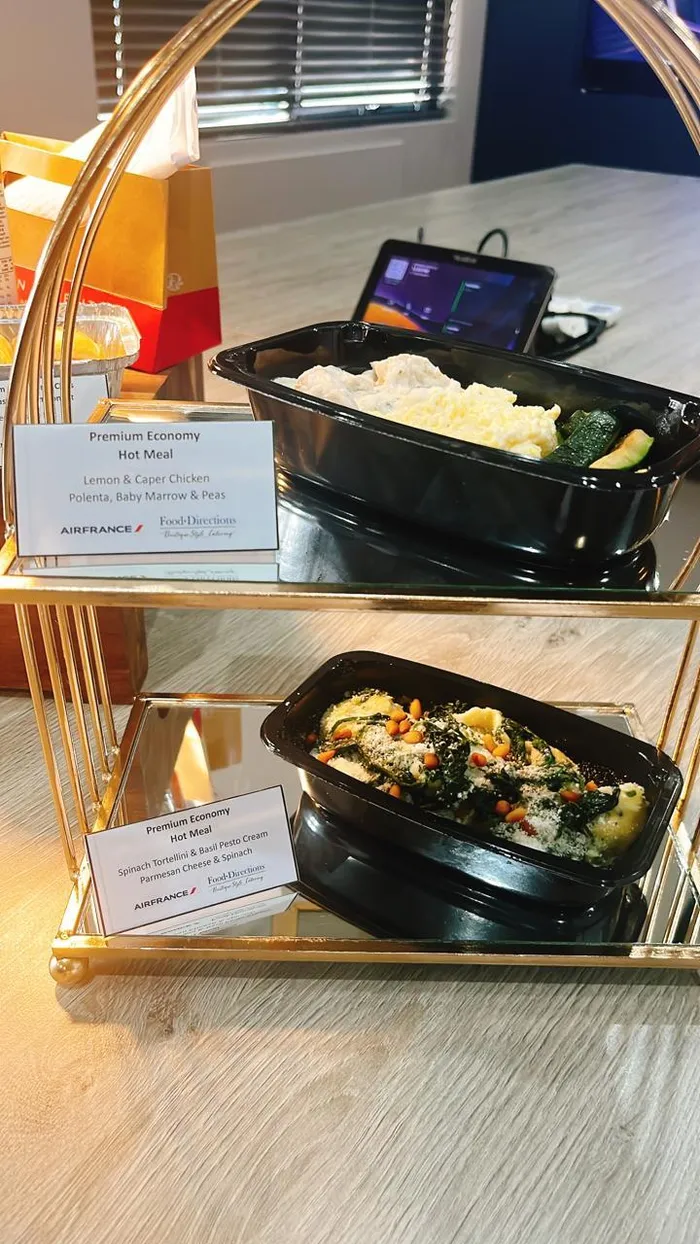
Premium economy travellers can choose between two main courses: lemon and caper chicken polenta served with baby marrow and peas, or spinach tortellini with a basil pesto cream, parmesan cheese, and spinach.
Image: Debashine Thangevelo
The plating is on the sophisticated side, and travellers can enjoy a carefully selected cheese collection.
Appetiser
Main course (choice of):
Dessert
Breakfast
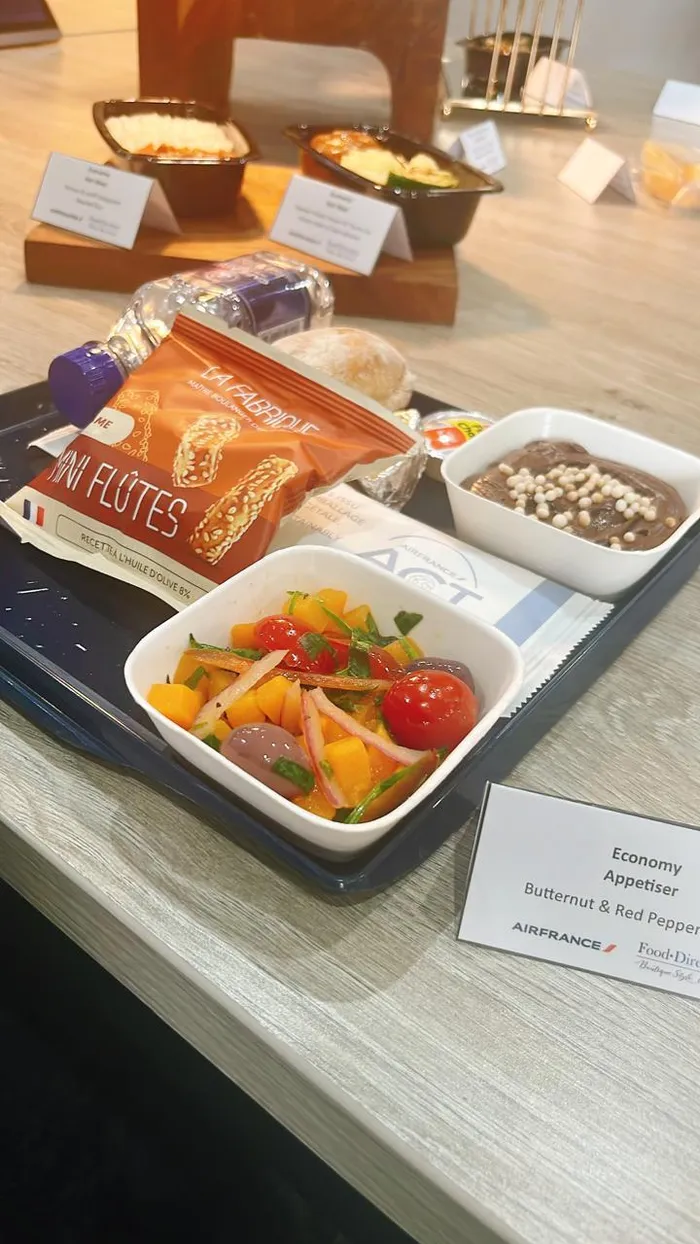
The butternut and red pepper salad is the appetiser served to economy passengers.
Image: Debashine Thangevelo
Appetiser
Main Course (choice of):
Dessert
Breakfast