
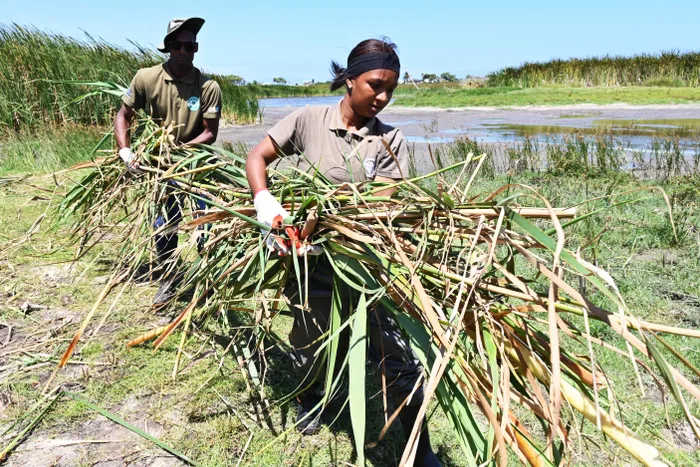
Clearing alien vegetation from the Rondevlei Nature Reserve.
Image: City of Cape Town
As the morning mist lifted over the Rondevlei section of the False Bay Nature Reserve this week, the sound of birdcalls mingled with the voices of a new generation of conservationists. The National Department of Forestry, Fisheries and the Environment (DFFE), alongside the City of Cape Town and CapeNature, gathered to celebrate World Wetlands Day 2026, marking a significant milestone in the province’s commitment to its "liquid gold."
This year’s theme, "Wetlands and Traditional Knowledge: Celebrating Cultural Heritage," serves as a poignant reminder that while modern science provides the data, ancient wisdom often provides the blueprint for sustainability.
The False Bay Nature Reserve is no stranger to international acclaim. Designated as a RAMSAR site on World Wetlands Day in 2015, the reserve earned its status by meeting nine rigorous criteria. These include its staggering abundance of biodiversity, the presence of rare species, and its vital role as a corridor for migrating wildlife.
Building on this momentum, the city of Cape Town was officially declared a RAMSAR Wetland city in 2022. This global recognition is not merely a title; it is a mandate. To honour this commitment, the City launched the River Warden Skills Development Programme on July 1, 2024, in partnership with the NGO Nature Connect.
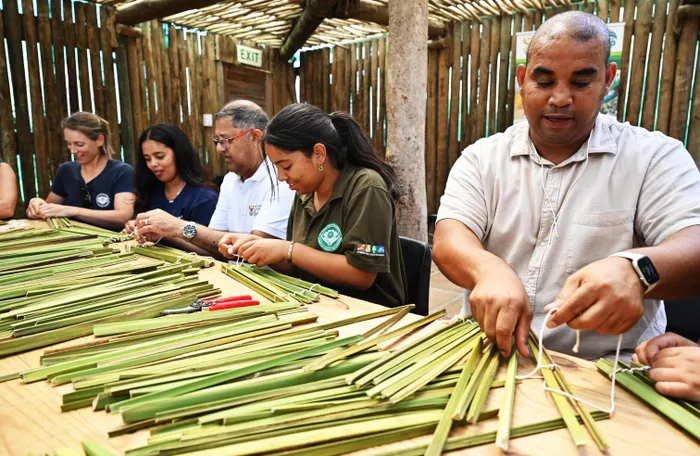
The Deputy Minister of Forestry, Fisheries and the Environment (DFFE), Narend Singh, together with Eddie Andrews, the City’s Deputy Mayor and Mayoral Committee Member for Spatial Planning and Environment, celebrated World Wetlands Day at the Rondevlei section of the False Bay Nature Reserve.
Image: Ciy of Cape Town
The River Warden programme is a masterclass in "conservation with a conscience." Targeting youth and women from communities adjacent to the False Bay, Zandvlei, Edith Stephens, and Table Bay Nature Reserves, the initiative provides a three-year pathway to professional stability.
Participants are not just workers; they are students pursuing an FET certificate in Nature Conservation (NQF 4 qualification). To date, 57 participants have been integrated into the program, receiving mentorship and temporary employment.
"The River Wardens are hands-on with river and wetland restoration work," said Eddie Andrews, the City’s Deputy Mayor and Mayco member for Spatial Planning and Environment. "They are the local champions and future conservation leaders who monitor ecosystems and educate their neighbours. We need our communities to help us protect these natural assets for future generations."
The impact of their labour is measurable and massive. Between January 1 and December 31, 2025, River Warden teams cleared staggering amounts of debris:
141,280 kg of invasive alien biomass.
77,648 kg of solid waste.
These figures, calculated using average bag weights (10 kg for biomass and 8 kg for waste), highlight the sheer volume of pressure placed on urban wetlands by human activity and invasive species.
While the City focuses on urban restoration, CapeNature is looking toward the cultural roots of the Western Cape. Throughout February, the provincial conservation authority is joining communities to recognize the "deep and enduring relationship" between people and these ecosystems.
"For generations, wetlands have been central to the cultural identity, livelihoods, and knowledge systems of indigenous and local communities,"said Thabiso Mokoena, SMME Development Specialist at CapeNature. "Long before formal conservation frameworks existed, traditional knowledge guided the sustainable use of these vital ecosystems."
In a period defined by water insecurity and climate change, this traditional ecological knowledge (TEK) is more relevant than ever. Wetlands act as natural filters between mountain catchments and the sea, providing essential services for fish, insects, and mammals. CapeNature is actively integrating these historical land-use practices into their modern management plans, ensuring that conservation supports both biodiversity and community wellbeing.
The celebrations continue on February 6 at the Assegaaibosch Nature Reserve, where CapeNature and the Western Cape Department of Environmental Affairs and Development Planning will host Grade 7 learners from Pniel Primary School. The event is designed to foster intergenerational knowledge transfer—creating a space where elders and youth can share stories of how wetlands once provided medicine, building materials, and spiritual sanctuary.
For those looking to explore these wonders themselves, Rondevlei remains a crown jewel of the system. The 230-hectare site features six bird hides, two towers, and a museum. Perhaps most famously, it is home to the city’s only hippo pod. These "ecosystem engineers" were re-introduced in 1981 after a 300-year absence specifically to control Vleigras, an invasive South American grass that was choking the wetland.
As the province navigates current water shortages, the message from World Wetlands Day 2026 is clear: protecting wetlands is not a luxury, but a necessity for survival.
Teachers and parents interested in participating in CapeNature’s facilitated, curriculum-aligned wetland education programmes throughout February are encouraged to reach out to learning@capenature.co.za or visit their online library.
By valuing traditional knowledge alongside scientific research, the Western Cape is ensuring that its "living cultural landscapes" remain vibrant for generations to come.