
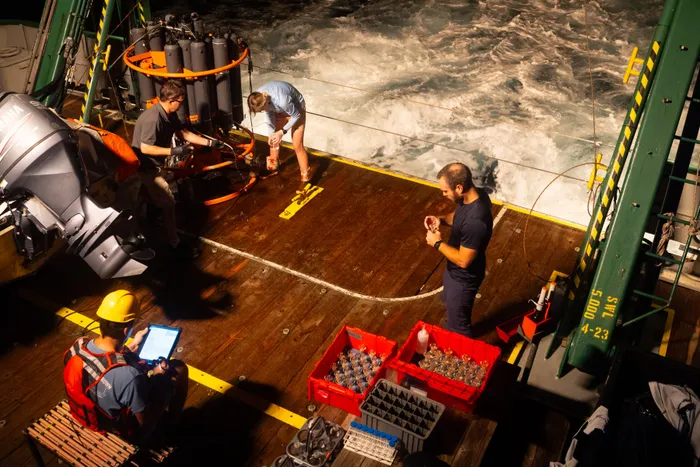
Water collected from the ocean will be brought back to the laboratory in Miami to be analyzed.
Image: The Washington Post
Early on September 3, 2023, as the city of Miami faded into the distance, oceanographer Ryan Smith, along with a determined crew from the University of Miami and the National Oceanic and Atmospheric Administration, embarked on a critical research mission. Their target was the Florida Current, a key player in the vast Atlantic Ocean system that could hold answers to pressing questions about climate change and its implications for global weather patterns. But this trip was far from routine.
As they navigated the high seas aboard the 96-foot research vessel F.G. Walton Smith, the fatigue from a long night weighed heavily on the team. It was 2 a.m., and after nearly 12 hours of work, Smith was in the midst of lowering a 1,000-pound cage of sensors into the depths of the Atlantic when trouble struck. The instruments, designed to measure temperature and salinity, had abruptly ceased transmitting data, casting a pall of urgency over the mission.
“We had no time for a hiccup,” Smith recalled. The team quickly decided to bring the cage back to the surface instead of risking a delay. With the Florida Current—known as one of the fastest ocean currents in the world—rushing beneath them, a malfunction could mean a lengthy journey back to Miami, cutting short vital research.
The Florida Current has been closely monitored for over four decades, enabling scientists to track its flow and gauge the overall health of the Atlantic Meridional Overturning Circulation (AMOC). the AMOC regulates global climate by transporting heat and nutrients across the Atlantic.However, its stability is increasingly under threat from climate change, prompting escalating concern among scientists.
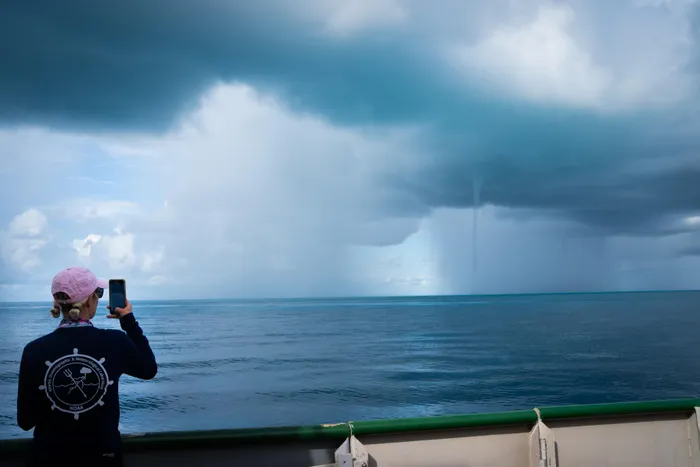
Tyler Christian, a marine scientist, takes a photo of a waterspout during a research trip to collect data on the Florida Current.
Image: The Washington Post
The AMOC’s potential weakening has been a subject of intense debate. If it were to collapse, dire consequences could unfold, ranging from catastrophic weather disturbances to significant sea-level rise along the Eastern U.S. coastline. The Hollywood portrayal of such a failure, as in the 2004 film “The Day After Tomorrow,” may be exaggerated, yet real-world scientists warn of shifts in rainfall patterns, the spread of diseases, and a resurgence of extreme weather. Countries like Iceland have even classified the AMOC's health as a national security threat.
Smith and his team are at the frontline of this research, combating both the elements and technical challenges during their expeditions. Using a makeshift method involving a decommissioned telecommunications cable, scientists leverage the flow of water over time to gauge the strength of the Florida Current, updating their findings with data from research cruises. Notably, the risk of a malfunction in the cabling system in 2023 has left researchers scrambling. Its unexpected breakdown necessitated alternative data collection methods, intensifying the need for diligent diving operations to gather fresh samples from the ocean floor.
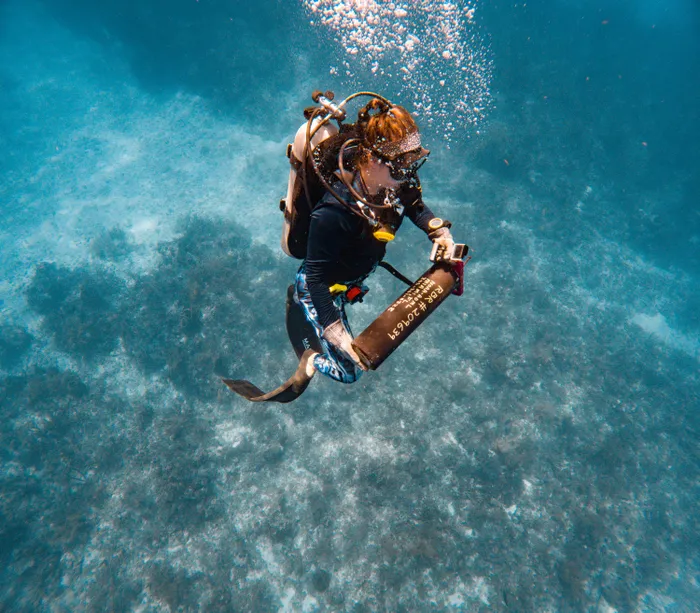
Leah Chomiak, a postdoctoral researcher and physical oceanographer, retrieves an instrument that collects data on the Florida Current.
Image: The Washington Post
Upon their return to the university dock, data was meticulously processed and prepared for upload to NOAA’s Atlantic Oceanographic & Meteorological Laboratory, leaving no trace of the fatigue endured. Their efforts would contribute to a wealth of knowledge about the state of ocean currents, climate change, and ultimately, humanity’s future.
Despite turbulence in the field and contentious debates among scholars regarding the AMOC's trajectory, Smith's work perseveres. As new data emerges, a clearer picture may form of what lay ahead—a vital step in working toward a more resilient understanding of our global climate system.
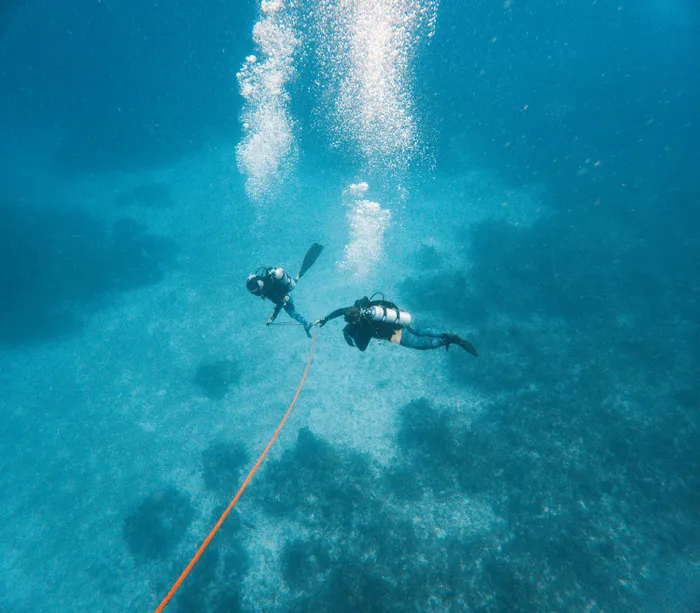
Chomiak, left, and Zach Barton, a technician and engineer, return from diving to the seafloor to place a data-collection instrument.
Image: The Washington Post
Throughout the subsequent 36-hour expedition, the crew delved into the intricate workings of the Florida Current, collecting vast amounts of precious data. Each drop of the CTD-rosette sampler—a device measuring conductivity, temperature, and depth—brought forth new insights; yet, on one occasion, it threatened to hinder progress. The device’s failure to transmit information compelled Smith and his team to troubleshoot tirelessly through the night, ultimately reviving the connection and salvaging critical data.
The atmosphere onboard became a blend of exhilaration and fatigue as divers descended into murky waters, attempting to retrieve acoustic barometers needed for calculations on water flow. A sense of camaraderie thrived amidst the challenging conditions—a crew member’s birthday was celebrated with a rendition of “Happy Birthday,” laughter mingling with exhaustion as they bobbed against the powerful current.