
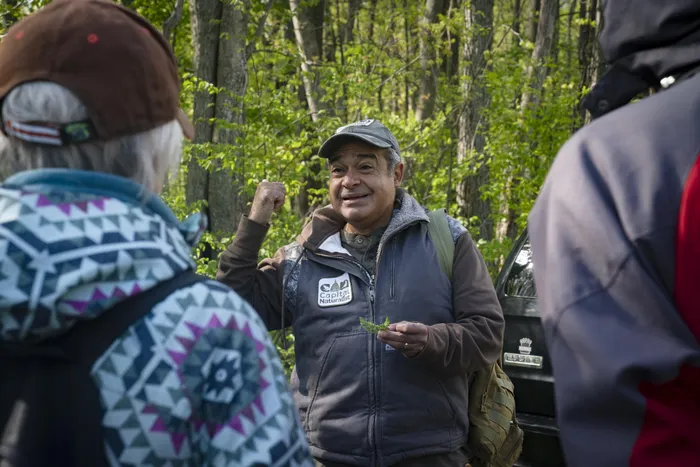
Abugattas estimates that he has led 20 to 25 Trillium Treks over the years.
Image: The Washington Post
As the sun began to crest the Virginia hills on a biting May morning, a small band of travellers stood shivering in a gravel car park. Clad in “woollen garments that should have been stashed away weeks ago” and clutching trekking poles and long-lens cameras, they looked less like Sunday hikers and more like an expeditionary force. They were here for the Trillium Trek, a pilgrimage to witness one of the most spectacular, yet fleeting, botanical events on the planet.
Their destination was the G. Richard Thompson Wildlife Management Area, a spartan 4,000-acre preserve sixty miles west of Washington. There are no interpretive centres here, no campgrounds, and no restrooms. Instead, there is something far rarer: an estimated thirteen million great white trilliums (Trillium grandiflorum) carpeting two square miles of forest floor in what visitors describe as a "spectacular—and fleeting—display of natural beauty."
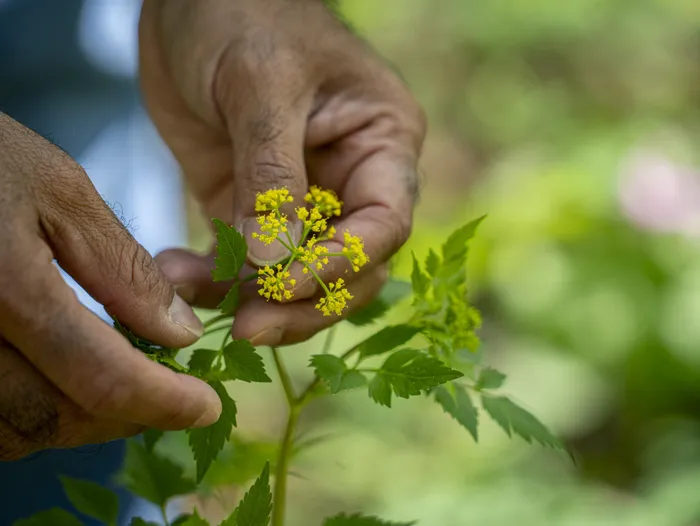
The hairy-jointed meadow parsnip is one of many perennial wildflowers blooming at the nature preserve.
Image: The Washington Post
The walk was led by Alonso Abugattas, a veteran naturalist who has guided this trek for a quarter of a century. His opening disclaimer was simple: “We’re going to be moving at a botanical pace today.” In translation, that meant slow. Over the course of four and a half hours, the group covered distance at a rate of roughly a quarter-mile per hour, ensuring everyone could "behold the staggering array of wildflowers in bloom."
This glacial speed is essential. To rush through these woods is to miss the biodiversity of a landscape that Abugattas describes as possessing "a long ecological memory." Because the land has "never been messed with" or significantly disrupted, the soil still contains the beneficial fungi and nematodes on which the flowers rely to grow. As Abugattas puts it: “The ecological memory is still here.”
This floral miracle almost vanished nearly 40 years ago. In 1990, state authorities planned a major logging operation that would have sent heavy machinery rolling over what had long been recognized as a "biodiversity hot spot." It was only through the intervention of the Virginia Native Plant Society, who "approached the state with a proposition" to restrict logging and recreation in sensitive areas, that the forest was spared.
Today, the preserve is managed through a delicate ecological partnership. While volunteers pull invasive weeds like garlic mustard by hand, the state manages the forest for hunters. This is not merely for sport; “Trillium are deer candy,” Abugattas explained. In a region where deer populations are surging and "you can’t walk 100 paces without seeing deer damage," the hunters keep the herd in check, allowing the trilliums to thrive.
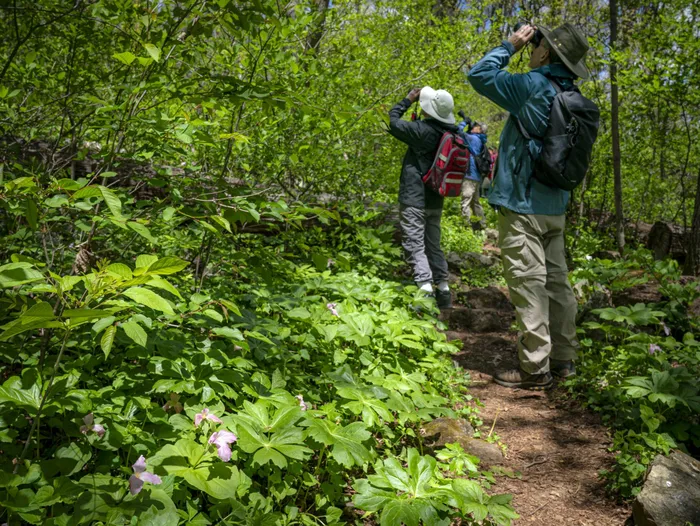
The trek also attracts birdwatchers hoping for a glimpse of such migratory species as tanagers and American redstarts.
Image: The Washington Post
The great white trillium, often called “the most showy, best known, and loved of all the trilliums,” is a masterclass in natural geometry. Its name is derived from the Latin tres, a nod to the fact that it has "three petals, three sepals, and three leaves called bracts." They are slow-burners of the botanical world, taking about "five to seven years to bloom from seed."
As the group moved deeper into the trail, the scattered blossoms unified into a "sea of white and pink blossoms." The petals begin as a pristine white, gradually turning pink once the plant has been pollinated. For trekkers like Carolyn Bednarek, the experience was transformative. “Slowing down, paying attention to things and trying to identify them—that all started with trillium,” she remarked, marveling that the quantity and concentration was simply “wild.”
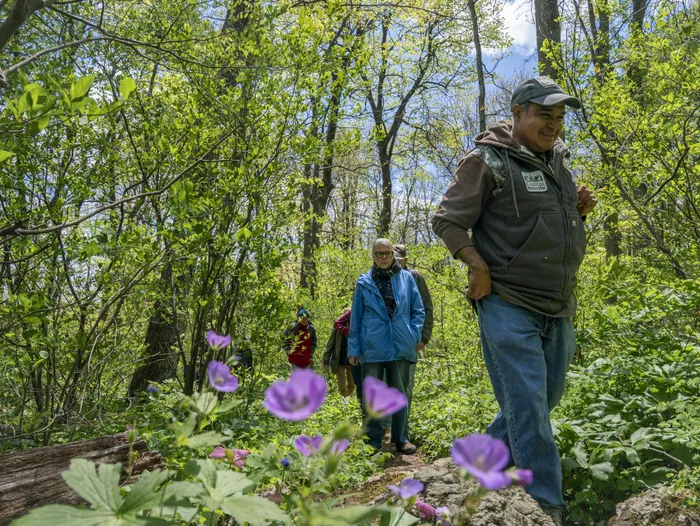
Abugattas leads the group at a slow and steady pace.
Image: The Washington Post
While the trilliums are the headline act, the preserve is a sanctuary for other rarities. Orchid hunters, like Heather Stevens-Kittner, join the trek to glimpse the “yellow lady’s slipper and the showy orchid,” finding the environment “peaceful and green and lovely.” Meanwhile, birdwatchers track neotropical migrants like tanagers and warblers that congregate here because fewer deer mean "more food to forage."
However, the beauty is fragile. Abugattas pointed out small "divots where trillium has been plucked" by poachers. Despite the fact that the plants "almost never survive being transplanted from the wild," poaching remains a threat to their survival.
As the trek concluded and the mercury finally began to rise, the group retreated to a nearby town for "apple butter cinnamon doughnuts," a local tradition. They left behind a forest that serves as a living museum—a reminder that when we protect the soil and check our pace, nature is capable of producing a miracle thirteen million times over.