
Could a Victorian catastrophe return? Why Today’s ‘Super El Niño’ is different.
Image: SANDILE NDLOVU
The shadow of a Victorian catastrophe looms over the modern world, as meteorologists track a surge in Pacific Ocean temperatures. With the chances of one of the most powerful El Niño events on record rising, comparisons are being drawn to 1877—a year when a similar climatic shift triggered a global apocalypse. While the physical threat today is arguably greater due to a warming planet, the scientific arsenal at our disposal suggests that history need not repeat itself.
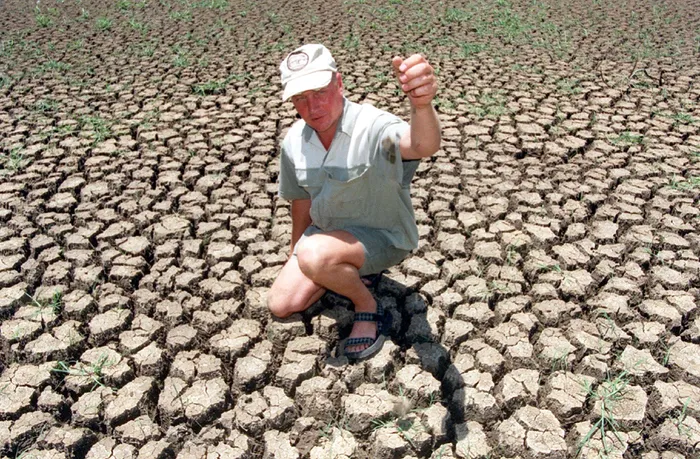
El Niño—the warming of ocean waters in the east-central tropical Pacific—is a natural cycle, but its super variants are anything but routine. In 1877, ocean temperatures soared, causing a total collapse of predictable weather patterns. The result was what researchers describe as arguably the worst environmental disaster to have ever befallen humanity.
It didn’t just affect one region; they synchronised across the tropics and subtropics. From the grain fields of India to the vast plains of China and the north of Brazil, crops failed simultaneously. The ensuing famine claimed more than 50 million lives—roughly 4 per cent of the global population at the time. To put that in perspective, a disaster of that proportion today would equate to 250 million deaths.
However, the tragedy of 1877 was not entirely a natural one. Deepti Singh, an associate professor at Washington State University, points out that the deliberate actions of colonial administrations dismantled local resilience systems. In many regions, food was exported even as local populations starved. The drought was the spark, but political negligence was the fuel.
For over a hundred years following the Victorian disaster, humanity remained largely blind to the mechanics of El Niño. It was not until the surprise super El Niño of 1982–1983 that the scientific community truly woke up. That event caused billions in economic losses, precisely because no one saw it coming.
That failure became a pivotal turning point. Climate scientist Kevin Trenberth recalls the international effort that followed to revolutionise ocean monitoring. By the mid-1990s, a grid of 70 moored buoys was established across the Pacific to track air pressure, wind, and salinity. Today, that network has ballooned to over 4,000 instruments, providing a real-time, high-definition pulse of the ocean’s health.
If the 1877 event happened today, would we survive? Singh warns that while our politics have changed, the physics have become more dangerous. Our atmosphere and oceans are substantially warmer than they were in the 1870s, which means the extremes we face now could be even more intense than those that devastated the world 150 years ago.
The spring predictability barrier still makes early-year forecasting difficult, but our ability to model these events using high-performance computing means that governments now have months, rather than days, to prepare. We know the drought is coming; we know which crops will fail; and we know where the water will run dry.
The devastating losses of the 19th century are unlikely to be repeated in scale, largely because the colonial structures of the past have been replaced by international aid networks and real-time global trade. However, complacency remains a risk.
In our interconnected socioeconomic system, a drought in Southeast Asia can drive up food prices in British supermarkets within weeks. As Singh notes, international collaboration will be vital to reduce impacts to the most vulnerable. We have the data and the technology to weather the coming storm; the only question remaining is whether we have the collective political will to act on what the monitors are telling us.