
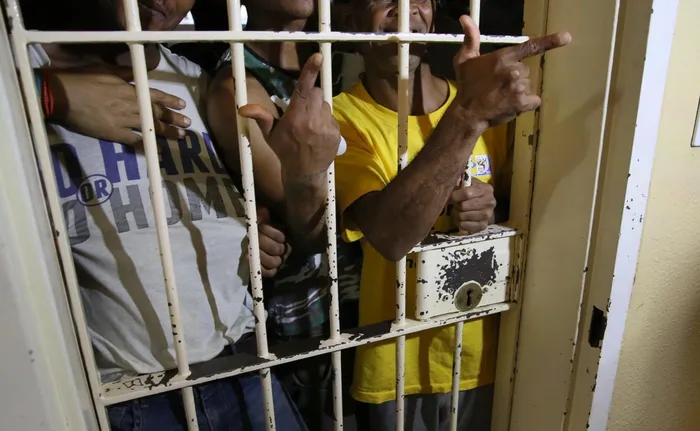
South Africa's prisons is currently 58% overcrowded
Image: File
South Africa’s prison system is facing mounting pressure as overcrowding continues to spiral, with some inmates reportedly spending more than a decade behind bars without being sentenced.
The alarming revelation was made by Pieter Groenewald in Parliament, sparking widespread debate about the state of the country’s justice system, prison conditions and lengthy court delays.
According to figures from the Department of Correctional Services, the country’s prisons are currently housing more than 169,000 inmates, despite facilities operating far beyond their intended capacity.
Of those inmates, more than 63,000 are remand detainees who are still awaiting trial or sentencing.
Government further revealed that prison overcrowding has now reached 58%, placing severe strain on correctional facilities, officials, rehabilitation programmes and infrastructure.
The crisis is unfolding against the backdrop of significant financial pressure, with the department also facing budget cuts exceeding R683 million.
Groenewald warned that slow-moving court processes and prolonged detention periods were worsening already dire conditions inside correctional centres across the country.
The revelations have raised serious concerns about constitutional rights, human dignity and the efficiency of the criminal justice system, with many South Africans questioning how individuals can remain incarcerated for years without final sentencing.
Professor Stephen Tuson, who lectures Criminal Procedure at Wits Law School said prolonged detention without sentencing constituted a serious violation of constitutional rights.
Tuson pointed to Section 35(3)(d) of the Constitution, which guarantees every accused person the right to a fair trial, including the right for proceedings to begin and conclude without unreasonable delay.
He warned that violations of these rights by the State reflected deeper concerns about accountability and respect for the rule of law.
Tuson further argued that one of the main drivers behind delays in court processes was dysfunction within parts of the South African Police Service, particularly regarding investigations that are not completed before arrests are made.
According to Tuson, suspects are frequently arrested before matters are trial-ready, resulting in repeated postponements while police continue investigations.
He said investigating officers were often overwhelmed, with detectives carrying extremely high caseloads while also lacking adequate transport and resources to track down witnesses and gather statements efficiently.
Tuson added that delays were also linked to forensic backlogs, including outstanding blood analysis, ballistic testing and post-mortem reports, which often postpone matters for months.
He noted that defence attorneys requesting postponements due to lack of preparation also contributed to the delays.
Despite concerns around dangerous suspects remaining in communities while investigations continue, Tuson said arrests should ideally only occur once investigations are complete and matters are ready to proceed to trial.
He further called for greater use of summonses instead of arrests in less serious matters, arguing that many suspects unnecessarily remain in detention simply because they cannot afford bail.
Tuson also suggested that authorities consider relaxing certain bail conditions to reduce overcrowding in correctional facilities.
Overcrowding inside prisons has long been linked to increased violence, gang activity, deteriorating living conditions and pressure on already stretched correctional staff.
The department also disclosed that more than 37,000 cellphones and contraband items were confiscated during prison raids as authorities intensified efforts to clamp down on illegal activities operating behind bars.
Government said it is attempting to ease some of the pressure on the correctional system by expanding internal prison bakeries, farming projects and manufacturing initiatives aimed at reducing operational costs and increasing self-sustainability within facilities.
However, critics argue that such interventions may offer only temporary relief while deeper systemic failures within the criminal justice system remain unresolved.
Among those raising concerns is Calvin Rafadi, a crime expert and visiting lecturer at University of Juba, who has called for lifestyle audits to be conducted on members of the South African Police Service deployed at courts, including magistrates’ courts and high courts across the country.
Rafadi raised concerns about what he described as growing acts of impunity among some prison inmates, alleging that contraband continues to find its way into correctional facilities, particularly during prisoner transport and court appearances.
According to Rafadi, certain inmates deliberately become involved in additional criminal activities while already awaiting trial, allegedly with the intention of remaining within the court system for extended periods.
He further alleged that some offenders intentionally leave fingerprints at crime scenes so that, once arrested, they can continue attending multiple court proceedings while still benefiting from access to smuggled contraband inside correctional facilities.
Rafadi claimed that the smuggling of contraband is, in some instances, facilitated by corrupt officials operating within court holding cells and prisoner transport environments.
He also noted that within prison slang, some inmate couriers are allegedly referred to as “Quantum” or “Spaceman” terms used to describe individuals regarded as fast carriers of contraband between facilities and inmates.
Rafadi has now called on law enforcement authorities and correctional services to strengthen oversight mechanisms, increase surveillance within court holding cells and introduce X-ray and CT scan technology to detect contraband smuggling.
He warned that some inmates allegedly make use of so-called “body stuffing” methods to move illegal items into facilities and argued that stricter monitoring could help expose organised criminal networks operating within parts of the justice system.
tracy-lynn.ruiters@inl.co.za