
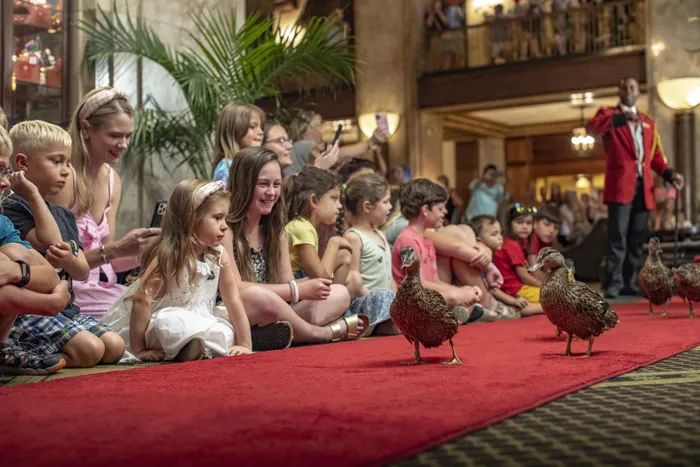
Children watch a recent duck march.
Image: The Washington Post
It's a job description that reads like a fairytale, yet every morning at precisely 10:30, the grand lobby of the Peabody Hotel in Memphis is transformed into a theatre. An employee rolls out a crimson carpet, a fanfare swells, and Kenon Walker, the official Duck Master, descends from the rooftop, leading his unique flock to the sound of rapturous applause.
Walker, 45, doesn’t just supervise; he is the custodian of a decades-old tradition—caring for the hotel’s resident mallards and leading their celebrated daily procession to and from the lobby fountain. This ritual, witnessed by onlookers who travel from as far as Japan and New Zealand, is considered a true 'bucket-list' item.
"We’ve got to march with smiles in that lobby," Walker instructs the five pampered ducks in a pre-show pep talk each morning. "We’ve got to march with purpose."
Walker's path to becoming the world’s only official Duck Master was as unexpected as the job itself. Before joining the Peabody in 2018 as a concierge, he was a tour guide at the National Civil Rights Museum and had a professional background in theatre.
"I was already a public speaker, a historian, an actor and a father," Walker explained. "Those things ended up being preparation."
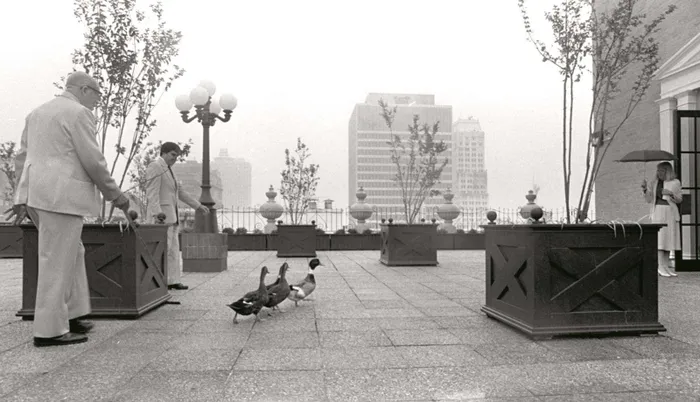
Edward Pembroke on the hotel rooftop in 1981.
Image: The Peabody Memphis/The Washington Post
He became the assistant Duck Master in 2019, taking the top job in 2020. He now presides over the birds, who reside in a lavishly appointed $200,000 penthouse—or the "royal duck palace"—on the heated rooftop. "Lucky ducks," he admits.
The enchanting story dates back to 1933. Hotel General Manager Frank Schutt and his friend Chip Barwick returned from an unsuccessful hunting trip in Arkansas. After consuming too much whiskey, the pair decided to place three of their live duck decoys—a legal practice at the time—into the lobby fountain as a drunken prank.
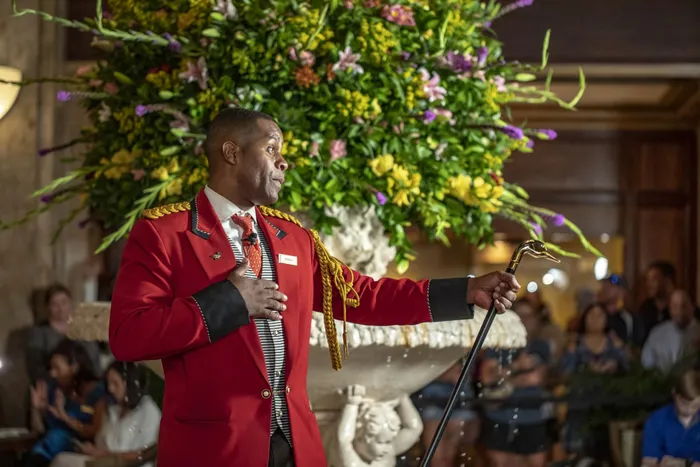
Walker had no trouble engaging with the ducks, despite a lack of prior experience.
Image: The Peabody Memphis/The Washington Post
Hotel guests were immediately charmed, and the joke quickly became a fixture. The English Call Ducks were later replaced by five North American Mallards. In 1940, a bellman and former circus animal trainer named Edward Pembroke offered to train the ducks to march, establishing the formal role of the Duck Master, which he held for over 50 years.
Walker keeps the tradition fresh, incorporating new elements. He now invites children in the lobby to assist him with rolling out the red carpet and feeding the ducks, ensuring people feel "a part of the ceremony, versus just watching me give a speech."
The birds, which come from the same local farm for over 35 years, stay for three months before "retiring" to a life in the wild.
The day begins with a shower and a pep talk—a moment Walker says helps set him up for the day, too—followed by a breakfast of romaine lettuce, grains, cracked corn, and dried worms as a treat.
Just before 11:00 am, with John Philip Sousa’s ‘King Cotton March’ playing, Walker marches his team (always one male, four females) across the rooftop, into a reserved elevator, and down to the spectacle in the lobby.
Walker, the hotel’s second Black Duck Master, is constantly mindful of his predecessor, Edward Pembroke. Pembroke held the job during an era when many hotels in the South were segregated and Black employees were often restricted to back-of-house roles.
"Their value was less than the ducks," Walker reflected on the historical context. "I have that kindred connection to Mr Pembroke, having never met him."
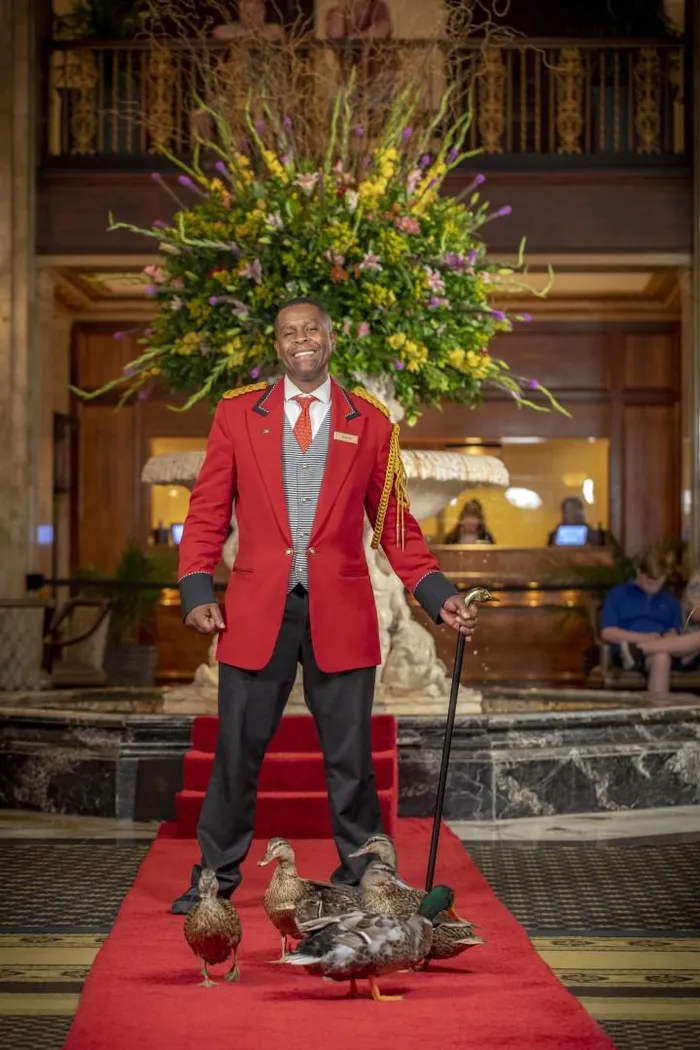
Kenon Walker gives one of his daily presentations before a duck march at the Peabody Memphis.
Image: The Peabody Memphis/The Washington Post
For Walker, who names the male duck 'Quinn' after a young patient from a local children’s hospital and the females after his aunts and daughter, the daily march holds deep meaning.
"Kids from all walks of life see hope in a face that looks like mine," he concluded. "To know that those moments have impacted people... that’s part of what it is."
He plans to continue leading the flock for as long as he can: "We could all use some joy and some hope. And I try to represent that."