
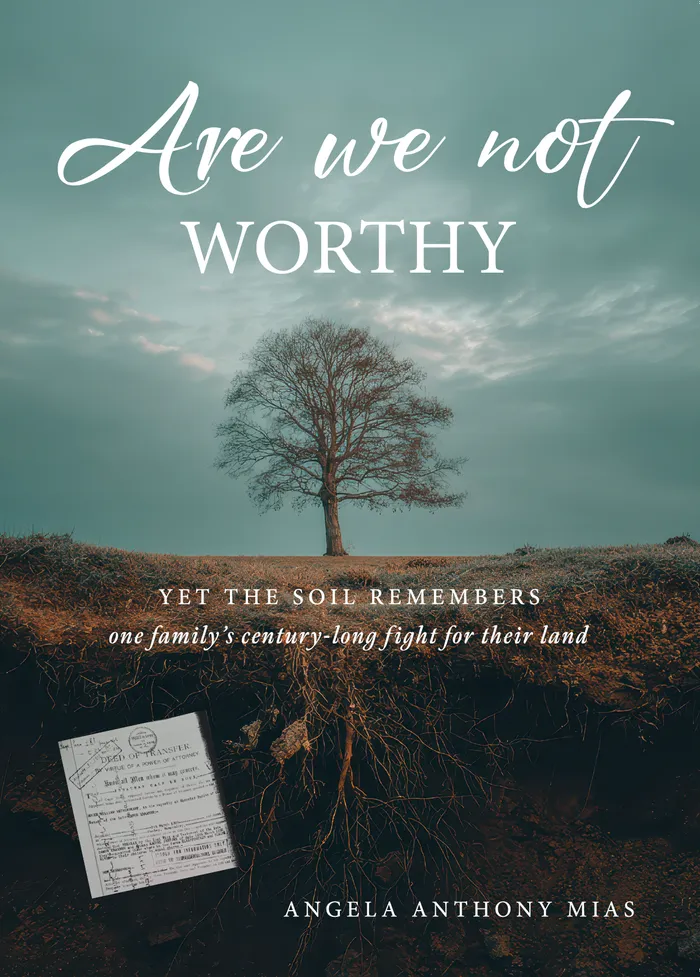
The cover of the book.
Image: Supplied
The historic South End Museum in Gqeberha recently opened its doors to a remarkable celebration of literature and legacy, setting the stage for the launch of Angela Anthony Mias’s poignant memoir, Are We Not Worthy – Yet the Soil Remembers. In front of a fully engaged audience, the book received an outpouring of acclaim, stirring profound emotional responses from scholars, community elders, and everyday citizens connected to its deeply personal themes.
Mias’s newly released work is positioned to become a milestone narrative in the ongoing national discourse on land, dispossession, and the generational pain that these issues explore. Yet, more than a political commentary, it reads as an intimate chronicle of one family's harrowing 108-year journey—a journey marked by the loss of ancestral land, the empty promises of the Land Restitution process, and a willingness to embrace vulnerability as a means of healing.
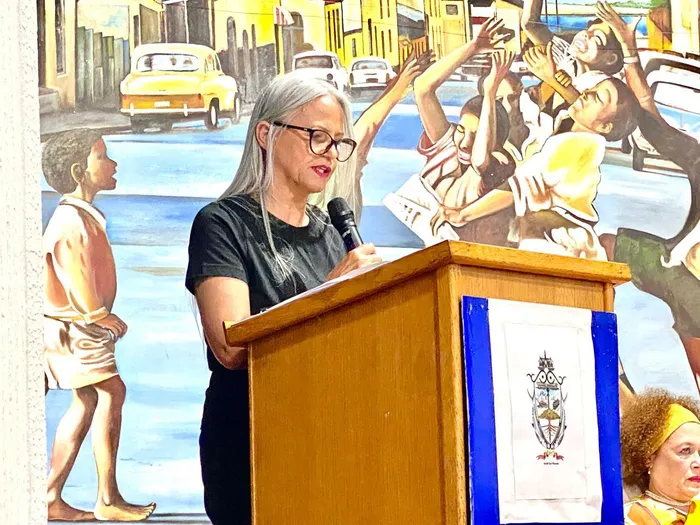
Angela Anthony Mias at her book launch at the South End Museum.
Image: Supplied
At the heart of the narrative lies the forced dispossession of the Kleinfontein and Klein Rivier properties in the Eastern Cape, which had, for generations, been woven into the fabric of the Kramer family's identity. The author recounts nearly eight decades filled with petitions, administrative failings, and a government process often tinged with indifference. The book artfully unveils not only the political failures faced by many claimants but also the emotional and spiritual ramifications of dispossession.
The heart-wrenching chasm between the hopeful aspirations of 1994 and the harsh realities for thousands who submitted land claims is expertly depicted in Mias's writing. Far too many families, infused with hope after the apartheid era, were met instead with silence, bureaucratic obstructions, and personal anguish, as detailed in the book.
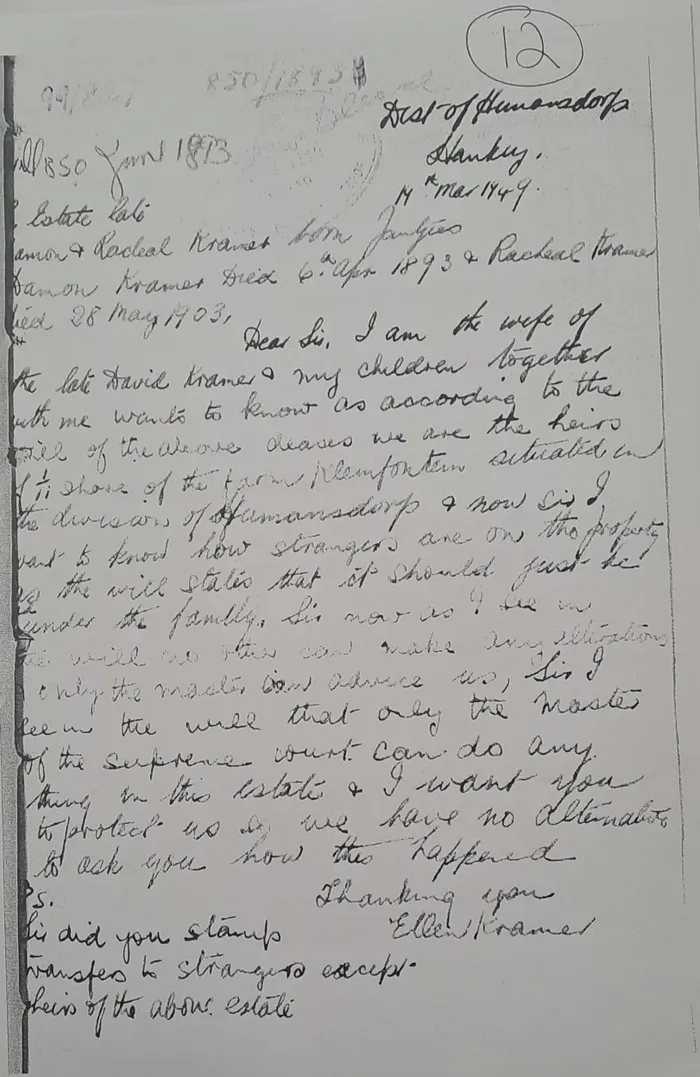
A letter by Ellen Kramar, describing the family's struggle for their land.
Image: supplied
Renowned education leader, Professor Jonathan Jansen, encapsulates the book's essence succinctly: “Gripping, insightful, and heartbreaking – yours is a story that speaks for so many without the voice or resources to bring their pain to the surface for public consciousness.”
Mias succeeds in amplifying these voices, infusing the pages of her memoir with raw emotional truth—her family's suffering and her own disillusionment reverberate throughout, yet the narrative retains its dignity and resilience.
The spiritual dimension of Mias’s story is particularly striking, drawing from biblical archetypes, especially the journey of Israel through exile and eventual return. She intertwines the generational consequences of dispossession with land inheritance principles found in scripture, thus creating a narrative that is both historically rich and theologically profound. This thematic exploration culminates in the poignant title: Are We Not Worthy – Yet the Soil Remembers. It stands as both a lament and declaration—a testament to the land as a witness to human injustice.
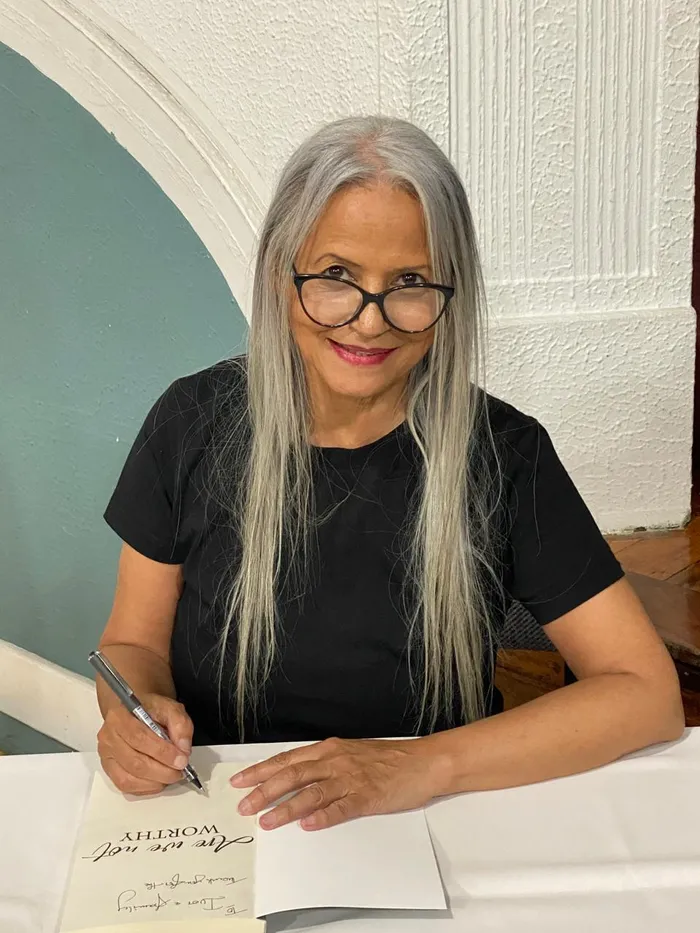
Angela Anthony Mias
Image: Supplied
Editor and literary scholar David Kaplan seamlessly praises the book for its intricate interplay of history and moral clarity, calling it, “an astounding piece of writing to say the least, and one with immense historical and social importance for the people of South Africa and abroad.” Kaplan's sentiments echo a palpable atmosphere felt by attendees at the launch event, which was described as “electric,” “historic,” and “emotionally overwhelming.”
The event was particularly impactful as Mias shared selected passages, revealing her spiritual healing upon uncovering century-old wills and family documents—“the keys that unlocked the vault of secrets,” as she calls them. The success of her book launch already signals the beginnings of a nationwide conversation. Mias intends to extend her reach, bringing her family's story to communities, universities, churches, museums, and radio platforms across South Africa. This narrative is set not only to resonate nationally but also to transcend borders, appealing to those who have experienced similar forms of dispossession worldwide.
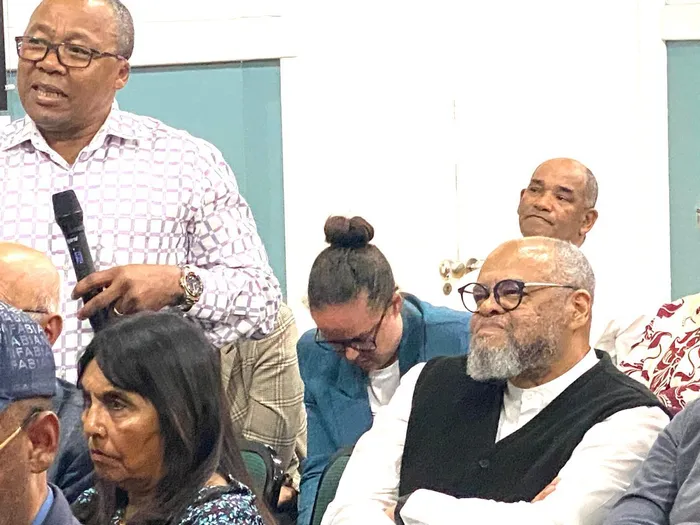
Apartheid activist, land claimant and founder of the political party AIM, Mkhuseli Jack and advocate Darryl Newton at the launch of Angela Anthony Mias' book: Are we not worthy: Yet the soil remembers.
Image: Supplied
At its core, Are We Not Worthy – Yet the Soil Remembers. emerges as a daughter’s heartfelt tribute to her ancestors—a closing of a generational circle, pulling her family’s story out of the shadows and illuminating it for all. Reviewer Quinton Redcliffe describes the memoir as, “an aching testament to loss, resilience, and the search for justice and recognition,” capturing its essence as more than just a personal journey but a universal quest for worthiness.
Ultimately, Mias's memoir stands as a reminder that justice is multifaceted—it is emotional, spiritual, and generational. Its central premise insists on one undeniable truth: worthiness is neither granted by institutions nor validated by bureaucratic processes; it is inherent, divinely bestowed, and remembered by the soil itself.