
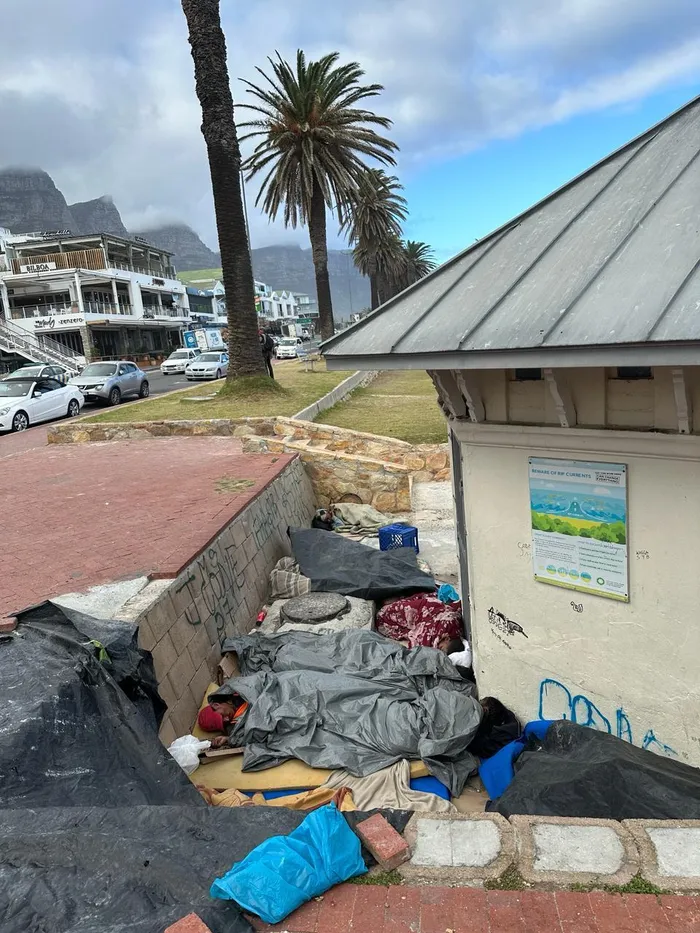
Camps Bay has grappled with homelessness but a new programme is turning the tide.
Image: Supplied.
Camps Bay, the iconic Cape Town suburb known for its sweeping ocean views, has successfully eliminated illegal shacks and regular rough sleeping from its streets by adopting a new, collaborative strategy focused on dignity and employment over enforcement.
The Camps Bay City Improvement District (CID), in partnership with social development provider ignisive, launched the "Give Smart Today, Help Build Tomorrow" campaign in 2025 to address homelessness, which CID manager Muneeb Hendricks says is now being recognised as a result of "systemic failures in mental health care, trauma support, addiction services and family systems."
“Our approach was based on the understanding that poverty can’t be policed away,” says Hendricks. “An enforcement-only response would not have been cost-effective and would simply have resulted in displacement, effectively playing ‘musical chairs’ with individuals and pushing the problem into neighbouring areas.” The results are significant: in just one year, the number of illegal shacks and individuals sleeping regularly on Camps Bay’s streets has been reduced from approximately 20 structures and 60 individuals to zero.
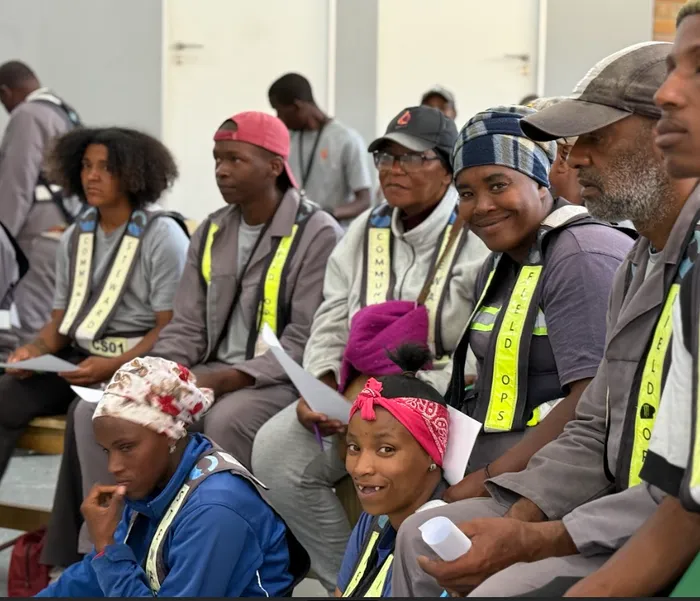
1 December 2024 to 31 December 2025, 197 people were placed in safe accommodation, 32 engaged with social workers, 37 entered rehabilitation facilities, and 47 training days were delivered to job-seekers via the development programme.
Image: Supplied.
The Dignity and Reintegration Model
The campaign’s core strategy, according to ignisive founder and CEO Theresa Massaglia, is rooted in addressing both "symptomatic issues that show up on the street, but also systemic issues." She added: “The two key pillars of our strategy are community regeneration and community reintegration.” The programme, which ignisive refers to as an employability skills pipeline, provides access to shelter, rehabilitation, coaching, and a structured path to sustainable employment.
Louise Cooke, deputy chair of the Camps Bay CID, summarises the offering: “With our solutions, you get access to shelter, an employability pipeline, stipends, some structure and training – so you have the tools to be able to find the way out of your problem.” To date, 95% of entrants have graduated from the programme, with 38 people placed in permanent employment. There are currently 58 people participating.
Community Stewards
Community Stewards and Crime Drop Programme beneficiaries are also employed as Community Stewards, who play a vital role in public safety and environmental care. These stewards have reported over 1,200 safety incidents and removed 13 metric tonnes of waste from public areas. The safety gains have been matched by a sharp decline in crime. Andrew Tulloch, operations manager at ignisive, notes: “At a recent Camps Bay Community Policing Forum, a SAPS captain indicated that drug crime is down by 75%, and we have had no reports of vehicle break-ins, car jamming or smashed windows in the areas covered by the community stewards.”
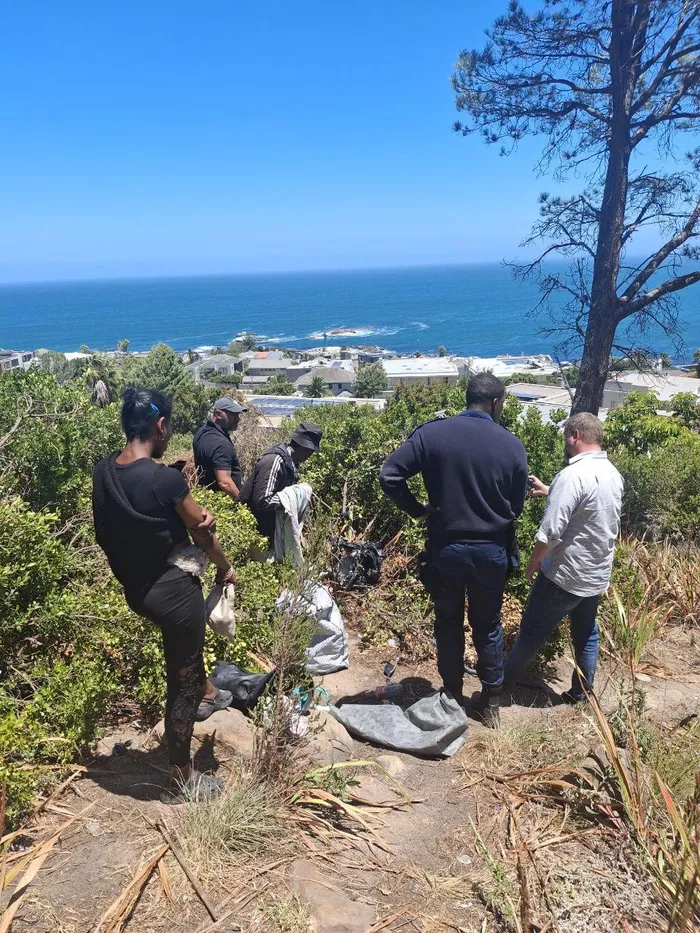
In partnership with its social development provider, ignisive, the CID shifted the focus from displacement to sustainable solutions.
Image: Supplied.
Personal Stories of Transformation
For participants, the impact is deeply personal. Dumisani Sibeko, now a senior supervisor, shares his gratitude: “I’m really grateful to ignisive... They helped me get to a rehabilitation centre, and now I don’t smoke marijuana and take drugs. I’m now a senior supervisor, and I have my own place in Hout Bay. Things are going the way I want now.”
Mark Malgas, who now has a landscaping job, recounts his journey: “I want to thank ignisive very much for helping me. My life is much better than it was before, when I was sleeping on the street or behind the police station, and asking people for money. I asked ignisive for a job because I saw some other people had been given jobs, and I went for an interview, then I received training in how to use a chainsaw. I’m feeling much better now because I earn something at the end of the month.”
Looking beyond the statistics, Massaglia concludes: “Every number reflects more than a statistic – it represents a life touched, a family restored, and a community strengthened. It’s a message of hope and opportunity, combining advocacy with compassionate stewardship.” The model has been hailed by local residents as a way to reintegrate the unhoused. As opera singer and Camps Bay resident Aviva Pelham puts it, “The programme brings unhoused people into the community again. We’re all part of the same community, so it’s giving them an enormous opportunity.”