
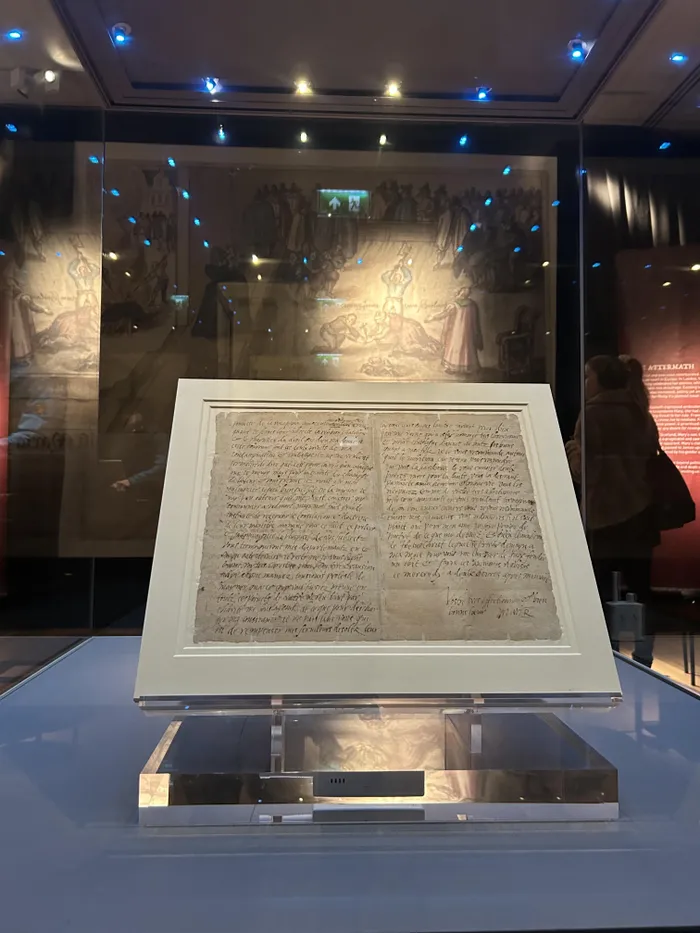
Part of the letter’s appeal is the mere fact that it has survived, still legible, after 5,268 months of tumult and trading since Mary wrote it.
Image: Steve Hendrix
Steve Hendrix
PERTH, Scotland - While eating dinner on Feb. 7, 1587, Mary, Queen of Scots, was told her two decades in prison for alleged treason were finally over - but not in a good way. Her head would be chopped off the next morning.
Mary Stuart (she changed her surname from Stewart) thanked her hosts, went back to her chambers and penned, or quilled, a letter. She signed it, folded it into a kind of origami padlock and sealed it with wax. Two hours later, she was executed. After that, her story gets interesting.
That letter, was a big part of why the 44-year-old royal who spent half her life imprisoned didn’t just fade away as a headless footnote. Instead, four centuries on, she continues to command cultlike fascination, revered as a doomed ingenue, a Catholic martyr and a shape-shifting symbol of Scottish identity.
And now her followers have a once-in-a-generation chance to see that deathbed manuscript. After surviving journeys by horseback and sailing ship, the French Revolution and nearly unbroken climate-controlled darkness for the last century, Mary’s last letter is on view to the public.
“It makes me feel very emotional, to be honest,” said Midge Williams, who traveled to Perth in southern Scotland last week from her home in northern England to see the manuscript. She first heard of the letter from her late Scottish mother, who talked reverently about Mary her whole life.
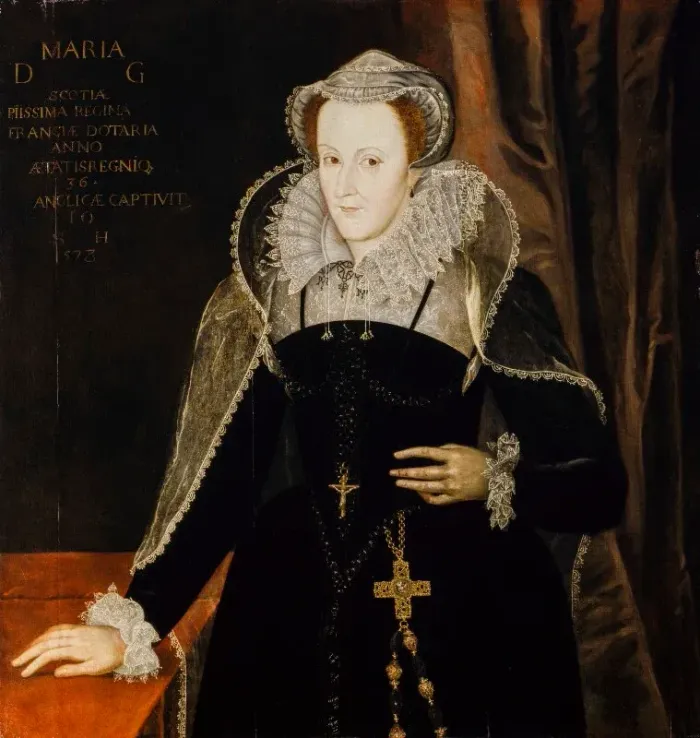
A portrait of Mary Queen of Scots after Nicholas Hilliard, inscribed 1578, in the National Portrait Gallery, London.
Image: Supplied
“It’s wonderful to see something so personal of hers,” Williams said after staring at the inky swirls of cursive. “She held that paper in her hands. She wrote those words.”
The letter went on display in late January at the Perth Museum, a new cultural and heritage center an hour’s train ride from Edinburgh. It will be up until the end of April and has already attracted some of the museum’s biggest crowds.
Mary’s reputation has never stayed fixed long enough to be pinned down. In the century after her execution, she was a Catholic martyr. During the Jacobite uprisings of the early 1700s, she became a symbol of the Stuart cause seeking to restore the exiled Roman Catholic monarchy.
She addressed her debts, requested that her servants be paid and asked that her body to be transported to France. More critically, she constructed a deliberate narrative of her own death as a victim of anti-Catholic hysteria rather than cutthroat court intrigue. (She had been accused of plotting the death of her cousin, Queen Elizabeth I of England.)
“Tonight, after dinner, I have been advised of my sentence: I am to be executed like a criminal at eight in the morning,” Mary wrote to her brother-in-law, King Henry III of France. She refused to renounce her religion and complained that Elizabeth’s henchmen would not even allow a priest in to hear her final prayers. Denied last rites, she wrote a last letter.
“The Catholic faith and the assertion of my God-given right to the English crown are the two issues on which I am condemned,” she wrote, “and yet I am not allowed to say that it is for the Catholic religion that I die.”
Interest now is even higher for what is likely to be its last big show for years, maybe decades. Curators say they are burning through much of the object’s carefully monitored tolerance for the sun by displaying it in the open for 13 weeks, even snug in a windowless room in a custom-built UV-filtering Plexiglas case.
“We’re basically using its whole light budget. It won’t be out again for a long time,” Ashleigh Hibbins, the Perth Museum’s head of audience, said as visitors crowded around the display.