
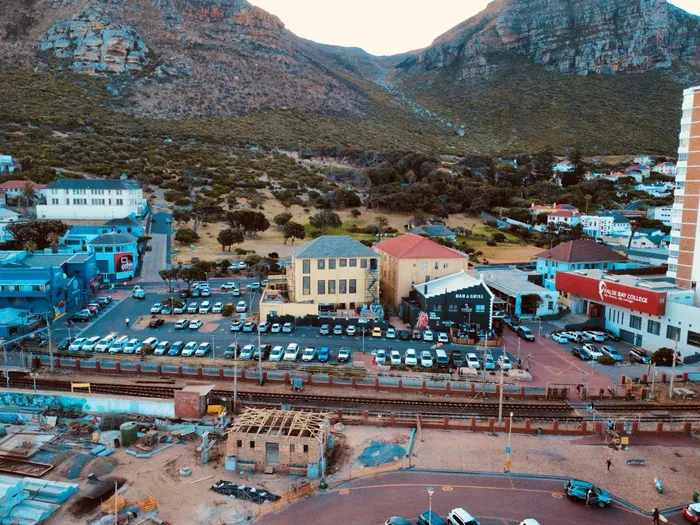
An old photo of the surfing town of Muizenberg.
Image: Supplied
After recently moving closer to Muizenberg, the pull to tell this story is real, and personal. I started surfing at 52. My fear of sharks is significant. But the fear of living a life where I never try anything that scares me is bigger. I just needed my daughter to get me to show up. “The waves will do the rest,” she said. She was right.
This story doesn’t get told enough. Not the ones about champions or titles, but the ordinary, extraordinary fact of a woman deciding, against the voice that says you’re too old, too unfit, too much of a beginner, too big, too feminine, to paddle out anyway. The mothers, the daughters, the accountants, teachers, students and side-hustlers, at sixteen or forty-two or sixty-seven. Choosing to stand up and ride that wave.
What started as a photograph of a young woman on a borrowed board in the waves at Muizenberg has turned into a movement. It was 1920 and UCT student Heather Price had never surfed before. She paddled out and stood up, and probably didn’t realise, as the shutter clicked, that she was starting something. Handing women the possibility of the ocean, and a kind of freedom that had never been given to them before.
If you grew up in the eighties and nineties, as I did, women’s roles in surf culture looked more like itsy-bitsy bikinis watching their boyfriends from the shoreline. The water belonged to the boys. Women belonged to the beach. The culture was peak aggro, and the women who did paddle out were treated as guests in someone else’s lineup. When magazines covered women’s surfing, it was about how they looked, not how they rode.
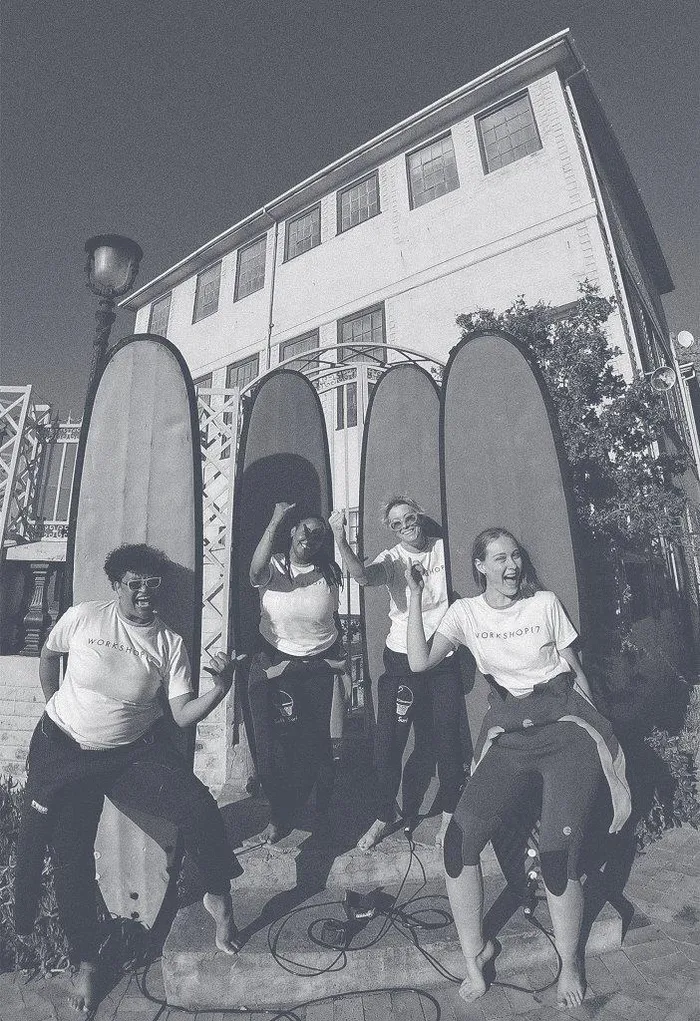
The first ladies of surf in Muizenberg.
Image: Supplied
In 1999, at a J’Bay competition, women were sent out to compete in a heat with no waves. In quiet defiance, they sat together at the water’s edge and refused to paddle out. No placards, or speeches, just women sitting together in solidarity. This image said everything, we are not here to be your entertainment, we’re here to surf. Then there was the photograph of a teenage girl at the Ballito Pro, holding a winner’s cheque for half the amount of the boy standing beside her. The global reaction forced the World Surf League to announce equal prize money, becoming the first American professional sports league to do so. It happened because of a South African girl on a South African beach.
But it’s far more than the competitive side that has shifted. It’s the everyday attitude to sharing the backline with women that has quietly, fundamentally changed. When Muizenberg local Emma Horner got tired of the feeling she encountered every time she paddled out, the subtle repositioning, the looks, the unspoken message, she went home and started a WhatsApp group. She called it Backline Babes.
In her own words she sums it up beautifully: “I thought maybe twenty women would join at most. That was honestly my expectation when I started Backline Babes, just a small WhatsApp group of friends of friends, a way to make the backline feel less intimidating. But messages kept coming. What grew wasn’t just a group, it was a movement of women showing up for each other in the water. Strangers became surf sisters, confidence was shared wave by wave and courage became contagious. Six hundred women later, it felt like something had shifted in Muizenberg. Women no longer hesitating, but fully claiming their place in the ocean, together, with strength, joy and belonging.”
Six hundred women who had been carrying the same feeling, waiting for someone to say, come in, we’ve got you. That number says everything about the demand that was always there. It just needed somewhere to go.
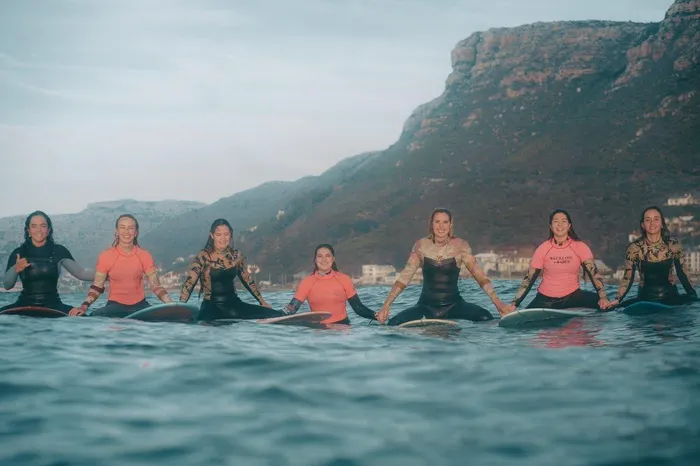
The Backline Babes of surfing in South Africa.
Image: Supplied
The most important thing about Backline Babes isn’t the growing membership or the merchandise. It’s the women who get up before sunrise knowing someone will be on the sand. The mother who finally tries surfing because there’s a group waiting, the daughter who watches her pull on a wetsuit for the first time and understands, without words, that it is never too late to start something that scares you. That is what the ocean does. It reaches ordinary women in their ordinary lives and changes the shape of what they believe is possible.
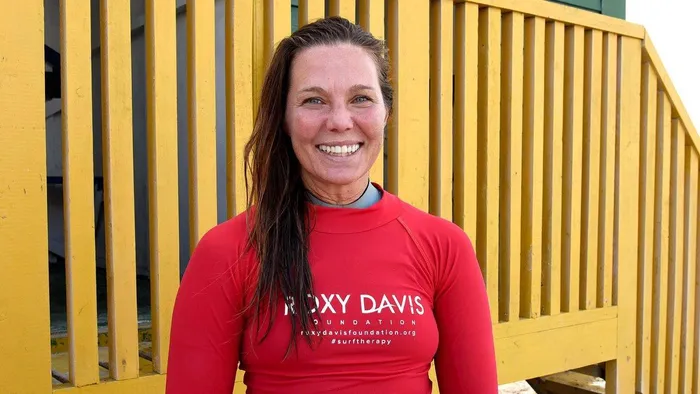
Surf therapist Roxy Davis from the Roxy Davis Foundation.
Image: Supplied
Later this year, Workshop17 will open its doors on the beachfront at Muizenberg, just 20 metres from Surfers’ Corner, where this all started. A place to work, to meet, to build something. Which feels, given the history of women doing exactly that on this stretch of coastline for over a hundred years, entirely appropriate.
I’ll be the one at the hotdesk with the wetsuit hanging over the chair.