
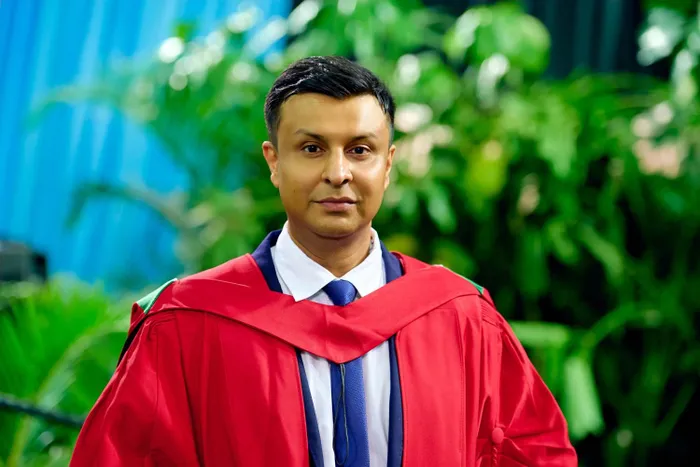
Dr Sahil Tulsi graduated with a PhD in Virology for his novel study.
Image: Supplied
In the global battle against Tuberculosis (TB), the "one-size-fits-all" approach to medicine may finally be reaching its expiration date. Dr Sahil Tulsi, a Durban-born researcher, has earned his Doctor of Philosophy in Virology from the University of KwaZulu-Natal (UKZN), delivering a body of research that could fundamentally change how the continent’s most persistent public health challenge is treated.
While TB is both preventable and curable, it remains a leading cause of death in South Africa. Dr Tulsi’s study, ‘Influence of Drug Transporter Gene Polymorphisms on Pharmacogenetic and Treatment Outcomes in African Mycobacterium tuberculosis Cohorts’, suggests that the secret to higher cure rates may be hidden within the unique genetic makeup of the South African population.
For decades, global pharmaceutical approaches have been informed by genetic data largely drawn from non-African populations. Dr Tulsi’s work identifies a critical gap in this science, highlighting that African genetic diversity is significantly underrepresented in the studies that dictate how drugs are dosed.
“South African patients may respond differently to TB treatment because of their unique genetic makeup,” Dr Tulsi explained. “Understanding these differences moves us closer to more personalised treatment for TB and HIV rather than a one-size-fits-all approach.”
His research focused on how specific genetic variations influence drug absorption, distribution, and elimination—the physiological process of how the body handles medication. By analysing data from 1,407 Black South African participants in KwaZulu-Natal, he identified specific variants that dictate how the body processes moxifloxacin, a cornerstone antibiotic in TB therapy.
The findings were striking. One specific genetic variant was linked to significantly reduced drug concentrations in the bloodstream. This suggests that some patients possess a genetic "blueprint" that causes them to metabolise the drug much faster than average. When a drug is processed too rapidly, it may fail to reach the levels necessary to kill the bacteria, leading to treatment failure or the dangerous emergence of drug-resistant strains.
“These findings show that understudied genetic variants unique to African populations potentially influence treatment outcomes,” said Tulsi. “Future studies may help to validate the potential of these variants to serve as biomarkers to guide dosing strategies and improve treatment success.”
Professor Veron Ramsuran, who supervised the study, emphasised that the implications for the healthcare system are profound. “By paving the way for precision medicine approaches tailored to African populations, the research could help reduce treatment failure and relapse rates, ultimately strengthening healthcare outcomes in communities hardest hit by TB.”
Dr Tulsi’s academic journey is a testament to the strength of South African institutional research. Having completed his undergraduate and postgraduate studies at UKZN, his passion for the intersection of microbiology and human health was ignited by early exposure to infectious disease research at the Medical Research Council and the Centre for the AIDS Programme of Research in South Africa (CAPRISA).
Reflecting on the achievement, Dr Tulsi described the completion of his PhD as a deeply rewarding milestone. “I feel a great sense of pride in having achieved this personal goal and in contributing, even in a small way, to the advancement of science,” he said.
Currently serving as a Senior Genomics Sales Specialist at Illumina, Dr Tulsi is already applying his expertise across Southern and East Africa. His work ensures that the next generation of genomic technologies, such as next-generation sequencing, is available to help African scientists continue the work of tailoring medicine to the people who need it most. Through researchers like Tulsi, the goal of a TB-free South Africa moves one step closer to reality—one gene at a time.