
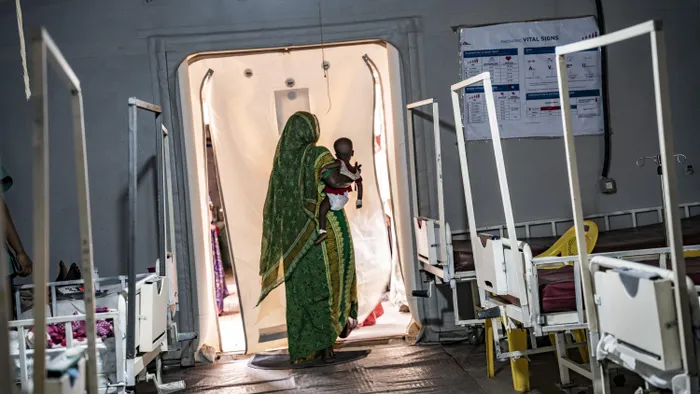
A caregiver leaves the ITFC tent in Ethiopia carrying her baby girl.
Image: Paula Casado Aguirregabiria
A year has passed since the Trump administration's sweeping executive actions, which Doctors Without Borders says ushered in a dramatic shift in US foreign assistance, leaving a trail of devastation in global health and humanitarian programmes. It says the true magnitude of the crisis is beginning to unravel, revealing catastrophic human costs around the globe.
According to Mihir Mankad, the Global Health Advocacy and Policy Director at Doctors Without Borders (MSF) USA, the actions taken under the previous administration have amounted to more than mere budgetary cuts; they represent a fundamental realignment of America’s approach to global humanitarian care. “While the world is still reeling from these cuts to aid, it's already clear that they were merely the Trump administration's opening salvo in reshaping global health and humanitarian assistance,” Mankad stated. He emphasised that the prioritisation of political agendas over essential health needs has profoundly endangered the welfare of some of the world’s most vulnerable populations.
Among the most harrowing impacts of this retreat is visible in Somalia, where shipments of therapeutic milk for malnourished children ceased, causing the number of severely malnourished youngsters in MSF-supported facilities to surge from 1,937 in the first nine months of 2024 to 3,355 in the same period of 2025. In the Baidoa Bay Regional Hospital, the grim consequences of inaction became starkly apparent; deaths among severely malnourished children rose by an alarming 44% in the first half of 2025 compared to the previous year, with many losing their lives within days of arrival.
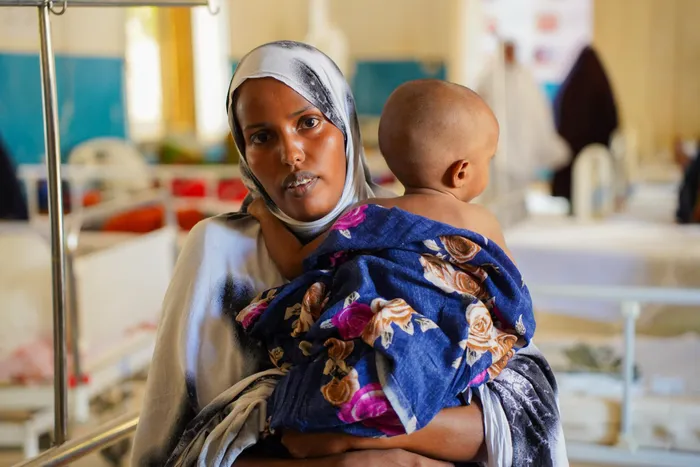
Suado Hassan Mohamed, 22, holds her 11-month-old son, Abdirahman Abdilatif, in the paediatric ward of the MSF-supported Bay Regional Hospital in Somalia. A resident of Baidoa, Suado brought her son for treatment, as he is currently receiving care for malnutrition.
Image: Mohamed Ali Adan
Similarly, in South Sudan, cuts to funding left Renk County Hospital in a critical state, abruptly leading to the discontinuation of support for 54 hospital staff and subsequently compromising maternity care operations. The MSF paediatric ward witnessed an alarming rise in neonatal emergencies, primarily due to insufficient hygiene and infection control measures. In response to the deteriorating conditions, MSF took action to bolster the maternity ward starting in September 2025, spotlighting the urgent need for intervention.
The Democratic Republic of Congo illustrates another dimension of this crisis, as the dismantling of USAID resulted in the cancellation of vital procurement of post-rape kits designed to mitigate the risk of HIV and other sexually transmitted infections. MSF’s teams have responded to extraordinary levels of sexual violence, providing critical care to 28,000 survivors in just the first half of 2025 alone. In an effort to bridge supply gaps, MSF has made unplanned purchases of post-exposure prophylaxis medications, still facing the ramifications of inadequate governmental support.
These recent developments signal more than a lapse in funding; they present a stark deviation from the traditionally humanitarian ethos of US foreign assistance. Last September, the release of the America First Global Health Strategy demonstrated a narrow vision of US engagement in global health, failing to address key issues such as sexual and reproductive health, nutrition, and support for chronic non-communicable diseases. Negotiations for a range of bilateral agreements with recipient nations indicate a shift towards a more transactional model that eschews inclusive dialogue.
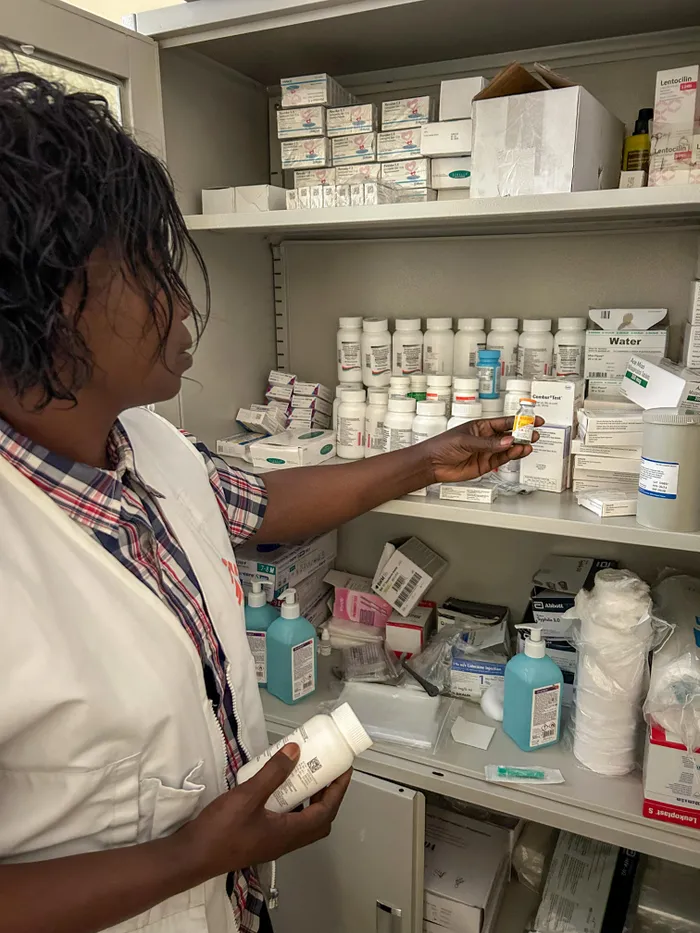
An MSF midwife supervisor organises medicines given to sexual violence survivors at their first medical appointment at Turunga Health Centre, Goma, DRC. She holds post-exposure prophylaxis for HIV, administered to survivors within 72 hours of the assault.
Image: Laora Vigourt
While the administration touts these agreements as enhancing national ownership of health programmes, critics argue that they come at the cost of essential services, particularly for marginalized populations. “The claim that these agreements advance national ownership rings hollow when, at the same time, you have State Department officials openly telling countries that global health assistance is contingent on their willingness to strike a minerals deal with the US,” Mankad pointedly remarked.
The ramifications of the Trump administration's actions are severe and widespread, inflicting humanitarian harm that will take years to rectify. As the global community grapples with the ongoing fallout, it is imperative that world leaders refocus efforts on restoring cooperation and commitment to the ideals of humanitarian aid, ensuring that the most vulnerable have access to the health services they desperately need.
IOS