Why the hotel bakery is becoming as popular as the hotel bar
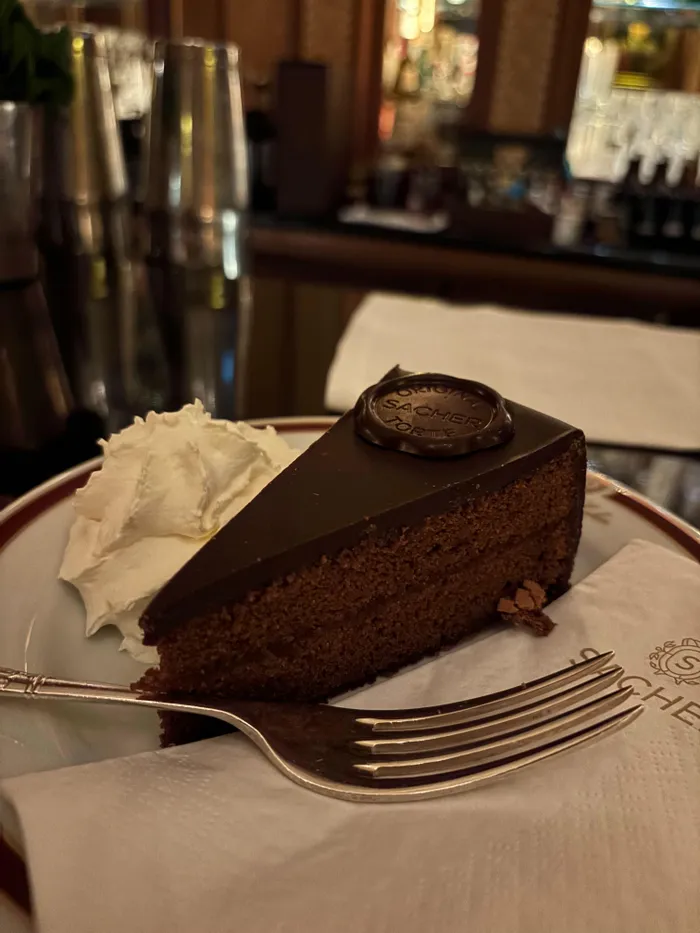
A slice of Vienna at the Lanesborough.
Image: Sarah Rappaport / Bloomberg
Sarah Rappaport
In late January, I pushed open a frosted door in Mayfair, London, and entered a different world, engulfed by the intoxicating scent of yeasty bread and caramelized sugar. I was 7 miles from my home in North London, yet I was mentally on vacation: at the new Claridge’s Bakery.
The little space only had room for grab-and-go, with half of it dedicated to viewing the staff hard at work on their creations. I was there for a sweet escape, but a whole host of people waiting in line were there to see celebrity baker Richard Hart in action. He’d gained renown as head of San Francisco’s Tartine Bakery, before dazzling Copenhagen with his cardamom buns. In certain circles, he’s kind of a big deal.
From the glass display case I chose an iced finger bun slicked with a pink sugar glaze. The day’s stress immediately melted away like butter in a warm pan.
Hart’s portal to sugar-induced bliss is part of a larger trend in which iconic hotels are teaming up with A-list bakers - not just to supply their breakfast pastries but to create spaces as viral and crowded as an excellent lobby bar. (Claridge’s of course, has several excellent bars, like a popular spinoff of the New York favorite Dante). At the end of the day, people are drinking less, but they’re lining up like never before to buy little indulgences made from laminated dough.
Bakers have taken on the celebrity status that bartenders once had, with Cédric Grolet, the 40-year-old French pastry magician, now claiming 13.5 million Instagram followers. At his own hotel bakery, in London’s the Berkeley Hotel, people line up at all hours of the day for a taste of his fruit entremets - little cakes made to look like apples and mangoes. A vanilla flower tart there costs £23 ($31.39), just a little less than a cocktail off the Connaught’s famous martini cart. The Airelles Palladio hotel in Venice, opening this spring, will have a Grolet bakery too, putting the outlet’s emphasis on celebrity cachet rather than local Italian flavors.
It’s bigger than just Grolet and Hart. The Gardiner House in Newport, Rhode Island, just launched Gardiner Provisions, a neighborhood bakery that serves raspberries and cream cruffins and sourdough. In Dubai, the lobby of the year-old Jumeirah Marsa Al Arab hotel hosts a Pierre Hermé cafe - the chef Vogue called the “Picasso of Pastry.” Another of these macaron-doling havens has opened at La Mamounia in Marrakech. Like a good hotel bar, these are usually open to both guests and the local community.
The rise of buzzy bakeries isn’t just due to the rising fame of pastry chefs who have become international social media phenoms. It’s also indicative of “little treat culture,” says Milly Kenny-Ryder, author of Britain’s Best Bakeries. Amid a cost-of-living crisis, she says people may be cutting back on lavish restaurant dinners but they’re still happy to spend £20 on a creative baked good that feels like a special moment unto itself.
Florent Girardin, associate professor of marketing at the EHL Hospitality Business School in Lausanne, Switzerland, says this phenomenon is an evolution of the “lipstick effect,” an economic trend in which consumers - young ones, in particular - cut back on larger purchases like lengthy vacations while splurging on so-called affordable luxuries like fancy cosmetics to keep their mood buoyed. Research from Bank of America backs this trend, with a July report saying 57% of Gen Zers buy themselves a small “treat” at least once a week. These splurges come without economic guilt, which is important to millennial and Gen Z consumers for whom the traditional goals of financial security, like homeownership, have been elusive.
“I think life is hard, and when you feel like you can’t afford to buy a home, buying yourself a £4 iced bun as a little pick-me-up is sometimes more special than the big treats,” says Kenny-Ryder.
It doesn’t hurt that during the pandemic, people developed a better appreciation for the art of baking - remember the failed sourdough experiments galore? I spent months perfecting my banana bread recipe. Plus, it’s easy to turn small indulgences into a routine - or to use them as windows into a world that we might not otherwise want to shell out for.
Corsica-based swimsuit designer Tara Matthews, for instance, is happy to stay at a hotel more modest than the $2,700-per-night Ritz when she’s in Paris, but she won’t skip out on visiting its bakery.
“Those madeleines are the best thing in the world, and the service is just so great,” she says.
She’s not alone. Fora travel adviser Claire Herzog says she’s increasingly planning pastry crawls for her clients rather than bar hops - particularly in urban destinations such as Paris and Mexico City. She says these outings speak to people’s propensities for daytime, sober-leaning experiences that still feel indulgent and social.
But as the hotel bakery trend grows, it’s also evolving. Rather than homegrown chefs offering a sense of their destinations - like the Ritz does in Paris, by sticking to such local delicacies as macarons and madeleines - the next iteration has globally famous spots like Grolet’s and Hart’s popping up in hotels around the world.
Think of it like a vacation within a vacation. It’s less about the culturally authentic experience of cardamom buns in Copenhagen or conchas in Mexico and more about the pastry chef as an international superstar. Carrying a shopping bag from one of Grolet’s bakeries might now come with the same brand-name gravitas and social cachet as lugging around a giant shopping bag from Chanel or Louis Vuitton. Perhaps more so, given that he doesn’t have shops in every major urban hub.
That explains why Jenny Nisman, a nurse in the Atlanta area, made it a priority to visit the Cédric Grolet Bakery at the Airelles Château de La Messardière in St.-Tropez hotel during her trip to the south of France in August instead of just hitting up the shops along the iconic Rue Gambetta.
“We knew Cédric Grolet was viral, and we love to try these sorts of places out,” she says. Nisman and her friends woke up early to get to the bakery not long after it opened one morning to avoid waiting in the long lines that wrap around the store. She calls herself a big foodie and says she plans her travel days around these kinds of experiences. (She didn’t stay at the hotel, but at one nearby.)
Her order? An oversize peanut-shaped creation with caramel, salted peanut paste, peanut ganache and white chocolate. In a strategy that I deliberately did not employ, she suggests eating (and photographing) as quickly as possible: In St.-Tropez, unlike London, enjoying pastries can be a race against the sun, with creamy or chocolaty elements melting and drooping in the heat.
But a good sweet treat doesn’t need virality. There’s something timeless about a perfectly made slice of cake, and hotels have known it for quite some time. Take Vienna’s beloved Hotel Sacher, right across from the city’s opera house. It’s perhaps most famous for creating the Sacher-Torte, a rich chocolate sponge cake with a layer of apricot jam. It was invented in 1832.
And yet, the Sacher is getting in on the value trend too: The cake can now be found at London’s Lanesborough Hotel as part of a pop-up, where slices are sold alongside other Viennese classics like warm apple strudel. I strolled into the hotel in February, and for £18 ($24), the indulgent cake - dark and smooth with fancy swirls of homemade cream on the side - transported me to Vienna without the price of a plane ticket. Enjoyed under the glittering light of the Lanesborough’s elaborate chandeliers, it was a perfect little treat.