
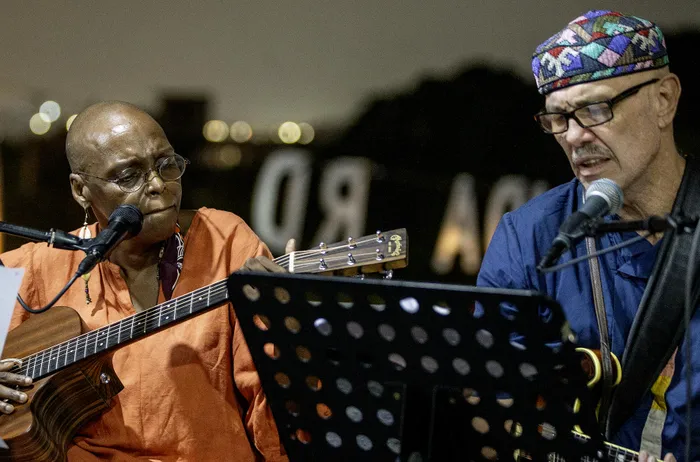
Musician Lu Dlamini and her partner Marius Botha at the launch of her book, UMPHROFETHI, the isiZulu translation of Kahlil Gibran's book, The Prophet.
Image: Leon Lestrade/Independent Newspapers
DURING the Covid lockdown, musician Lu Dlamini picked up her pencil and began an unexpected project: a translation of The Prophet into isiZulu.
What began as a way to cope with all the uncertainty slowly became UMPHROFETHI, the isiZulu version of Kahlil Gibran’s 1923 classic. It was published through the University of Johannesburg and launched at Ike’s Books in Durban this week.
Through Dlamini’s work, The Prophet, already translated into more than 100 languages, now includes isiZulu.
She first encountered the book in 2012, around the time when she began a youth outreach programme, Art Knows No Boundaries, where she visits schools and libraries to motivate young people through music and wisdom from the book.
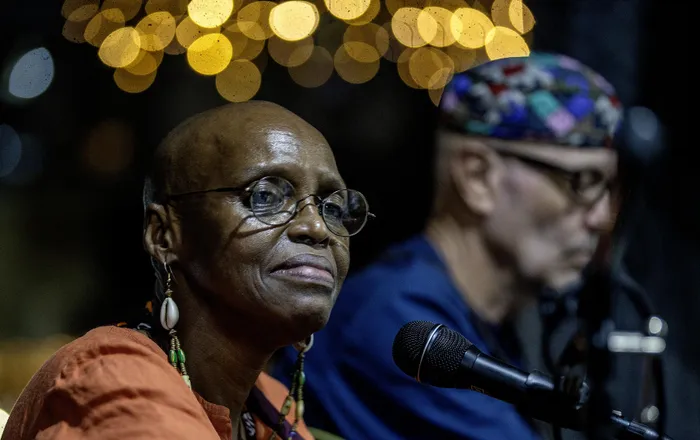
Musician Lu Dlamini and her partner Marius Botha at the launch of her book, UMPHROFETHI, the isiZulu translation of Kahlil Gibran's book, The Prophet.
Image: Leon Lestrade/Independent Newspapers
However, during Covid, The Prophet took on new meaning. “It’s the very thing that kept me sane, translating it into isiZulu,” she says.
“Everything was shifting and changing all the time,” Dlamini says, recalling how she translated the book twice, writing it by hand in pencil, producing two handwritten isiZulu versions of The Prophet.
She didn’t start with the intention of publishing a book. It was just a personal project to keep her grounded.
“It became a healing potion, like medicine,” she says. “Something that says things will get better, they’re not as bad as you see them right now.”
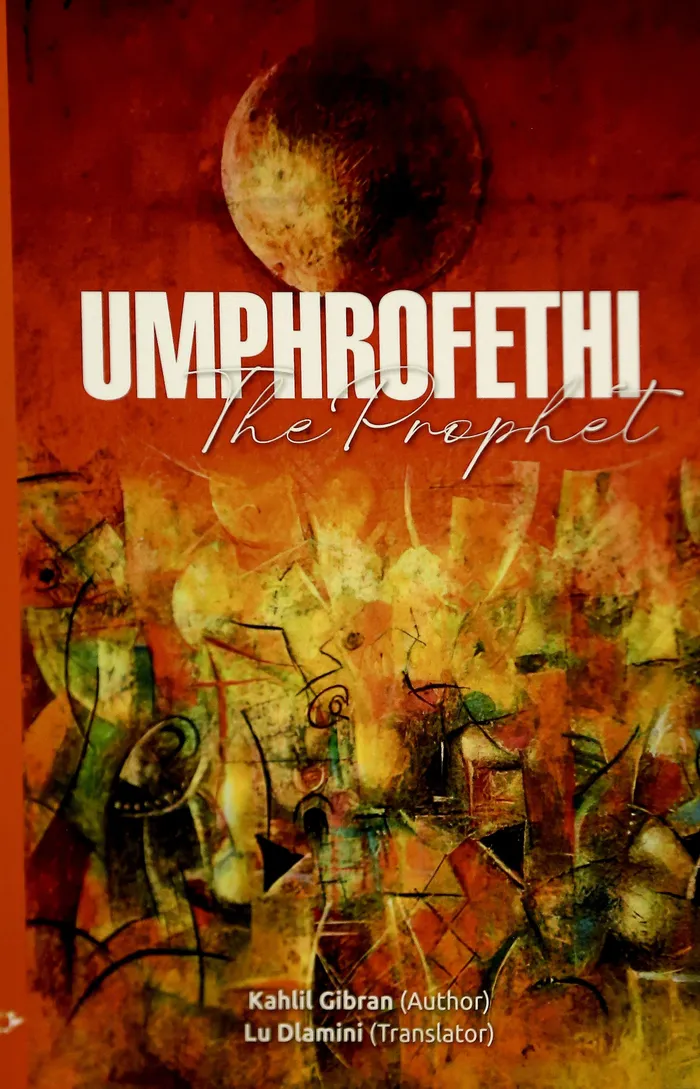
UMPHROFETHI, the isiZulu translation of The Prophet, a project by musician, Lu Dlamini.
Image: Leon Lestrade/Independent Newspapers
The English version of the book was given to her partner, Marius Botha, by his mother when he was 11, nearly 50 years ago. It remained in the home for years before Dlamini decided to read it.
By using it in her youth project she wanted to show young people that there are ways to heal and find direction in life beyond medicine, and that music can do that.
But UMPHROFETHI was just the beginning.
Next, instead of pairing themes in the book with her existing music, the vocalist, who is also renowned for performing with traditional instruments, now plans to compose a unique piece for each chapter in the book.
“There was a lot in common with what I say in my songs and what's said in the book. But now I'm trying to create sounds for each theme. When we speak of love, people must identify with a certain sound. It must really feel like love. “It doesn't need lyrics because the book already has the words. So what I'm trying to create now is a sound that will go with each and every theme that is in the book,” she says.
Her favourite way to read The Prophet is just by opening the book at a random page and then reflecting on its message.
Despite being a musician, Dlamini says it didn't change her understanding of Gibran’s messages or the rhythm in his writing.
“The thing is, a book is a song, a painting is a song, a song is a book and a song is a painting. It depends on how you feel about it. Fine art is a song for your eyes,” says Dlamini.
She said translating the book had to be deliberate. “In isiZulu, what is one word in English can become five words.” “Sometimes one word carries several meanings, so you have to be very clear.”
Dlamini says there was a lot of negotiating once the book was with the editors. “There’s a lot of back and forth,” she says. “We don’t all come from the same communities, and we all speak differently, so there’s always debate around certain words”.
She also believes that English doesn’t convey emotion as well as isiZulu or isiXhosa. “It's like African languages were created to heal”.
Some of Dlamini’s favourite passages in the book are those about children, which was shaped by her own experience of becoming a mother in her teens.
One of those is the iconic Gibran quote: “Your children are not your children. They are the sons and daughters of life’s longing for itself. They come through you but not from you.” It means you don't own them, she says.
But what would Gibran say about her translation? “He’s sitting somewhere looking at all these versions and thinking, ‘ah, so this one said this.’ I don’t think in his eyes it’s wrong. It’s just another part of him that he didn’t say when he was still alive.”
Asked about the target audience for the translation, she says: “It was really meant to heal me, but once you have something, you always wish to give it to somebody else.”
Now she hopes that UMPHROFETHI will inspire others and spark conversations between young and old.
UMPHROFETHI retails between R125 and R200 depending on the seller and is available at Ike’s Books or online via her website, www.ludlamini.co.za.