
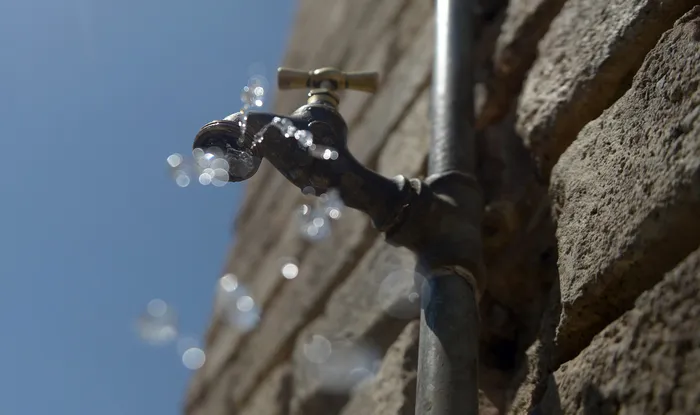
Residents in Durban are reassured that municipal water remains safe to drink despite recent changes in taste and odour linked to elevated levels of 2-methylisoborneol.
Image: Oupa Mokoena / Independent Newspapers
Something is wrong with Durban’s drinking water; or at least that is what a growing number of residents fear.
Over the past few weeks, distrust over the quality of the city’s tap water has been growing as residents across eThekwini claim they have fallen ill after drinking it.
People from different communities have reported symptoms associated with gastroenteritis, including diarrhoea, stomach cramps and nausea.
“It’s 100% the water,” a pharmacist from the Sparksport Pharmacy group told the Independent on Saturday this week.
“We are seeing a lot of stomach cramps, diarrhoea and nausea. A lot of people are sick,” she said.
The pharmacist said many residents had started buying bottled water because they no longer trusted the quality of the municipal supply.
She claimed that even boiling the water did not fully address residents’ concerns over its quality and said the increase in stomach-related complaints had been noticeable across several pharmacy branches.
“We are ordering gastro medication every week now,” she said.
Concerns over the water intensified after some residents complained that it smelt foul and had a “sandy” or “earthy” taste, while others described the water flowing from taps as whitish or brown.
Morningside resident Charles Cane said his 84-year-old mother, Myrna, became severely ill after drinking tap water.
“She has eaten the same food for years and hardly ever leaves the house except to go to church on Sundays,” Cane said.
“But she couldn’t go to church for two weeks because she was so sick. She had severe diarrhoea and I was constantly changing bedding and clothes because she kept getting sick. The washing machine was running almost all the time.”
Cane said he also developed stomach problems and that the family doctor suspected the illness may have been linked to the water supply, although no definitive cause had been confirmed.
“She became extremely weak. She could barely lift her head,” he said.
Last week, eThekwini Municipality said it was working closely with uMngeni-uThukela Water to address elevated levels of 2-methylisoborneol (MIB) affecting water supplied through the Wiggins Water Treatment Works.
“The Municipality wishes to assure residents that, despite the temporary taste and odour changes, water remains safe for human consumption and continues to meet the required quality and safety standards,” it said in a statement.
It added that MIB, a naturally occurring compound linked to increased levels of blue-green algae in surface water systems, can cause an earthy or musty taste and odour, but does not pose a health risk.
It said intervention measures included intensified water treatment processes, more frequent filtration cycles and enhanced monitoring systems.
The municipality added that uMngeni-uThukela Water had also implemented an advanced ozone treatment process this month, achieving “at least a 50% removal efficiency in conjunction with powdered activated carbon treatment systems”.
uMngeni-uThukela Water spokesperson Siyabonga Maphumulo reiterated on Thursday that the water remained safe for consumption.
“We’ve put our heads on the block to say despite the unpleasant taste and odour, the water remains safe to drink,” he said.
“It is rigorously tested in our laboratories and we can confirm that it meets the required standards.”