
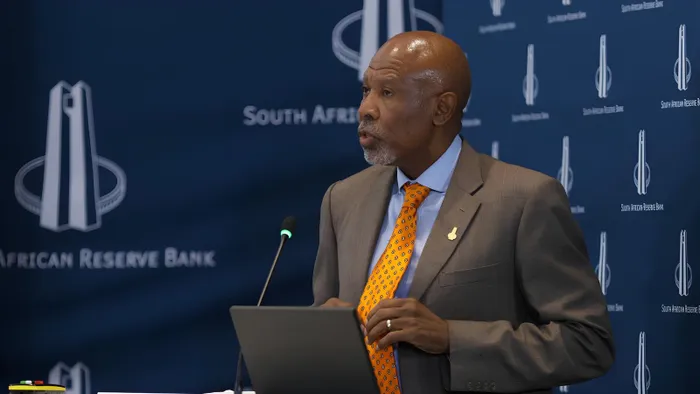
Announcing a 25 basis point increase in the repo rate to 7%, SARB Governor Lesetja Kganyago said the MPC was responding to growing risks posed by the prolonged Middle East conflict.
Image: SARB
The South African Reserve Bank (SARB) has issued a stern warning that additional interest rate hikes may be on the horizon as inflation pressures threaten to escalate.
Following a 25 basis point increase in the repo rate to 7%, SARB Governor Lesetja Kganyago outlined significant risk scenarios that could propel inflation above the critical 6% mark, compelling policymakers to resort to further monetary tightening.
In a climate marked by the ongoing conflict in the Middle East, surging fuel and food prices, and potential second-round inflation effects, the Monetary Policy Committee (MPC) acted decisively. This latest increase elevates the prime lending rate to 10.5% and reflects the central bank's proactive stance in mitigating growing risks.
Kganyago noted a troubling decline in the economic outlook since the MPC's previous meeting. The bank now anticipates headline inflation to average 4.4% in 2026, rising from a forecast of 3.7% next year before targeting the desired 3% mark by 2028.
A sharp uptick in consumer inflation to 4% in April, up from 3.1% in March, largely driven by a staggering 11.4% rise in fuel prices, underscores the urgency of the situation. “This is one of the largest jumps in fuel inflation on record,” Kganyago stated.
While the MPC noted the absence of clear evidence of widespread second-round inflation effects, Kganyago expressed concerns that prolonged supply shocks could begin to embed themselves into wages and inflation expectations, according to Business Report.
The bank's Quarterly Projection Model suggests one more rate hike this quarter may be necessary; however, Kganyago emphasised that future decisions will depend on evolving data and circumstances.
The SARB outlined three alternative risk scenarios to evaluate future inflation threats.
The first scenario foresees prolonged strife in the Middle East and an extended closure of the crucial Strait of Hormuz, leading to higher oil and food prices, potentially pushing inflation to around 5%. This would necessitate two additional interest rate hikes.
The second scenario considers the emergence of the El Niño weather pattern, which generally brings drought and higher food prices, and would result in elevated interest rates for an extended period.
The most adverse scenario combines these risks, projecting inflation peaking above 6% and requiring three more hikes.
Economic analysts are echoing the SARB's concerns. Patrick Buthelezi of Sanlam Investments believes that more rate hikes may be required across all three scenarios.
“This could be the only hike, but evidently, there are upside risks," he remarked. Mark Phillips from PPS Investments added that the SARB's decision demonstrates a significant shift in policy, due to the perceived severity of current challenges impacting inflation.
Furthermore, FNB chief economist, Mamello Matikinca-Ngwenya, stated that the SARB’s strategic move is aimed at preventing enduring inflation risks, as reported by Business Report.
“To curb this risk of more widespread inflation, the SARB has opted to act proactively by raising interest rates — aiming to dampen demand and pricing power,” she explained.
The upcoming release of second-quarter inflation expectations data will be pivotal in influencing the path forward for interest rates, as the market watches closely for any shifts away from the SARB's 3% target.
However, the implications of the rate hikes are concerning for businesses. Oscar Siziba, managing executive for commercial at Nedbank, warned that elevated rates would exacerbate already strained cash flows for businesses battling rising operational costs.
“Higher interest rates increase borrowing and debt servicing costs, placing additional strain on cash flow,” Siziba cautioned.