
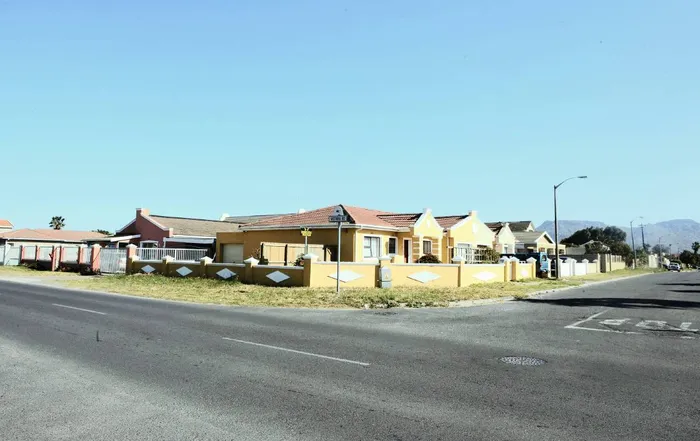
The property market has historically shown resilience during changing rate cycles.
Image: Tracey Adams
The interest rate increase may place additional pressure on household finances in the short term.
This is as the policy rate increased by 25 basis points to 7%
Delivering the Statement of the Monetary Policy Committee on Thursday afternoon, Lesetja Kganyago, Governor of the South African Reserve Bank (SARB) said the committee decided to increase the policy rate by 25 basis points, to 7%, effective from 29 May.
He said four members preferred this action, while two favoured no change.
“The committee agreed that inflation risks had intensified and that the challenge of large and overlapping shocks would likely trigger second round effects, requiring a monetary policy response. Our decision was aimed at managing risks and ensuring that inflation returns to target.”
The MPC decision to increase interest rates, with the repo rate now at 7% and the prime lending rate at 10.5%, reflects SARB's ongoing efforts to contain inflation as ge-opolitical tensions persist and commodity prices continue to rise, says Adrian Goslett, CEO and Regional Director of REMAX Southern Africa.
He says the property market has historically shown resilience during changing rate cycles.
“Higher interest rates will naturally influence buyer affordability and may result in consumers approaching property decisions with even more caution, however, the South African property market remains underpinned by long-term demand as property is viewed as a stable investment,” he explains.
The CEO notes that while higher borrowing costs may cause buyers to delay purchasing decisions and reassess their budgets, the demand for property is still expected to remain resilient as many South Africans continue to view property as a stable long-term investment.
“For consumers, now is the time to review budgets carefully, reduce unnecessary debt and approach property decisions with the long-term goal in mind. Buyers who plan ahead and remain financially responsible can still find valuable opportunities in the market,” Goslett says.
The increase in rates will come as an unwelcome surprise to consumers, especially given what expectations were at the beginning of 2026, says Herschel Jawitz, CEO at Jawitz Properties.
He says with inflation holding at the new Reserve Bank target of three percent, the expectation was at least two rate cuts this year of 0.25% each which would have taken the prime lending rate to 9.75%. Now consumers are faced with high fuel costs and higher interest rates within the space of three months, he says.
“Despite the ‘cost shock’, the impact on the residential market is expected to be marginal. Sentiment in the residential property market among buyers, sellers and investors remains firm and property price growth according to the latest stats from FNB is at 5.4% which is the highest year-on-year growth rate since 2021 when interest rates were at record lows post-Covid.”
The CEO says demand for property across the country exceeds supply and even with the rate increase, the market is expected to hold at current levels.
Much will depend on how long the current high fuel prices and increased rates will last. The longer they last, the greater the impact on the residential market, he adds.
The SARB's decision to increase the repo rate by 25 basis points to 7% (prime to 10.50%) is premature and a blow to the economy and property market, says Samuel Seeff, chairman of the Seeff Property Group.
He says the hike will unnecessarily penalise consumers and hamper economic recovery for what is clearly a temporary spike in inflation, driven by external factors rather than domestic overspending.
At 4%, the inflation rate is only just at the upper end of the Bank’s 3-4% target range while the Rand has remained stable below R17.00 to the USD. This, according to Seeff, provided sufficient room to keep the rate unchanged for the sake of economic stability and growth.
The chairman says the temporary nature of the inflation blip should also have been considered.
“It was entirely expected and less severe than anticipated. Fuel prices and inflation will come down again. Given the missed opportunity to cut the rate in January, the rate should have been kept unchanged.”
Consumers and the economy are already struggling under the weight of high interest rates and the burden of fuel price hikes and other cost increases, Seeff says. Further pressure on disposable incomes only exacerbates the current economic challenges while impeding recovery, he adds.
He reiterates that economic stability and growth must be prioritised and facilitated wherever possible. The first-quarter job losses (taking unemployment to a disastrous 32.7%) and fading economic optimism which has already seen the GDP growth outlook downgraded to around 1.2% from an initial 1.6%, must be a priority at this stage, he says.
The property market also seems to have lost momentum from the end of last year, largely due to the expected January rate hike not materialising. Overall, he says, despite the rate cuts over the last two years, the market remains around 20% below the 2021/2 highs.
Higher interest rates and weakened disposable income affect buyers' ability to enter the market, especially first-time buyers where we continue seeing the average age increasing rather than reducing, he says further.
Buyers and investors want a stable environment with predictable interest rates, not a situation where rates are hiked unnecessarily and do not come down when they should.
That said, Seeff says the market continues to offer good opportunities for buyers and sellers. He says despite the hike, the interest rate is still well below what it was two years ago and the general mortgage lending environment remains hugely supportive of the market. ooba recently reported approval rates of around 84%, lower deposit requirements (12.8% from 15.4%), and rate concessions still attainable. Buyers should take advantage where they can, Seeff says.
Independent Media Property