
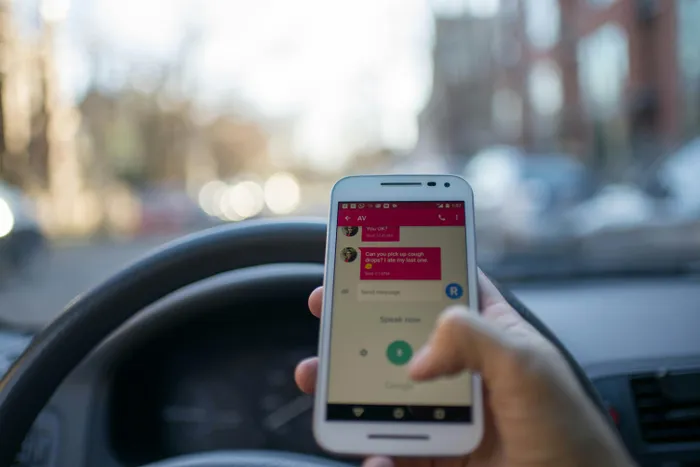
Texting while behind the wheel increases the risk of an accident by 23 times, an expert says, warning that distraction robs you of the seconds that can be the difference between a close call and a life-changing incident.
Image: Pexels
Statistics from Transport Minister Barbara Creecy on this past festive season revealed a worrying trend: human factors were at the core of the 1,172 car accidents recorded during the period. The most significant culprit? Driver distractions, particularly the use of mobile phones. In a world where technology governs much of our daily lives, this alarming data serves as a wake-up call for motorists nationwide.
Wynand van Vuuren, client experience partner at King Price Insurance, emphasised the significance of Distracted Driving Awareness Month, observed in April, highlighting the stark reality of how quickly moments of inattention can escalate into catastrophic events on the road. “Many drivers think they can glance at a message or adjust something on their phone without consequence," he noted. "The reality is that distraction robs you of the seconds you need to react, and, on the road, seconds can be the difference between a close call and a life-changing accident.”
Research underscores the danger that comes with texting and calling while behind the wheel. A study revealed that those who text while driving are 23 times more likely to be involved in an accident, while merely dialling a number elevates the risk by six times. To illustrate the peril: taking just five seconds to read a message while driving at 90 km/h is akin to covering the length of a rugby field with your eyes closed.
The implications of distractions extend beyond just immediate danger; they directly affect reaction times. Texting drivers exhibit a staggering 35% decline in their reaction times compared to normal. In contrast, drunk drivers are merely 12% slower than average. These statistics paint a grim picture of how easily ordinary actions can compromise road safety.
But it’s not just phones creating hazards. Children are significantly more distracting, making up to 12 times more potential distractions than cellphones. Parents are often sidetracked by their little ones, accounting for over 20% of their focus during a typical 16-minute trip. Alarmingly, about 10% of new mothers report having been involved in a car accident while driving with their infants.
Moreover, eating while driving also poses an increased danger, with studies indicating a nearly 39% rise in crash risk associated with consuming food on the go.
In the unfortunate event of an accident, proving distraction can be a significant legal hurdle. Van Vuuren advises that while it’s challenging to demonstrate that a driver was distracted at the moment of an accident, engaging in illegal activities — such as holding a cellphone while the engine is running or driving under the influence — can severely impact insurance claims. “Always check your policy document to understand what is covered and what isn’t,” he warned, stressing the importance of being aware of legal requirements.

Wynand van Vuuren, client experience partner at King Price Insurance
Image: Supplied
In light of these alarming statistics and insights, adopting simple yet effective habits when driving can make all the difference. Here are some practical suggestions:
Van Vuuren concluded, “Our roads already come with enough hazards — potholes, traffic signals, and pedestrians. Phones, food, and playlists multiply this risk. No distraction is worth a life. When you’re behind the wheel, the only job that matters is driving.”
IOS