
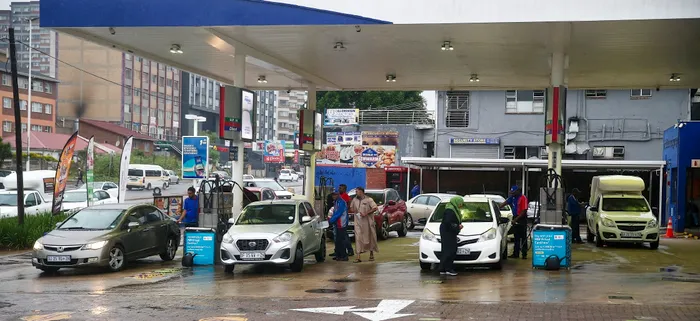
Motorists head to the pumps on Tuesday before a wave of fuel price hikes hit the country at midnight.
Image: Leon Lestrade
The Durban Chamber of Commerce and Industry has expressed deep concern regarding the fuel price increase that took effect on May 6. This rise, it says, is directly linked to the ongoing geopolitical tensions involving Israel, the United States, and Iran, which have contributed to volatility in global crude oil markets.
According to Palesa Phili, CEO of the Durban Chamber of Commerce and Industry, South Africa's heavy reliance on imported crude oil makes the country particularly susceptible to sudden fuel price hikes. “The impact on business is devastating,” Phili commented, highlighting that fuel is integral not only to the transport sector but across all industries. This dependency magnifies risks for sectors such as agriculture, manufacturing, and public transport, creating an onerous burden as consumers face the inevitable rise in prices.
Durban's large logistics sector is especially at risk, said Phili. The fuel price increase not only raises operational costs for companies but also disrupts trade, posing a broader economic challenge. Margins shrink as expenses for imports and exports rise, thereby undermining South Africa's competitiveness at a decisive moment when businesses are trying to recover from previous economic pressures.
Large corporations might absorb such shocks, but the situation is dire for small and medium-sized enterprises (SMEs). As many SMEs already grapple with narrow profit margins, the rising fuel costs threaten their sustainability, with some potentially facing closure. “For many businesses, this could be the final blow,” Phili added.
The ramifications extend beyond individual businesses. Increased fuel prices are expected to push inflation higher, alongside rising costs of electricity and transportation, while salaries remain stagnant. This scenario results in diminished purchasing power for consumers and businesses alike, further tightening the financial strain on households and local enterprises.
With confidence in the business sector waning, the Chamber has called for urgent governmental action. Phili emphasises the need for a clear government strategy to navigate these crises effectively, stating that “decisive action and clarity are essential” to restore confidence and ensure transparency on the strategies in place to mitigate these challenges.
In a bid to soften the blow for affected businesses, the Durban Chamber of Commerce is urging the government to consider a deeper cut to the fuel levy and to introduce additional supportive measures for SMEs. “Stabilising our economy is critical,” Phili said, reinforcing the Chamber’s commitment to working collaboratively with the government.
IOS