
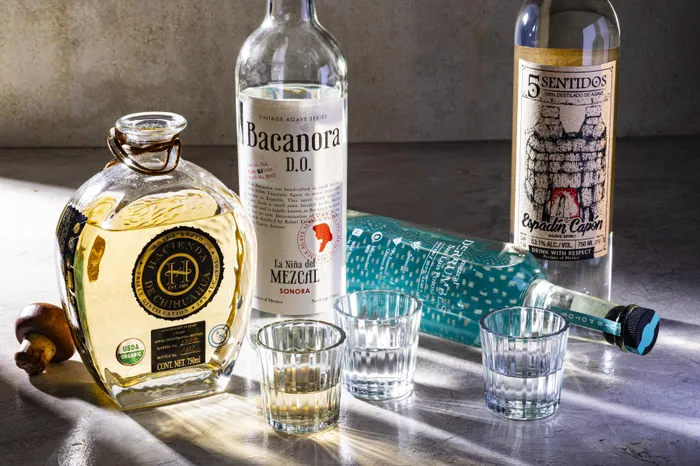
The specific plants and production methods used to create heritage Mexican spirits — including, from left, sotol, bacanora, mezcal and “destilado de agave” — will tell you more about their flavors than the broader category names.
Image: Scott Suchman/ For The Washington Post; food styling by Lisa Cherkasky
M. Carrie Allan
With a layer of chips and salsa providing a landing strip, I’m tasting a flight of agave spirits at El Chucho in D.C. The last is a raicilla with a pungent nose and a fruity, funky flavor. Something like … a guava and cheese danish? It’s nothing like the bell pepper notes I love in my favorite tequila. I can’t imagine burying it in a margarita, in which its idiosyncratic qualities would be obscured by lime and triple sec.
I’ve spent recent weeks sampling mezcals, sotols, bacanoras, raicillas and “destilados de agave,” yet barely scraped the surface, especially of the regional variations that fall outside the Mexican D.O.s (denominations of origin, the laws that - in theory - help define and protect specific heritage foods and beverages from countries around the world).
“I always say there are only four ingredients in mezcal: the agave, air, water and the hands of the maker,” says Susan Coss, co-founder and director of Mezcalistas, a company dedicated to raising awareness of Mexican craft spirits. From such simple-sounding ingredients come bottlings with an amazing range of flavor notes - herbs, stone fruit, cooked squash, earth, petrichor - a huge spectrum in spirits that are often reduced to one word, used dismissively or appreciatively: “smoky.”
Loosely but not legally, the word “mezcal” refers to Mexican spirits made from the cooked hearts of agaves, a diverse genus of desert plants. In this sense, tequila itself is a mezcal. But to be called “tequila,” the spirit must come from specific areas of Mexico and contain only one species of agave, the Blue Weber.
And though tequila defined the category for a long time, in significant ways, tequila is not mezcal. Or is no longer mezcal. And geographic rules mean that while bacanora and raicilla and other regional agave spirits are culturally mezcal, many are legally not allowed to call themselves mezcal. Sotol, made from a plant called the desert spoon, is not agave at all but is culturally mezcal-adjacent. Some bottles that could legally be labeled mezcal are choosing not to be, and some bottles labeled mezcal are not what connoisseurs believe mezcal should be.
So … yeah. It’s complicated.
Financially, tequila is a massive success story, but as its popularity grew through the latter half of the 20th century, the spirit’s handmade edges have been sanded down. The agaves began to be grown and processed more efficiently to meet demand. While there are holdouts who continue to make traditional tequila, by and large tequila has industrialized, its flavors changing as it evolved.
Meanwhile, small distillers all over Mexico continued to make spirits with varied species of farmed or wild agaves, many maintaining traditional roasting, fermentation and distillation methods. Now, as more people outside of Mexico discover these bottlings, the mezcal category is coming under similar pressures to grow.
Many mezcaleros continue to fight to preserve their traditions, but some have scaled to meet the demand. In certain cases, there’s no longer anything “artisanal” about these productions, no matter what the labels say, says Coss.
It’s a conundrum: Appreciation for these heritage spirits has become a market force driving them to change, in some cases industrializing to a degree that’s “detaching mezcal from what brought people to it in the first place,” says Coss.
The legalese surrounding these spirits has only grown, with denominations of origin ostensibly protecting and preserving them. But by and large, says agave spirits importer and James Beard-winning author David Suro, the D.O.s “were designed more to protect the interests of the big companies than the interests of individual traditional producers.”
Some of the best producers cannot call their products mezcal, due to their location or the agave species they use, and some have opted not to use the traditional names, opting instead for terms like “destilado de agave” (agave distillate). “It’s kind of like a cultural divorce,” Suro says.
Whatever these spirits are called, their names don’t always communicate the flavors that show up in them. The names of the agaves used to make them are usually more helpful, and tend to be how those in the know reference the bottlings. But before we get into that, let’s talk about smoke.
As a cocktail maker, for me the smoke in many mezcals is part of their appeal. Del Maguey’s Vida (now Vida Clásico), an accessibly priced and smoke-forward bottling, was one of the mezcals to make early waves in the craft cocktail community, becoming the go-to for many mixologists and shaping many consumers’ understanding of mezcal.
But there are hundreds of agave expressions derived from dozens of species. Each reflects the altitude, soil and climate of where the agave grew, and the choices made by the people who turned it into spirits - the cooking and fermentation methods, the still type - and designed to pull specific notes from the plant. Describing mezcal as “smoky” is like describing wine as “grapefruity” or “leathery”: The descriptor is very true of some bottles, not at all of others.
Daniel Rodríguez, certified sommelier and founder of the Agave Spirits Institute, recommends developing an understanding of various agaves the way you would wine varietals. A mezcal that tastes smoky first, he says, is likely out of balance - the flavors of the agave should always come first. Rodríguez advises people not to be distracted by celebrity endorsements or brands. Just like you know you want a New Zealand sauvignon blanc at an oyster bar, he says, once you get acquainted with agaves, and you’ve liked, for example, bottlings made with Madrecuixe agaves - the distillates of which are known for their earthy, mineral notes - then you’ll try more Madrecuixes and discover the ones you like most.
Bars with a good selection of agave spirits and events like Mezcalistas’ traveling Mexico in a Bottle tastings are a boon to curious drinkers, providing a way to sample pours of unfamiliar, more expensive bottlings. (Much like good whiskeys, high-quality agave spirits usually cost over $50; many cost over $100.)
That education is valuable, but those eager to chase down bottlings of the next sexy wild agave need to slow down and consider the history: The popularity of tequila has created a monoculture issue with Blue Weber agave. The growth of mezcal has pushed agave espadín in the same way.
Rodríguez points to tequila as an example of what happens when profit motives drive production toward a single species selected for how quickly it can grow. The environmental challenges are becoming harder to ignore, as more wild agave populations are harvested, and as planting of espadín starts looking like what happened with Blue Weber, threatening the ecosystems that historically supported the plants and the people who cultivate them.
“It’s like the car is making all these weird noises … the wheel is shaking,” says Suro of the speedy growth in the category. “We have to get off the road and rethink.”
Those with a passion for heritage spirits feel the tension between promoting them and acting as gatekeepers. Good curation of what can be an overwhelming number of spirits may sometimes mean offering consumers less, as Suro’s son Dan has chosen to do at La Jefa in Philadelphia, which offers only five agave spirits bottles at a time. They choose those that they feel represent the best practices and producers, allowing their staff to engage more deeply in each bottle and its maker and to pass that knowledge along, ideally to guests who understand that protecting the agave spirits’ future may mean consuming less of some of them in the present.
Mexican agave and agave-adjacent spirits can be pricey and tricky to find, so if you can take a trip to a good agave bar or a store that offers tastings, it’ll help get you started. Look for bottles that are transparent about their materials, production methods, region and maker. Mezonte, a nonprofit dedicated to protecting heritage agave spirits, is known for its sustainable focus and work with traditional distillers around the country; many of its excellent bottlings are labeled as “spirits distilled from agave” instead of mezcal. Here are a few more recommendations. (The Mezcalistas website is a goldmine for deeper dives.)
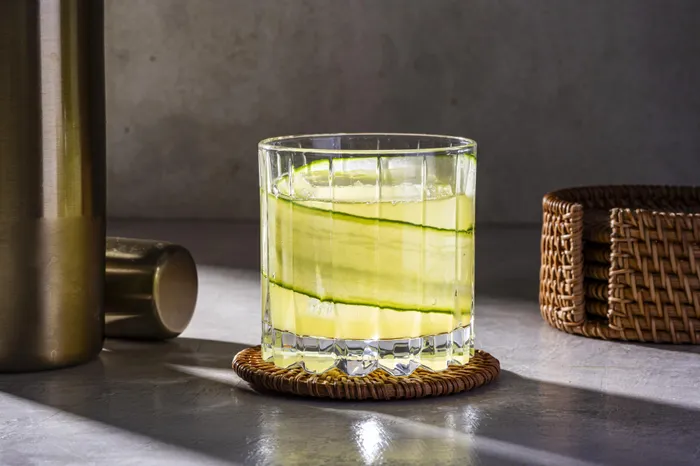
The flavor of the Garden Margarita will change depending on which Mexican spirit you use for the base, whether it be a classic espadín mezcal, a funky raicilla or a minerally sotol.
Image: Scott Suchman/ The Washington Post; food styling by Lisa Cherkasky
Servings: 1 (makes 1 drink)
Total time: 5 mins
Bright, fresh and quietly complex, this vegetable-enhanced riff on a margarita works with a variety of agave and agave-adjacent spirits. Stick with a blanco tequila, or branch out to a mezcal, sotol, bacanora or raicilla to experience how the different spirits affect the drink, making it grassier or more mineral, funkier or herbal depending on the bottle.
Where to buy: Sotol, bacanora and raicilla are available at well-stocked liquor stores with a strong agave selection, and online.
Ingedients
1 large cucumber
1 large ice cube, plus more ice cubes for shaking
1/4 yellow bell pepper, seeded and coarsely chopped
1 thin slice jalapeño pepper, seeded (optional)
Pinch fine salt
2 ounces blanco tequila, mezcal, sotol, bacanora or raicilla (see Where to buy)
3/4 ounce fresh lime juice (from 1 lime)
3/4 ounce simple syrup
3 dashes celery bitters (optional)
Directions
1 Cut a 1-inch chunk off the cucumber, peel, coarsely chop and set aside. Using a y-shaped vegetable peeler, peel a thin strip from the remaining cucumber. In a rocks glass, wind the ribbon of cucumber around the inside, then place a large ice cube in the glass.
2 In a cocktail shaker, vigorously muddle the chopped cucumber, bell pepper, jalapeño, if using, and salt until the vegetables release their juices.
3 Add the ice cubes, tequila, lime juice, simple syrup and celery bitters, if using. Shake vigorously until well chilled, then double strain into the glass and serve.