
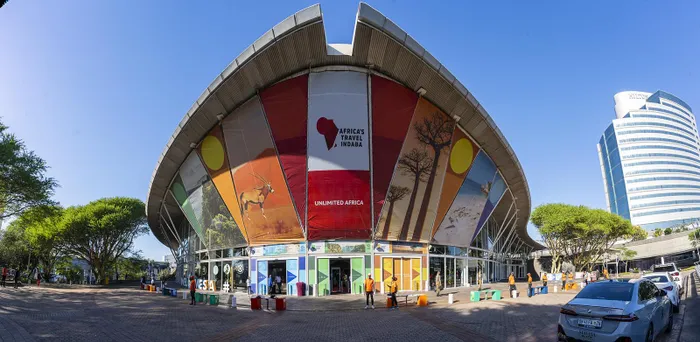
South Africa's tourism landscape reveals promising statistics and an evolving narrative. The industry is turning challenges into opportunities for economic empowerment across the nation.
Image: Africa's Travel Indaba
Africa’s Travel Indaba 2026 arrived at an important moment for South African tourism. Travellers are becoming more intentional about where they go, how they spend and what they expect from their experiences. Costs remain under pressure, global travel patterns have been disrupted and travellers are planning more carefully.
Yet despite that complexity, South Africa’s tourism sector entered this year’s Indaba with genuine momentum.
Tourism figures show South Africa’s recovery at 95.2% of pre-pandemic levels, making it the strongest first-quarter performance since 2019. Europe, our largest overseas source market, has already recovered to 95.7% of 2019 arrival levels and continues growing. Those numbers reflect years of work to rebuild confidence, restore demand and reconnect South Africa with key international markets.
But perhaps the more important question is what South Africa does with this momentum.
Tourism recovery should never be measured purely by arrival numbers. The real opportunity lies in how tourism growth translates into broader economic participation, stronger regional development and more inclusive opportunities for South Africans across the country.
That is the conversation the industry should have had at Indaba this week.
Tourism remains one of the few sectors capable of creating economic activity across multiple layers of society at the same time. When tourism grows, the impact extends far beyond airports, hotels and conference venues. It supports restaurants, transport operators, tour guides, local farmers, laundry services, community markets, security providers and small businesses that form part of the wider tourism ecosystem.
Tourism also creates accessible entry points into the formal economy. Hospitality and tourism continue to provide opportunities to build careers through experience, reliability and human connection. The sector has always rewarded adaptability, work ethic and service excellence in ways that remain deeply valuable in the South African context.
This is why tourism growth matters even to people who may never directly consider themselves part of the industry.
Travel demand has remained remarkably resilient despite ongoing economic pressure. Findings show South African travellers heading abroad are experiencing airfare increases of between 10% and 50%, yet cancellations remain relatively low. Travellers are adjusting their behaviour rather than abandoning travel altogether.
That shift tells us something about how people are approaching travel in 2026.
Travellers are booking more carefully. They are seeking greater value. They want experiences that feel worthwhile and memorable. They are also relying more heavily on trusted travel advisors to help navigate increasingly complex travel decisions. In many ways, global travellers have become more intentional consumers.
That creates opportunity.
Our tourism offering stands out because it combines world-class experiences with strong value across accommodation, food, nature, culture and hospitality. International visitors are increasingly looking for destinations that offer depth of experience rather than simply high-end price tags.
But sustaining momentum requires the industry to think beyond traditional tourism models and beyond traditional tourism geography.
South Africa’s international tourism identity has understandably centred around recognised destinations such as Cape Town and the Kruger National Park. Those remain important and continue to perform well. But one of the most exciting opportunities for growth lies in expanding international awareness of the broader South African tourism landscape.
KwaZulu-Natal is a strong example of this potential, as are regions across Limpopo, Mpumalanga and the North-West. These provinces offer extraordinary natural beauty, cultural depth, wildlife experiences, heritage tourism and community-based travel opportunities that resonate strongly with travellers seeking authentic and meaningful experiences.
The conversation now is not simply about attracting more tourists to South Africa. It is about encouraging visitors to experience more of the country and to stay longer within regional economies.
That matters because tourism becomes exponentially more valuable when visitor spending spreads geographically. A traveller who extends their trip beyond one destination contributes to a broader network of local businesses, service providers and communities. Tourism spending begins moving deeper into local economies where its impact is often felt most directly.
This is also where tourism’s long-term sustainability strengthens.
A tourism sector that benefits multiple provinces, smaller towns and wider communities becomes more resilient over time. It creates broader participation, reduces overreliance on a handful of destinations and allows more South Africans to share in the opportunities.
South Africa must continue investing in the fundamentals that support long-term tourism confidence. International travellers today are informed, connected and experience-driven. Consistency matters. Infrastructure matters. Service standards matter. Ease of travel matters.
The destinations that will continue to grow globally are those that deliver reliability alongside memorable experiences. South Africa already possesses the product, the people and the hospitality culture that travellers respond to positively. The focus now is on ensuring that experience is consistently delivered across provinces, price points and tourism categories.
There is also opportunity in strengthening regional and intra-African tourism. Building stronger travel ecosystems within Africa can create additional resilience for the sector while unlocking new business and leisure travel opportunities. South Africa remains well-positioned to play a leading role.
Importantly, none of this requires South Africa to reinvent itself.
One of the country’s greatest tourism strengths has always been authenticity. Our landscapes, cultures, food, wildlife, creativity and people offer something distinctive in a global tourism environment where travellers value meaningful over manufactured experiences. South African hospitality remains one of the country’s most powerful differentiators because it cannot easily be replicated elsewhere.
The tourism sector has worked hard to rebuild itself. The recovery now visible reflects that effort. The next phase is about ensuring that tourism growth reaches further, includes more people and contributes more meaningfully to long-term economic resilience.
South Africa has the foundation, the demand and the global attention. The opportunity now is to build on that momentum intentionally and ensure the benefits are felt beyond the traditional centres.
If we get that right, tourism becomes more than an industry recovery story. It becomes part of a broader South African growth story.
Alan Campbell is the Talent and Commercial Director at ANEW Hotels & Resorts