
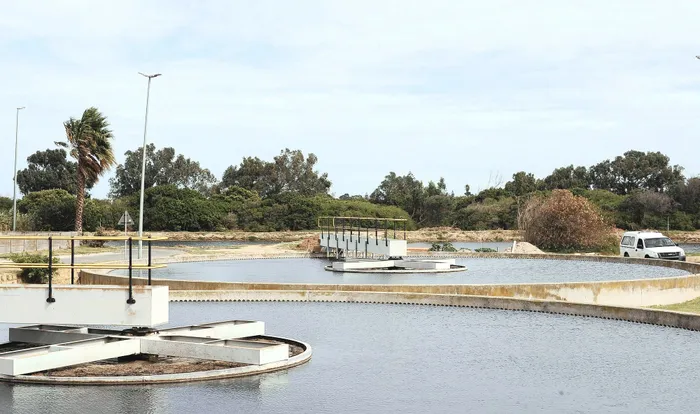
As climate challenges mount, innovative circular water economies will be required to transform Africa’s future and nurture resilience across communities.
Image: Courtney Africa/African News Agency(ANA)
Africa Day (May 25) provides an opportunity to reflect on the continent’s shared future. In 2026, that future is increasingly shaped by one issue that cuts across every sector of society and the economy: water.
Recognising the urgency of the challenge, the African Union has declared 2026 the Year of “Assuring Sustainable Water Availability and Safe Sanitation Systems to Achieve the Goals of Agenda 2063”. In launching the theme earlier this year, African Union Commission Chairperson Mahmoud Ali Youssouf described water not only as a social necessity, but also as a driver of industrialisation, job creation and sustainable development.
The declaration reflects a growing recognition, echoed in global water governance frameworks such as UN-Water, and development research from the World Bank, that water security underpins public health, food security, economic productivity and social wellbeing throughout Africa. It is also a call for stronger political leadership, greater investment and more integrated approaches to water management across borders.
Across the continent, climate variability, rapid urbanisation, ageing infrastructure and rising demand are placing unprecedented strain on water systems. These pressures are consistently highlighted by the Intergovernmental Panel on Climate Change (IPCC), which identifies water stress as one of the most direct impacts of climate change in vulnerable regions. In South Africa, shortages, pollution and deteriorating wastewater infrastructure are already affecting communities. Water remains fundamental to life and dignity, yet for many it is becoming increasingly fragile.
Water insecurity is no longer a future risk confined to policy discussions. It is already affecting households, economic growth, food production and public health. Many communities continue to struggle with unsafe sanitation, while droughts and floods deepen vulnerability. As populations grow and climate pressures intensify, the need for resilient and sustainable water systems has become urgent.
Our Wastewater Challenge Is Already Measurable
Recent assessments by the Department of Water and Sanitation show that around 64% of wastewater treatment works are classified as high or critical risk, meaning they are likely to discharge partially treated or untreated effluent into the environment. This reinforces findings from the Water Research Commission, which has long highlighted declining infrastructure performance and the need to shift toward resource recovery.
The broader economic impact is equally significant. The African Development Bank has repeatedly emphasised that weak water infrastructure constrains growth, particularly in agriculture, energy and urban development, where water reliability is essential for investment and productivity.
The “Use and Dispose” Model No Longer Works
For decades, wastewater was treated as something to discard. Systems followed a linear model: abstract, use, treat and dispose. However, global evidence from the United Nations Environment Programme (UNEP) and the Food and Agriculture Organization (FAO) shows this approach is no longer viable in a water-scarce future, especially where agriculture accounts for the majority of freshwater use.
A circular water economy instead seeks to design out waste, keep water and resources in use for longer, and regenerate natural systems. Wastewater is reframed not as a burden, but as a resource that can support energy generation, agriculture, industry and ecosystem health.
The principle is simple: wastewater becomes the start of a new value cycle. Water is reused, nutrients recovered, and waste streams converted into energy and useful by-products.
Turning Wastewater Into Opportunity
Across South Africa, wastewater treatment plants are increasingly being explored as resource recovery facilities, producing biogas through anaerobic digestion and generating biosolids for agricultural and land rehabilitation use. These approaches align with global evidence synthesised by the UNESCO World Water Assessment Programme (WWAP).
Research shows that anaerobic digestion of sludge can significantly reduce energy demand at treatment plants while producing biogas for electricity or heat. This is increasingly important given rising municipal energy costs and grid instability.
Nutrient recovery is another key opportunity. Nitrogen and phosphorus extracted from sludge can be reused as fertiliser inputs, reducing dependence on imported fertilisers and supporting agricultural productivity. Internationally, circular water systems are already improving drought resilience, reducing environmental pollution and creating green jobs in cities facing severe scarcity.
Collaboration Will Determine Success
Technical solutions alone will not solve Africa’s water challenges. Circular water systems depend on collaboration across municipalities, researchers, policymakers, businesses and communities. Engineers, regulators and civil society all play a role in ensuring systems are both effective and trusted.
Research partnerships across South Africa and globally continue to demonstrate the feasibility of water reuse, nutrient recovery, biogas production and nature-based solutions. However, scaling these solutions depends on governance capacity, skills development and sustained institutional investment.
Regional co-operation is also critical. African countries face shared challenges including water scarcity, pollution, infrastructure failure and climate risk. Knowledge sharing and co-ordinated investment can significantly accelerate resilience across the continent.
A Shared Continental Responsibility
Africa Day celebrates unity, co-operation and shared destiny, and water embodies all three.
A circular water economy offers African countries an opportunity to decouple development from rising water demand while strengthening food and energy security, creating jobs and improving environmental outcomes. It also offers a pathway to rebuild trust in public institutions by demonstrating that practical, forward-looking solutions already exist.
The circular water economy is no longer theoretical. It is already emerging through pilot projects, research collaboration and policy development across the continent. Africa Day, and the African Union’s 2026 focus on water and sanitation, calls for this momentum to be accelerated.
By valuing every drop of water and every by-product within the system, Africa can build resilient water futures that serve both people and planet. On Africa Day, water is more than a resource. It is a shared responsibility and a shared opportunity for renewal.
*Dr Harrison Pienaar is chairperson of the Water Institute of Southern Africa (WISA) and Dr Lester Goldman is CEO of WISA.